
Our Specialty
Apartment Building Loans and Apartment Complex Financing
Apartment loans are mortgages for income-producing properties with five or more residential units. As a leading apartment lender, Select Commercial arranges apartment building loans nationwide, helping investors purchase, refinance, or renovate apartment complexes and walk-up, garden-style, and mid-rise buildings, with rates as low as 6.19% (see rates below), up to 80% LTV, terms to 30 years, and no upfront fees. To see all of our loan program rates, visit today’s commercial mortgage rates.
Get a Free QuoteToday’s Apartment Building Loan Rates updated November 24, 2026
To see all of our loan program rates, visit today’s commercial mortgage rates.
| Loan Type | Rate* | Max LTV |
|---|---|---|
| 5 Year Fixed | 6.39% | Up to 80% |
| 7 Year Fixed | 6.42% | Up to 80% |
| 10 Year Fixed | 6.47% | Up to 80% |
Rates start at 6.19% for multifamily loans over $6 million.
Rates last updated November 24, 2026. Rates and maximum LTV shown represent our best-case pricing scenarios. Actual rates, LTV, and loan terms are subject to underwriting approval and may vary.
See Lower Rates for Loans Over $6 Million on our Multifamily Loan Page, Starting at 6.19% ›
Get My Free Rate QuoteApartment Building Loan Rates and Apartment Complex Loan Rates
Apartment building loan rates and apartment complex loan rates come off the same programs shown above, but the number you are actually quoted is set by the property, not by a published sheet. Five things move it more than anything else:
- Loan size. Apartment complex loans over $6 million reach agency large-balance execution and usually price below smaller apartment building loans, which sit in small-balance, bank and credit union programs.
- Term length. The 5-, 7- and 10-year fixed options are priced off different points on the curve, so the lowest apartment loan rates are not always on the longest term.
- Leverage. Pricing tightens as you come down from 80% LTV. The same building at 65% LTV is a different quote.
- Debt-service coverage. A property clearing 1.35x DSCR prices ahead of one that barely clears 1.20x, even at identical leverage.
- Condition and market. Deferred maintenance, a short operating history, or a thin submarket each cost basis points.
Because of that spread, the honest answer to “what are apartment complex loan rates today” is a range until someone underwrites your rent roll. We quote apartment building loans and apartment complex loans from $1,500,000 across the 48 contiguous states, with written terms inside 48 hours and no upfront fees.
Apartment Building Loans, Explained in Two Minutes
For more than 30 years, investors have trusted Select Commercial to structure apartment and commercial mortgages with competitive terms and straight answers.
- Access to Fannie Mae, Freddie Mac, banks, life companies, credit unions, HUD and CMBS
- No upfront application or processing fees
- Written pre-approvals within 48 hours
- Loans from $1,500,000 nationwide
Apartment or Multifamily, What’s the Difference?
They finance the same asset: buildings with five or more residential units. In practice, “apartment loan” usually refers to financing under $6 million and “multifamily loan” to larger balances over $6 million. Select Commercial arranges both, through agency, bank, life-company, bridge and CMBS programs.
Beyond smaller apartment buildings, Select Commercial arranges large-balance multifamily financing for 5+ unit properties with loan amounts over $6 million. We place these through Fannie Mae Multifamily, Freddie Mac Multifamily, banks, life companies, bridge lenders, and CMBS programs. See our full multifamily loan programs or request a quote.
Why Investors Choose Us for Apartment Building Loans
Select Commercial is a nationwide commercial mortgage broker with over 30 years of experience arranging apartment loans and apartment building financing for properties starting at $1.5 million.
- Access to top apartment lenders: We work with Fannie Mae, Freddie Mac, national banks, credit unions, private capital providers, and insurance companies.
- Competitive apartment loan rates: We offer bank, credit unions, HUD, bridge, and other apartment loan programs tailored to your property and investment goals.
- Simplified process and fast closings: Our team handles underwriting, lender selection, and packaging to help streamline your financing.
- Nationwide coverage: Loans are available across the 48 contiguous states for 5+ unit apartment buildings, co-ops, and rental communities.
We oversee every part of the apartment building loan process, from screening and underwriting through closing, so you can stay focused on your property.
Our Apartment Loan Benefits
- Apartment loan rates start as low as 6.19% (as of November 24, 2026)
- A commercial mortgage broker with over 30 years of lending experience
- No upfront application or processing fees
- Simplified application process
- Financing up to 80% LTV
- Terms and amortizations up to 30 years
- Long term fixed rates
- Loans for purchase and refinance, including cash-out
- 48 hour written pre-approvals with no cost and no obligation
Apartment Building Loans Starting at $1.5 Million
At Select Commercial, we specialize in apartment building and apartment complex loans with loan sizes starting at $1,500,000. Whether you are purchasing, refinancing, or looking to cash out, our apartment building loan programs are tailored for professional investors and property owners with five or more residential units. Our lending programs are ideal for:
- Apartment complexes with 5+ units in stable or growing markets
- Experienced landlords and real estate investors seeking competitive terms
- New acquisitions, refinances, or equity takeouts
- Apartment building financing for both stabilized and value-add properties
Agency Small Balance Apartment Loan Programs
Select Commercial connects borrowers with top-tier agency apartment loan options in addition to our network of private capital, banks, and credit unions.
- Fannie Mae® Small Loan Program: Designed for apartment buildings with 5 or more units, with fixed and variable rate options and non-recourse terms. We arrange these starting at $1,500,000.
- Freddie Mac® Small Balance Loan (SBL) Program: Streamlined underwriting for loans from $2 million to $10 million on stabilized multifamily properties.
- Loans Over $6 Million: For large-balance requests, explore our nationwide multifamily loan programs over $6 million.
These agency-backed options provide competitive fixed rates, non-recourse terms, and simplified documentation for qualified investors purchasing or refinancing apartment buildings.
Apartment Complex Loans and Refinancing: Where Do You Start?
A call we get every week sounds something like this: “I refinanced my apartment complex ten years ago. The loan is coming due, and I am not sure where to start.” It is a fair question. If your last refinance closed in 2015 or 2016, the market you are walking back into looks different. Rates are higher than the number written on your current note, lenders look harder at real cash flow, and the document list has grown. The process itself has not changed much, though, and a prepared borrower can still close in 30 to 60 days.
Start with your payoff picture. Pull your most recent mortgage statement and confirm the maturity date, the prepayment terms, and whether the loan carries yield maintenance or a step-down penalty. Refinancing a few months early sometimes costs less than letting a balloon payment force your hand. Next, gather the property records: a current rent roll, a trailing 12 month operating statement, and the last two years of expenses. Every apartment refinance is sized against the building’s net operating income, so those documents drive everything else.
Then compare programs, not just lenders. A stabilized apartment complex with steady occupancy may qualify for agency financing with a long fixed rate and non-recourse terms. Older complexes with deferred maintenance, or a rent roll still in transition, are often better served by a bank or bridge loan, with a plan to refinance again once the property stabilizes. Cash-out refinancing is available under most programs when you have the equity, whether the proceeds fund repairs, the next acquisition, or a partner buyout.
This is the work we do every day. We review your payoff, underwrite your numbers the way a lender will, and bring back written options within 48 hours, with no fee and no obligation. Loan sizes start at $1,500,000. Check today’s commercial mortgage rates, or request a free quote and we will map the refinance out from where you stand right now.
Loan Programs We Use for Apartment Building Financing
Every apartment loan we arrange is placed through one of these programs. Explore the options that fit your property and business plan:
Fannie Mae Multifamily
Agency loans with some of the lowest fixed rates for stabilized 5+ unit properties.
Freddie Mac Multifamily
Conventional and value-add agency execution for larger balances.
Freddie Mac SBL
Small Balance (SBL) program, from $2 million to $10 million.
FHA / HUD Multifamily
Long-term, fully amortizing, non-recourse financing.
CMBS Loans
Non-recourse conduit loans for stabilized apartment assets.
Bridge Loans
Short-term capital for acquisition, lease-up and repositioning.
Before You Apply: Can You Finance an Apartment Building Right Now?
 Written & reviewed by Stephen A. Sobin, President of Select Commercial Funding LLC
We would rather tell you this now than waste your time. We arrange apartment building loans across the country and we like helping investors get a first or second property done. But there are borrowers we are not able to help, and it is fairer to say so at the top of this guide than three phone calls in.
Here is the short version of what it takes:
- A loan of at least $1,500,000. This is a firm floor with no exceptions. It is not a preference, it is the smallest loan the lenders we work with will write.
- Five or more residential units. Fannie Mae, Freddie Mac and HUD all draw the line at five. A duplex, triplex or fourplex is a residential mortgage, not a commercial one.
- Roughly 20% to 35% down. Maximum leverage is 80% loan-to-value on the strongest agency files. Most borrowers land between 25% and 30%.
- Income that covers the debt with room to spare. Lenders size to a debt service coverage ratio of about 1.20x to 1.25x, meaning net operating income needs to exceed the mortgage payment by 20% to 25%.
- Cash left over after closing. Expect to need closing costs of 2% to 5% on top of the down payment, plus post-closing liquidity. Agency lenders commonly want to see nine to twelve months of debt service still in the bank.
If that is not where you are today, you are welcome to read the rest of this guide and we hope it is genuinely useful to you. We would only ask you to be straight with yourself about those numbers first, because a phone call will not change them. Our days go to borrowers who are in a financial position to move now, and we would rather point you somewhere better than take a call we cannot turn into a loan.
Who We Cannot Help, and Where to Go Instead
Four situations account for most of the calls we have to turn away. In every one of them there is a better place to take your deal, so here they are with the alternative.
You own or are buying one to four units
This is a residential mortgage, not a commercial one, and that is good news for you. Residential financing on a two-to-four unit property is cheaper, needs less down, and underwrites to your personal income rather than the building’s.
Go to: a residential mortgage broker or your bank’s consumer lending side. Ask specifically about a conventional investment property loan or an FHA loan if you will live in one of the units.
Your loan would be under $1,500,000
Not a judgment on the deal. Agency and conduit lenders simply do not write loans that small, because the fixed cost of an appraisal, environmental report and legal work does not scale down.
Go to: a community bank or credit union in the property’s own market. They will write a $500,000 loan on an eight-unit building and often at a good rate, because they already know the street it sits on.
You do not have a down payment
You will see no-money-down apartment financing advertised. We want to be plain about this: there is no conventional path to buying an apartment building with no money down. What is usually being described is either seller financing on a property that could not sell on the open market, or a hard money bridge loan in the 10% and up range that requires you to already hold equity elsewhere. Neither is a route to a first purchase, and both can cost you the property.
Go to: honestly, keep saving, or partner with someone who has the equity. We would rather tell you that than put you in a loan that fails.
The property is in Alaska or Hawaii
We lend across the 48 contiguous states and we are not licensed or active in those two markets.
Go to: a commercial mortgage broker licensed locally. Both markets have specialists who understand their lender set far better than any mainland broker will.
If none of the above applies to you, keep reading. The rest of this guide is the part that gets a loan closed.
Are You Financially Ready? A Six-Question Self-Check
Lenders do not just underwrite the building. They underwrite you alongside it. These are the six questions an agency underwriter will answer about you whether you have thought about them or not, so it is worth answering them yourself first.
1. Is the down payment liquid today?
Not equity in another property, not a line of credit you have not drawn, not a promise from a partner. Lenders verify the source of funds and will ask for two to three months of statements. Money that arrives by selling something else needs to arrive before you apply, not during underwriting.
2. Is your net worth at least the loan amount?
Agency lenders commonly want to see a borrower net worth equal to or greater than the loan they are writing. On a $2,000,000 loan that means roughly $2,000,000 of net worth across the borrowing group, which can be combined across partners and can include real estate equity.
3. Will you still have reserves after closing?
This is where first-time buyers most often fall short. After the down payment and the closing costs, lenders want to see post-closing liquidity, commonly nine to twelve months of principal and interest. A borrower who empties the account to close is a borrower who cannot absorb a bad quarter.
4. Can you document two years of income?
Personal and business tax returns, a current personal financial statement, and a schedule of real estate owned. If you are self-employed and your returns are written to minimize taxable income, say so early. It is workable, but it changes which lender we take you to.
5. Have you identified a specific property?
This is the biggest difference from buying a house. There is no meaningful commercial pre-approval without a property, because the loan is sized on that building’s income, not on your salary. We can tell you what you are likely to qualify for in general terms, but a real term sheet needs a real rent roll.
6. Who is going to manage it?
Lenders ask about apartment ownership and management experience, and a first-time buyer with no track record is a weaker file. The fix is straightforward: engage a professional property manager with apartment experience before you apply and name them in the package. It frequently makes the difference on a borderline file.
If you answered yes to all six, you are in better shape than most first-time applicants and we would like to hear from you. If you answered no to one, that is usually fixable in a few months and worth fixing before you apply rather than after a lender declines you. If you answered no to three or four, the honest advice is to wait, build the reserves, and come back.
Get a Written Quote in 48 Hours
No cost, no obligation, no upfront fees. Apartment loans from $1,500,000.
How to Get an Apartment Building Loan
Apartment financing moves through a few clear phases. Knowing each one helps you close faster and avoid the common delays.
Organize Your Financials
Gather your trailing-12-month operating statement, year-to-date P&L, current rent roll, and occupancy history. Lenders size every loan against your actual net operating income (NOI).
Know Your Key Metrics
Lenders underwrite to three: debt-service-coverage ratio (DSCR), typically 1.20 to 1.25x; loan-to-value (LTV), generally 65% to 80%; and debt yield, NOI divided by loan amount.
Select the Right Program
Agency (Fannie/Freddie) for stabilized assets with long-term fixed rates; FHA/HUD for maximum leverage; bridge for value-add and lease-up; CMBS for non-recourse flexibility.
Application & Term Sheet
We submit your request with the property package, size the loan, and issue a term sheet outlining rate, leverage, fees, and structure, including prepayment terms.
Underwriting & Reports
Formal underwriting begins with an independent appraisal, Phase I environmental, and property condition assessment. Underwriters verify income, expenses, and leases.
Rate Lock & Close
Agency and CMBS loans allow a rate lock once approved. Most apartment loans close in 30 to 60 days; FHA/HUD takes longer.
Apartment Property Types We Finance
We arrange financing across the full range of 5+ unit residential assets:
Who We Finance
We work with apartment building borrowers of every structure, on properties from five units and up:
- Individual investors and joint ventures
- LLCs, LPs and partnerships
- Corporations and S-corps
- Trusts and estates
- Family offices
Apartment Loans by State
A short summary of the apartment market in each state. Select a state for local market data, the rules that affect a loan there, and current rates.
Northeast
Rent regulation is the defining variable here, and it is set locally rather than statewide in most of the region.
- ConnecticutRents are rising across the state, fastest in Hartford (about $1,688, up 5.2%), while Stamford runs near $3,044. Larger towns must have a fair rent commission, which comes up in underwriting.
- MainePortland rents are flat at about $1,960, while South Portland, just across the bridge, rose 7.7% to $2,369. Both cities limit how much rents can be raised each year, under different rules.
- MassachusettsOne of the most expensive and tightest markets in the country. Boston is about 95.6% occupied with almost nothing new being built, yet rents are flat while prices per unit keep climbing.
- New HampshireThree markets an hour apart are moving three ways: Manchester up 2.3%, Portsmouth about flat, Nashua down 1%. Rents are high because very little new supply gets built.
- New JerseyOccupancy finished 2025 at 94.1% and sales volume more than doubled. Loans here turn on three local items: town-by-town rent control, very high property taxes and the transfer fee.
- New YorkThe tightest market in the country, with city vacancy forecast at 2.4% and the smallest construction pipeline in a decade. Sales activity is picking back up.
- PennsylvaniaPhiladelphia and Pittsburgh are both about 95% occupied, and new construction has nearly stopped arriving. Rents are up about 2% in Philadelphia and flat in Pittsburgh.
- Rhode IslandProvidence rents slipped 1% to $2,500 while Warwick rose 5.8% and Pawtucket 3.7%. In a state this small, it matters which city your comparables come from.
- VermontBurlington rents are up 6% to $2,617, the strongest growth in New England, while next-door South Burlington is up 1.75%. Elsewhere in the state there is little published data, so a loan takes more work to underwrite.
Mid-Atlantic
Transfer and recordation taxes are charged on the loan itself in parts of this region, which puts real money on the closing statement.
- DelawareEvery property in the state was just reassessed for the first time in decades, so check the tax bill before anything else. Rents are steady: Wilmington about $1,721, up 2.5%, with Newark and Dover close to flat.
- MarylandTwo markets with different problems. The Washington suburbs are absorbing federal job cuts and softer demand, while Baltimore rents are barely moving.
- VirginiaNorthern Virginia rents are falling, with Arlington, Alexandria and Fairfax all down over the year, while Hampton Roads rents are rising faster than almost anywhere in the region.
- West VirginiaThe fastest growth is at opposite corners of the state: Morgantown up 5.4% and Martinsburg, effectively a Washington suburb, up 4.8%. Charleston is up 1.3%.
- Washington DCOne of the few major markets where rents fell last year, down 3.8% to about $2,446. The cause is federal job losses, not overbuilding.
Southeast
Insurance has replaced interest rates as the line item that decides whether a deal pencils, and reassessment on sale is the common trap.
- AlabamaHuntsville is the growth market and Birmingham the yield market. Birmingham rents average about $1,371, up 2.9%, and Huntsville $1,278, up 1.3%.
- FloridaTwo markets moving in opposite directions. Miami and Fort Lauderdale are tight at 6.6% vacancy with rents still rising, while Tampa, Orlando and Jacksonville run near 10% to 12% vacancy with rents slipping.
- GeorgiaAtlanta overbuilt, and 2026 is the year that ends: deliveries are forecast to fall by nearly half, the lightest year since 2021. Demand held up throughout, filling about 19,000 to 20,000 units a year.
- KentuckyLexington ($1,383, up 1.5%) and Louisville ($1,338, up 1.8%) are close in price and growth. Lexington is the smaller city but the more expensive one, supported by its university and hospitals.
- MississippiThe most expensive market is Southaven, a Memphis suburb, at $1,428. Hattiesburg is growing fastest at 4.1%, and Jackson has the lowest rents at $1,098.
- North CarolinaCharlotte is still absorbing one of the heaviest construction pipelines in the country, while Raleigh-Durham has already worked through its own. Which metro your building is in matters most.
- South CarolinaThere is no single trend: Columbia is up 2.8%, Charleston 1.6%, Greenville is flat and Myrtle Beach is down 2.6%. Charleston is the most expensive at $2,137.
- TennesseeNashville has too much new supply, with 47% of listings offering a free month. Memphis has almost no new supply and still has the highest vacancy in the state.
Midwest
The most favorable assessment treatment in the country for apartment owners, and the deepest bench of local bank lenders.
- IllinoisChicago is one of the stronger large markets in 2026: rents up 3.2% to $1,972, occupancy at 94.9% and very little new construction.
- IndianaA cash flow market where the state constitution limits property tax bills. Indianapolis is working through new supply, with rents about $1,310, up 1.1%.
- IowaOne of the flattest and most predictable markets in the country. Des Moines rents are about $1,107, up 0.5%, with no supply overhang and no concessions to work off.
- MichiganRents are rising modestly: Detroit $1,324, up 1.6%, and Grand Rapids $1,623, up 3.5%. Property taxes reset when a building is sold, so the bill after closing is usually higher than the one the seller paid.
- MinnesotaMinneapolis ($1,709, up 2.7%) is growing faster than Saint Paul ($1,543, up 2.0%). The two cities have different rent rules, so check which one your building falls under.
- MissouriKansas City is growing faster, up 3.5% to about $1,360, against St. Louis at $1,443, up 2.0%. Both metros cross a state line, which matters when you finance a building in either one.
- OhioA yield market with low entry prices: Cleveland trades near $108,000 a unit and Columbus near $148,000. Columbus is working through a record wave of new apartments.
- WisconsinMadison ($1,847) and Milwaukee ($1,639) both grew about 2.1% last year. Madison is held back by how little it is able to build.
Great Plains
Thin published market data means your own rent roll and operating history carry more weight here than anywhere else.
- KansasThe lowest-cost market we lend in. Wichita rents average about $959 and Overland Park $1,585, so loans here are limited by cash flow, not by property value.
- NebraskaOmaha, Lincoln and Bellevue rents sit within about $100 of each other and are all rising 1% to 2.5%. The difference between deals is in the operating statement, not the location.
- North DakotaGrand Forks rents are up 6.2% to $1,322 and Fargo is up 3.0% to $1,155. This is the only state with a state-owned bank, which changes what a small local lender can do.
- OklahomaAmong the lowest rents in the country: Oklahoma City about $1,065 and Tulsa $1,025, both rising 1.5% to 2%. Loans are limited by cash flow more than by value.
- South DakotaRapid City ($1,338) and Sioux Falls ($1,170) are both up about 2.5%. Demand in one is shaped by state law and in the other by the military, so neither behaves like a typical market.
South Central
The largest construction wave in the country is receding, which changes what a lender will underwrite on forward rent.
- ArkansasTwo markets, and the smaller one is the expensive one. Northwest Arkansas (Fayetteville $1,445, Bentonville $1,314) asks well above Little Rock at $1,086.
- LouisianaInsurance cost is what decides a loan here. New Orleans rents are down 2.8% to about $1,377, while Baton Rouge is up 3.1% to $1,285.
- TexasThe largest construction wave in the country is ending: new deliveries are forecast to fall from about 93,000 units to under 35,000. Concessions are still common, and lenders count them.
Mountain West
Property tax caps and valuation limits are common, and most of them reset or lapse when the property changes hands.
- ArizonaPhoenix overbuilt, then filled more apartments in six months than in any stretch on record. Vacancy is still above 11% and rents are soft, but the construction pipeline is down about 35%.
- ColoradoDenver went through a deep correction and turned in 2026: record absorption, rents no longer falling and the lightest year of new deliveries since 2020.
- IdahoGrowing again nearly everywhere: Boise up 3.7%, Meridian 3.4% and Coeur d'Alene 3.7%. The exception is Nampa, which is flat.
- MontanaThe widest spread of any small state. Bozeman is the most expensive at $2,194 but down 2.6%, Missoula is up 3.4% and Billings is flat.
- NevadaReno rents are up 4.7% to about $1,805, while Las Vegas is down 0.3% at $1,474. Las Vegas is near the end of its supply wave, with deliveries falling sharply.
- New MexicoSanta Fe is the most expensive market at $1,866, well above Albuquerque at $1,405. Both are growing about 2%, and Las Cruces is close to flat.
- UtahOne corridor pulling apart at both ends: Provo is up 4.1%, Salt Lake City is nearly flat at $1,602 and Ogden is down 1.1%.
- WyomingOnly two measured markets. Cheyenne shows a 15.6% rent jump that should not be used for underwriting, and Casper is up 1.8% at $1,204.
West Coast
Statewide rent caps apply in all three states, each with its own formula and its own new-construction exemption.
- CaliforniaCalifornia never had the building boom the Sun Belt did, and that shortage supports values. Los Angeles vacancy is about 4.5%, with rents averaging $2,887, up 0.8%.
- OregonPortland rents are down 1.6% to about $1,708, while Eugene is up 1.3% to $1,875. A statewide law limits yearly rent increases, and lenders check it first.
- WashingtonNew construction has dropped sharply, with Seattle deliveries down about 53%. A 2025 state law limits yearly rent increases, which limits how fast a lender will let income grow.
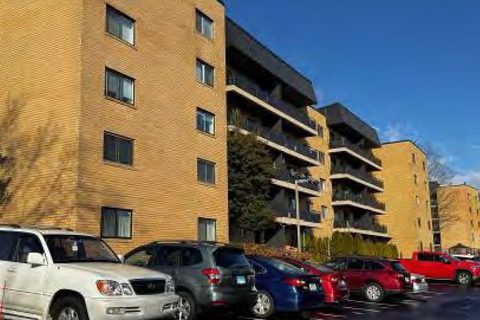
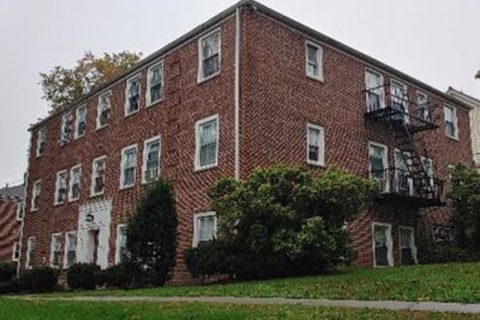
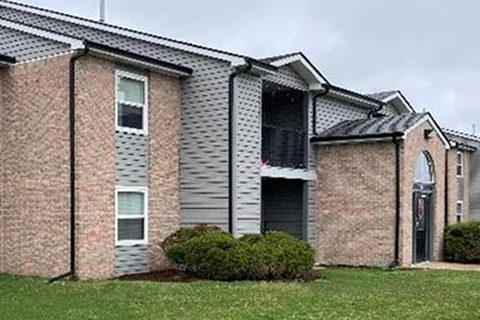
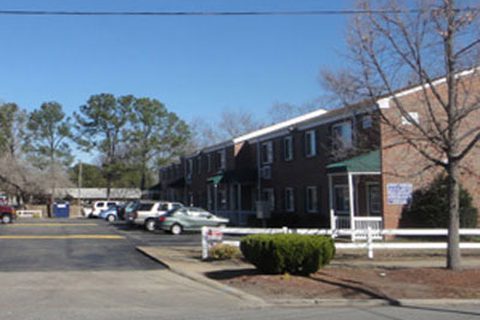
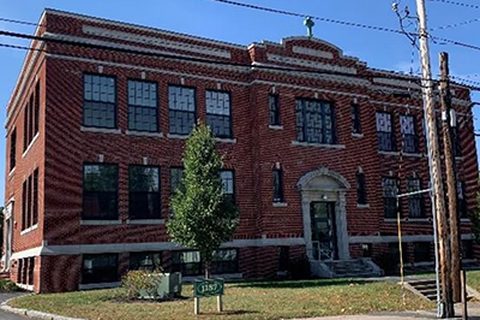
Recent Apartment Loan Closings
A sample of apartment loans we have arranged for investors nationwide.
What Our Clients Say
“I spoke to several commercial lenders before finding Select Commercial. They got me a lower rate and their service was exceptional. If you need a multifamily loan, you need to talk to Stephen.”
Nathan B. · Philadelphia, PA“I found selectcommercial.com and saw they specialized in apartment building loans. In the end, they were by far the best company I have used. Next time I know who to call first.”
Jerry T. · Long Island, NY“Select Commercial was very helpful with my multifamily mortgage. Stephen went over several options and we came up with the best lender to meet my needs. I got the funds and also lowered my payments.”
Gary M. · Portland, OR“As a real estate attorney, I trust that Select Commercial will deliver apartment building loans and commercial mortgages in a timely manner. The rates and terms offered are excellent. I heartily recommend them.”
David S. · New York CityGet a Free Apartment Loan Quote
No cost, no obligation. Written answers within 48 hours on apartment loans from $1,500,000.
- No application or processing fees
- Written answers within 48 hours
- For 5+ unit and commercial properties, $1.5M and up