
Maryland · Over $6 Million
Maryland Multifamily Loans
Select Commercial arranges Maryland multifamily loans, with rates as low as 6.14%, up to 80% LTV and non-recourse agency options. We compare Fannie Mae, Freddie Mac, FHA/HUD and CMBS. For loans under $6 million, see Maryland apartment loans. See current rates on every loan type we offer.
Get a Free QuoteFinancing Options in Maryland
Maryland apartment, multifamily and commercial properties each have dedicated financing. Pick the page that matches your property:
Financing more of the state? See Maryland apartment loans and Maryland commercial mortgages.
Financing in another state? Explore our apartment loans, multifamily loans and commercial mortgages nationwide.
Maryland Multifamily Loan Rates
Rates updated as of October 23, 2026
| Loan Type | Rate* | Max LTV |
|---|---|---|
| 5 Year Fixed | 6.14% | Up to 80% |
| 7 Year Fixed | 6.17% | Up to 80% |
| 10 Year Fixed | 6.21% | Up to 80% |
- Streamlined underwriting for institutional multifamily
- Cash-out refinances are acceptable
- Interest-only and non-recourse options
- Minimum 1.25x debt-service-coverage ratio
Maryland Apartment Loans
For smaller apartment building loans, under $6 million
Rates last updated October 23, 2026. Rates and maximum LTV shown represent our best-case pricing scenarios. Actual rates, LTV, and loan terms are subject to underwriting approval and may vary.
Maryland Apartment Building Loans
Not every Maryland apartment property is over $6 million, and we finance smaller buildings too. For 5+ unit Maryland apartment properties from $1,500,000 to $6 million, see our Maryland apartment loans page for Fannie Mae Small Loan, Freddie Mac SBL, bank and credit union options.
Compare Maryland Large-Balance Programs
As a broker we place your large-balance Maryland multifamily loan with the right capital source. Typical starting points for properties over $6 million:
| Program | Typical rate* | Max leverage | Best for |
|---|---|---|---|
| Fannie Mae DUS | 6.14% | Up to 80% | Non-recourse, fixed to 30 yrs |
| Freddie Mac | 6.17% | Up to 80% | Non-recourse large-balance |
| FHA / HUD | 6.74% | Up to 85% | Highest leverage, 35-yr amortization |
| CMBS / conduit | 7.03% | Up to 75% | Non-recourse, flexible underwriting |
Most large-balance lenders look for a debt-service-coverage ratio (DSCR) of at least 1.25x. For properties under $6 million, see our Maryland apartment loans.
Rates last updated October 23, 2026. Rates and maximum LTV shown represent our best-case pricing scenarios. Actual rates, LTV, and loan terms are subject to underwriting approval and may vary.
2026 Maryland Multifamily Investment and Lending Outlook
Baltimore’s construction pipeline has fallen to a decade low, and that is the most important fact for anyone financing a Maryland apartment property right now.
Harbor Stone Advisors reported Baltimore City stabilized vacancy of 9.0% at the end of 2025, down roughly 100 basis points year over year, with rent growth of 0.7%, net deliveries of 1,091 units for the year, and 1,542 units under construction, which the firm described as a decade low. That figure is stabilized vacancy for Baltimore City only, and it is not comparable to a metro number or to a whole-market number.
For the metro, Transwestern published both conventions side by side for the first quarter of 2025: overall vacancy 7.2% and stabilized vacancy 6.3%, a 90 basis point lease-up spread, with average effective rent of $1,707, metro rent growth of 3.0% over twelve months and 4,179 units under construction. One counterintuitive detail from that data is worth stating deliberately rather than leaving to be mistaken for an error: Class B stabilized vacancy measured 5.8%, tighter than both Class A at 6.6% and Class C at 6.9%. That is the workforce housing bid, and it is where Baltimore’s most durable rent has been.
The large-balance comparable is a twenty-property, 539-unit Baltimore City portfolio that traded in December 2025 for $120,319,809, about $223,228 per unit. Individual assets ranged far wider, from roughly $96,000 per unit in Northeast Baltimore City to nearly $300,000 in Canton, and submarket vacancy ranged from 4.9% in Canton to 13.3% downtown. Rent follows the same spread, from about $1,190 in Northeast Baltimore City to $2,572 in Harbor East.
One structural note on lenders. Eagle Bancorp, the largest Maryland-headquartered bank commercial real estate lender, cut its commercial real estate concentration ratio from 295.1% to 267.6% in a single quarter and its construction and land concentration from 75.7% to 66.2% as of June 30, 2026. A deliberate reduction of that size tightens bank execution for Maryland large-balance multifamily and pushes more deals toward agency and debt fund takeouts. Quote both.
Maryland Taxes Your Mortgage, and Above $12.5 Million the IDOT Workaround Stops Working
Maryland has the most consequential closing-cost rule in the country for loans in this size range, and the threshold sits directly inside it. Getting this wrong is a six-figure mistake. Getting it right is a structuring decision made at term sheet, not at closing.
Start with the base rule. Maryland charges recordation tax on the loan, not just on the sale, and there is no cap. Under Maryland Code, Tax-Property § 12-105, for mortgages and deeds of trust the recordation tax applies to the principal amount of the debt secured. The rate is local. In Baltimore City recordation is $5.00 per $500, or 1.0%, and a yield tax established by Ordinance 19-233 adds 15% of the recordation tax on transactions above $1,000,000, bringing the effective rate to 1.15% of the loan amount. In Montgomery County the schedule is a marginal bracket running to 2.27% above $1,000,000.
Put dollars on it. A $20,000,000 apartment loan recorded in Baltimore City costs about $230,000 in recordation tax. The same loan in Montgomery County costs roughly $454,000. Uncapped, due at closing, and payable whether the transaction is an acquisition or a refinance.
Now the exception, and the cliff. Maryland recognizes the indemnity deed of trust, in which the note obligor and the property owner are different entities and the property owner delivers an indemnity deed of trust guaranteeing the loan. Because the guarantor’s liability is secondary and contingent, recordation tax on the instrument is deferred, which in practice has operated as an exemption because most loans pay off without default.
The deferral is available only below a statutory threshold. Tax-Property § 12-105(f)(7) treats debt secured by an indemnity mortgage as incurred when the guaranteed loan is incurred, taxed as if the guarantor were primarily liable. Subsection (f)(7)(ii) switches that treatment off where the instrument secures a guarantee of a loan or series of loans that are part of the same transaction for less than $12,500,000. So below that figure the deferral survives. At or above it, the indemnity deed of trust is taxed like any other mortgage. That threshold was $3,000,000 from 2013 until House Bill 371 in the 2023 session raised it, effective for instruments recorded on or after July 1, 2024.
At Baltimore City’s 1.15%, the practical effect is this. A $12,400,000 loan structured as an indemnity deed of trust defers roughly $142,600. A $12,500,000 loan does not qualify and pays about $143,750 at closing. One hundred thousand dollars of additional proceeds costs you the entire deferral on the whole balance.
Four things follow that belong in the conversation early.
There is a real reason to size just under the threshold, and it should be an explicit decision rather than an accident. Ask directly whether the incremental proceeds are worth the tax plus the lost deferral on everything beneath it.
The aggregation language is a real rule. Splitting a $15 million requirement into two $7.5 million notes does not get you under the threshold if they are part of the same transaction. Structuring designed to defeat it invites challenge.
An indemnity structure changes the borrowing entity, not just the paperwork. The note obligor and the fee owner must be different entities and the fee owner is a guarantor. That has consequences for agency and conduit single-purpose-entity and bankruptcy-remoteness covenants, for the insured under the title policy, for the opinion of counsel, and for intercreditor terms. It is not a drafting shortcut bolted on at the end, and a defective structure loses the tax benefit entirely.
The deferral is contingent, not forgiven. The tax becomes payable if the guarantor’s contingent obligation becomes direct, which happens on borrower default. So an unaccrued recordation tax liability sits behind every Maryland indemnity deed of trust, and it lands at the worst possible moment. Model it in the workout case.
Rates and schedules vary by county and change, so confirm the current figure with the specific jurisdiction before relying on a closing estimate.
2026 Maryland Multifamily Metro Snapshots
A look at the Maryland metros we most actively finance, with 2026 market indicators and the local supply and demand picture:
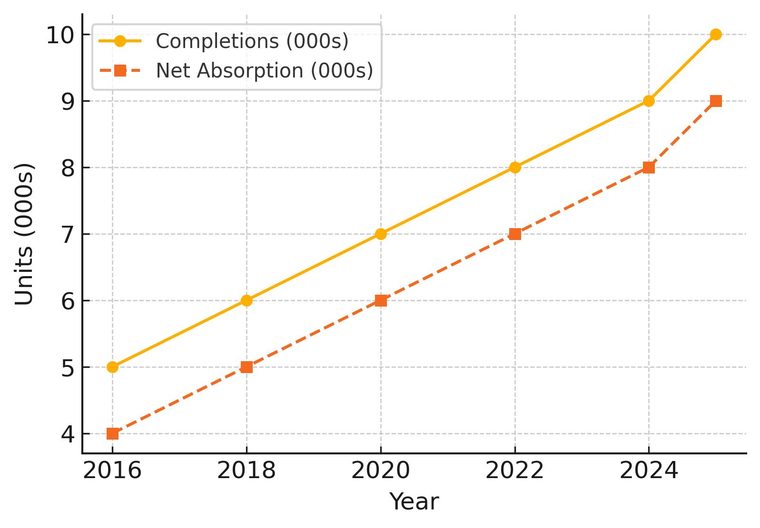
- Employment: about 3,000 new jobs
- Construction: about 1,500 units, inventory growth of 0.6%
- Vacancy: down to 4.1%, lowest since 2021
Maryland Multifamily Loan Programs
As a broker, we compare every large-balance program to find your best fit:
Recent Multifamily Loan Closings
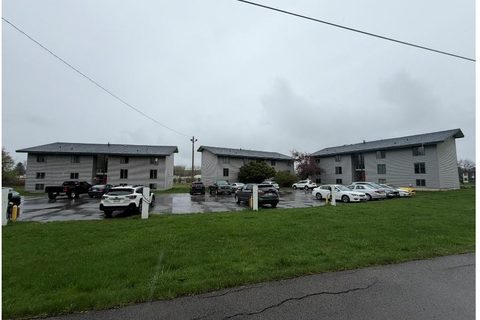
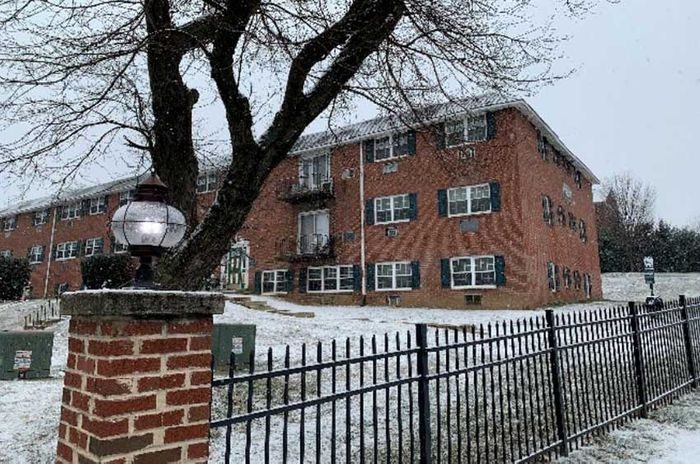
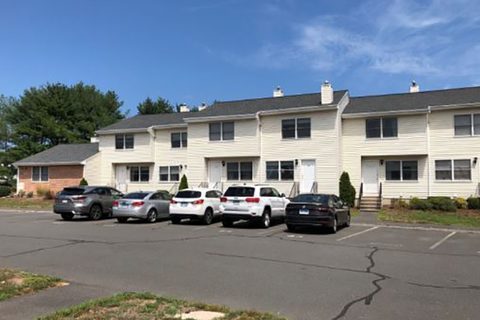
A sample of apartment and multifamily loans we have arranged for investors nationwide.


Other Property & Loan Types We Finance in Maryland
As a full-service commercial mortgage broker, we arrange Maryland financing across every major property and loan type:
We consider commercial loan requests of all sizes, beginning at $1,500,000.
What Our Clients Say
“As a real estate attorney, I trust that Select Commercial will deliver commercial mortgages in a timely manner. My clients are always handled professionally, and the rates and terms are excellent. I heartily recommend them.”
David S. · New York City“I spoke to several commercial lenders before finding Select Commercial. They got me a lower rate and their service was exceptional. If you need a multifamily loan, you need to talk to Stephen.”
Nathan B. · Philadelphia, PA“Select Commercial was very helpful with my multifamily mortgage. Stephen went over several options and we came up with the best lender to meet my needs. I got the funds and also lowered my payments.”
Gary M. · Portland, OR“Select Commercial offered 100% financing for my medical practice when my bank would have required 20% down. They delivered something my bank could not, and handled everything professionally.”
John C. · Boston, MAGet Your Maryland Multifamily Loan Quote
No cost, no obligation. Written answers within 48 hours on Maryland multifamily loans over $6,000,000.
- No application or processing fees
- Written answers within 48 hours
- For 5+ unit and commercial properties, $1.5M and up