
Utah · Over $6 Million
Utah Multifamily Loans
Select Commercial arranges Utah multifamily loans, with rates as low as 6.14%, up to 80% LTV and non-recourse agency options. We compare Fannie Mae, Freddie Mac, FHA/HUD and CMBS. For loans under $6 million, see Utah apartment loans. See current rates on every loan type we offer.
Get a Free QuoteFinancing Options in Utah
Utah apartment, multifamily and commercial properties each have dedicated financing. Pick the page that matches your property:
Financing more of the state? See Utah apartment loans and Utah commercial mortgages.
Financing in another state? Explore our apartment loans, multifamily loans and commercial mortgages nationwide.
Utah Multifamily Loan Rates
Rates updated as of October 22, 2026
| Loan Type | Rate* | Max LTV |
|---|---|---|
| 5 Year Fixed | 6.14% | Up to 80% |
| 7 Year Fixed | 6.17% | Up to 80% |
| 10 Year Fixed | 6.21% | Up to 80% |
- Streamlined underwriting for institutional multifamily
- Cash-out refinances are acceptable
- Interest-only and non-recourse options
- Minimum 1.25x debt-service-coverage ratio
Utah Apartment Loans
For smaller apartment building loans, under $6 million
Rates last updated October 22, 2026. Rates and maximum LTV shown represent our best-case pricing scenarios. Actual rates, LTV, and loan terms are subject to underwriting approval and may vary.
Utah Apartment Building Loans
Not every Utah apartment property is over $6 million, and we finance smaller buildings too. For 5+ unit Utah apartment properties from $1,500,000 to $6 million, see our Utah apartment loans page for Fannie Mae Small Loan, Freddie Mac SBL, bank and credit union options.
Compare Utah Large-Balance Programs
As a broker we place your large-balance Utah multifamily loan with the right capital source. Typical starting points for properties over $6 million:
| Program | Typical rate* | Max leverage | Best for |
|---|---|---|---|
| Fannie Mae DUS | 6.14% | Up to 80% | Non-recourse, fixed to 30 yrs |
| Freddie Mac | 6.17% | Up to 80% | Non-recourse large-balance |
| FHA / HUD | 6.74% | Up to 85% | Highest leverage, 35-yr amortization |
| CMBS / conduit | 7.03% | Up to 75% | Non-recourse, flexible underwriting |
Most large-balance lenders look for a debt-service-coverage ratio (DSCR) of at least 1.25x. For properties under $6 million, see our Utah apartment loans.
Rates last updated October 22, 2026. Rates and maximum LTV shown represent our best-case pricing scenarios. Actual rates, LTV, and loan terms are subject to underwriting approval and may vary.
2026 Utah Multifamily Investment and Lending Outlook
Salt Lake City apartments traded at a 5.2% cap rate in a market where office traded at 9.1%, and the same report gives both numbers.
Cushman & Wakefield’s year-end 2025 capital markets review put total Salt Lake City investment sales at $3.1 billion, up 9.5%, with multifamily volume at $1.1 billion across 47 properties sold, an average multifamily cap rate of 5.2% unchanged from 2024, and an average price of $296,916 per unit. By sector, cap rates ran multifamily 5.2%, industrial 5.8%, retail 6.7% and office 9.1%.
A 390 basis point spread between apartments and office in one market tells you where lenders and buyers are willing to go, and it is the clearest argument for Utah apartment financing on the page. The benchmark large trade was Sugarmont Apartments, 341 units, $149,000,000, about $436,950 per unit, with a smaller comparable at Greenhill at Riverdale at $26 million and roughly $176,700 per unit. Pricing dispersion in this market is wide.
Operating fundamentals are being held down by one thing. Yardi Matrix reported Salt Lake City 2025 completions of 9,430 units, equal to 6.7% of existing stock and roughly 350 basis points above the national completion rate, with average advertised asking rent at $1,525 and stabilized occupancy of 94.7%, up 10 basis points year over year. Cushman & Wakefield measured whole-market vacancy of 9.5% in the second quarter of 2026 with 3,682 units under construction and year-to-date absorption of 2,838 units against only 1,171 delivered.
Occupancy holding flat and absorption running at better than twice deliveries, after a year of record supply, is a market digesting rather than deteriorating. Employment supports it: Utah added about 19,300 jobs in 2025, with employment growth running ahead of the national rate and unemployment at 3.4%, roughly 100 basis points below the national figure.
Published transaction volume varies by source, with one publisher reporting $1.1 billion for 2025 and another $641 million for the same year on a narrower survey, so cite one and name it. Zions Bancorporation, headquartered in Salt Lake City, grew its five-or-more-unit residential book to about $3.56 billion by June 30, 2026, up 10.6% in two quarters, the fastest-growing real estate category on its balance sheet.
Utah’s 45% Exemption Is Worth Having, and Your Closing Puts It at Risk
Utah taxes qualifying residential property on just over half its market value. The reduction is large, it reaches tenant-occupied apartment units by the terms of the statute, and the act of buying the property creates a filing obligation that can forfeit it for a year.
The exemption. Under Utah Code § 59-2-103(3), for a calendar year, the fair market value of residential property located within the state is allowed a residential exemption equal to a 45% reduction. Qualifying property is therefore taxed on 55% of fair market value. Section 59-2-103(2) requires all tangible taxable property to be assessed at a uniform and equal rate on the basis of fair market value.
The provision that reaches apartments is § 59-2-103(6)(b)(ii), which allows the exemption for each residential property that is the primary residence of a tenant. Section 59-2-102(34)(a) defines residential property for these purposes as any property used for residential purposes as a primary residence, and (34)(c) provides that it does not include property used for transient residential use.
Read together, the exemption attaches unit by unit, each on the strength of that unit being its tenant’s primary residence. It is not a single parcel-level election, and the model has to reflect the unit mix rather than applying one rate to everything.
Now the trap. A change of ownership starts a clock. Under § 59-2-103.5(10)(a), after an ownership interest in residential property changes, the county assessor shall notify the owner that the owner is required to submit a written declaration, due within 90 days after the day on which the county assessor mails the notice. The declaration states under penalty of perjury that the property will be used for residential purposes as a primary residence of a tenant, and the assessor may request a current lease, a real estate insurance policy, or federal tax return documentation showing rental profit and loss.
On failure to file, § 59-2-103.5(10)(h)(ii) is blunt: the property owner no longer qualifies to receive the residential exemption in that calendar year for the property that is the subject of the declaration. The board of equalization may not accept an appeal filed after the later of September 15 of the current calendar year or the last day of a 45-day period beginning when the county auditor provides notice.
A change takes effect January 1, 2027. The Utah State Tax Commission states that from that date owners must file Form TC-473A with the County Board of Equalization where ownership changes, where prior ineligibility occurred, or where the county questions eligibility, citing § 59-2-103.5 as amended by 2026 Senate Bill 238, and that the filing deadline is September 15 and late applications cannot be accepted. The Commission also describes the primary residence test as occupancy as a primary domicile for at least 183 consecutive days in a calendar year, by an owner-occupant or a full-time tenant. Treat both the 90-day rule and the September 15 date as live during the transition and calendar the earlier of them.
The downside is large and easy to calculate. Losing the exemption moves taxable value from 55% to 100% of fair market value, an increase of 81.8% in the taxable base. On a $40,000,000 Utah apartment property that is $18,000,000 of additional taxable value for the year, flowing straight through net operating income and therefore through coverage and proceeds. The filing belongs in the closing checklist, in the tax escrow analysis and in the post-closing covenant package by name, not as a general compliance obligation.
Two further points on how the exemption can leak.
A short-stay program puts those units at risk. Because § 59-2-102(34)(c) excludes property used for transient residential use, and the benchmark is 183 consecutive days of occupancy, any furnished, corporate or short-term component of the rent roll may not carry the exemption. A property running a meaningful short-stay operation is not taxed the way its comparables are, and the premium revenue from that program should be underwritten against the higher tax line it creates rather than at the same margin.
Excess land does not qualify. Under § 59-2-103(5), no more than one acre of land per residential unit may qualify for the residential exemption. On low-density garden product with surplus acreage, the land above that limit is taxed at full value.
Because county assessors apply the exemption to multi-unit property by their own practice, confirm with the county assessor how your specific property is treated before you capitalize the benefit. The filing obligation and the deadline apply either way.
One genuine bright spot. Utah has the cleanest closing-cost profile of any state at this loan size. Under Utah Code § 17-21-18.5 county recorder fees are flat per-document charges, $40 for recording an instrument not otherwise provided for, plus $2 for each additional description beyond ten. Nothing is indexed to the debt amount or the sale price. A $60,000,000 Utah deed of trust records for about the same $40 as a $200,000 one. Confirm current fees with the county recorder, but the structure is flat rather than proportional, which is the opposite of Alabama, Minnesota, Maryland and Tennessee.
Utah Multifamily Loan Programs
As a broker, we compare every large-balance program to find your best fit:
Recent Multifamily Loan Closings
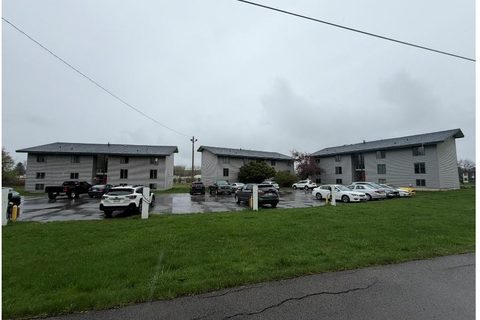
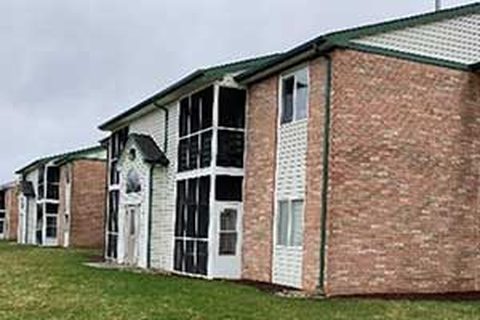
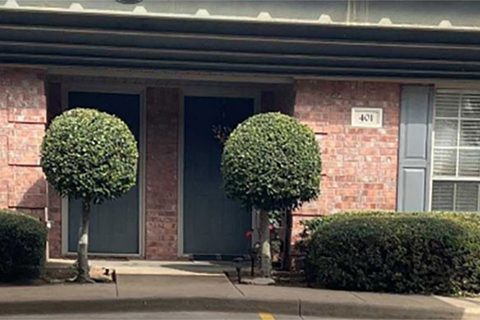
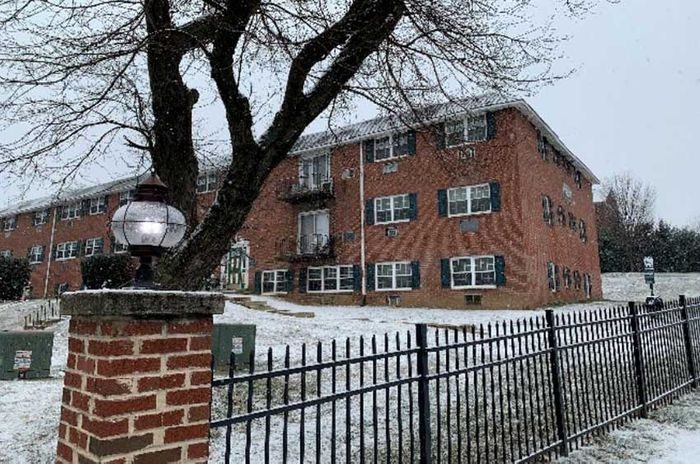
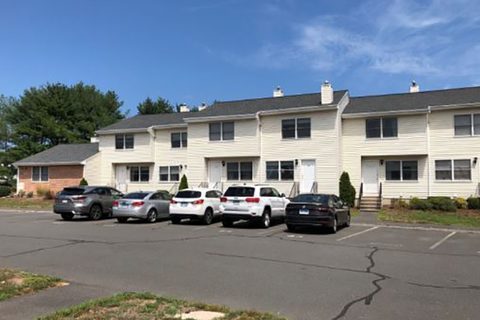
A sample of apartment and multifamily loans we have arranged for investors nationwide.
Utah Multifamily Markets We Serve
We arrange large-balance multifamily loans throughout Utah, including:
Other Property & Loan Types We Finance in Utah
As a full-service commercial mortgage broker, we arrange Utah financing across every major property and loan type:
We consider commercial loan requests of all sizes, beginning at $1,500,000.
What Our Clients Say
“As a real estate attorney, I trust that Select Commercial will deliver commercial mortgages in a timely manner. My clients are always handled professionally, and the rates and terms are excellent. I heartily recommend them.”
David S. · New York City“I spoke to several commercial lenders before finding Select Commercial. They got me a lower rate and their service was exceptional. If you need a multifamily loan, you need to talk to Stephen.”
Nathan B. · Philadelphia, PA“Select Commercial was very helpful with my multifamily mortgage. Stephen went over several options and we came up with the best lender to meet my needs. I got the funds and also lowered my payments.”
Gary M. · Portland, OR“Select Commercial offered 100% financing for my medical practice when my bank would have required 20% down. They delivered something my bank could not, and handled everything professionally.”
John C. · Boston, MAGet Your Utah Multifamily Loan Quote
No cost, no obligation. Written answers within 48 hours on Utah multifamily loans over $6,000,000.
- No application or processing fees
- Written answers within 48 hours
- For 5+ unit and commercial properties, $1.5M and up