
Virginia · Over $6 Million
Virginia Multifamily Loans
Select Commercial arranges Virginia multifamily loans, with rates as low as 6.22%, up to 80% LTV and non-recourse agency options. We compare Fannie Mae, Freddie Mac, FHA/HUD and CMBS. For loans under $6 million, see Virginia apartment loans. See current rates on every loan type we offer.
Get a Free QuoteFinancing Options in Virginia
Virginia apartment, multifamily and commercial properties each have dedicated financing. Pick the page that matches your property:
Financing more of the state? See Virginia apartment loans and Virginia commercial mortgages.
Financing in another state? Explore our apartment loans, multifamily loans and commercial mortgages nationwide.
Virginia Multifamily Loan Rates
Rates updated as of October 21, 2026
| Loan Type | Rate* | Max LTV |
|---|---|---|
| 5 Year Fixed | 6.22% | Up to 80% |
| 7 Year Fixed | 6.26% | Up to 80% |
| 10 Year Fixed | 6.35% | Up to 80% |
- Streamlined underwriting for institutional multifamily
- Cash-out refinances are acceptable
- Interest-only and non-recourse options
- Minimum 1.25x debt-service-coverage ratio
Virginia Apartment Loans
For smaller apartment building loans, under $6 million
Rates last updated October 21, 2026. Rates and maximum LTV shown represent our best-case pricing scenarios. Actual rates, LTV, and loan terms are subject to underwriting approval and may vary.
Virginia Apartment Building Loans
Not every Virginia apartment property is over $6 million, and we finance smaller buildings too. For 5+ unit Virginia apartment properties from $1,500,000 to $6 million, see our Virginia apartment loans page for Fannie Mae Small Loan, Freddie Mac SBL, bank and credit union options.
Compare Virginia Large-Balance Programs
As a broker we place your large-balance Virginia multifamily loan with the right capital source. Typical starting points for properties over $6 million:
| Program | Typical rate* | Max leverage | Best for |
|---|---|---|---|
| Fannie Mae DUS | 6.22% | Up to 80% | Non-recourse, fixed to 30 yrs |
| Freddie Mac | 6.26% | Up to 80% | Non-recourse large-balance |
| FHA / HUD | 6.83% | Up to 85% | Highest leverage, 35-yr amortization |
| CMBS / conduit | 7.00% | Up to 75% | Non-recourse, flexible underwriting |
Most large-balance lenders look for a debt-service-coverage ratio (DSCR) of at least 1.25x. For properties under $6 million, see our Virginia apartment loans.
Rates last updated October 21, 2026. Rates and maximum LTV shown represent our best-case pricing scenarios. Actual rates, LTV, and loan terms are subject to underwriting approval and may vary.
2026 Virginia Multifamily Investment and Lending Outlook
Norfolk posted 5.4% vacancy and 5.6% rent growth on 132 units delivered all year. That is the strongest combination in the mid-Atlantic and it is not a forecast.
Cushman & Wakefield reported second-quarter 2026 whole-market vacancy of 5.4% in Norfolk across a 115,183-unit inventory, with asking rent at $1,688 and rent growth of 5.6% year over year, against 8.9% vacancy and 1.5% growth nationally. Year-to-date deliveries were 132 units, with 2,359 under construction and 1,134 units of absorption. Hampton Roads has essentially no new supply and tenants bidding for what exists.
Richmond is softer and worth citing carefully, because the same firm publishes two different sets of Richmond numbers for the same quarter. Its Richmond metro report gives whole-market vacancy of 9.0%, down 10 basis points year over year, effective rent of $1,588 with growth of 0.6%, year-to-date net absorption of 1,132 units against 1,008 delivered, 4,410 units under construction and year-to-date sales volume of $369 million, with Edison Apartments trading at $28 million and about $161,000 per unit.
Against that whole-market softness, Mid-America Apartment Communities reported its Richmond same-store portfolio of 1,732 units at 96.2% physical occupancy with revenue up 4.7% and net operating income up 5.8%, the strongest performance in its disclosed markets across this region. That is not a contradiction. It is the gap between a market still absorbing 4,410 units of new supply and a stabilized portfolio inside it.
Northern Virginia sits inside the Washington market, where asking rents run near $2,279 with whole-market vacancy of 7.9% and 13,291 units under construction. The large-balance benchmark there is Riverside Apartments in Alexandria, under contract at $250.0 million following a July 2026 purchase agreement after an earlier buyer terminated.
Atlantic Union Bank in Richmond held about $2.43 billion of five-or-more-unit residential loans at June 30, 2026. Capital One, headquartered in McLean, is far larger and is the lender a large-balance Virginia borrower is most likely to actually meet.
Virginia’s Mortgage Tax Rate Steps Down as Your Loan Gets Bigger
Almost every state that taxes mortgage recording charges a flat percentage, so the cost rises in a straight line with your loan. Virginia runs a declining scale instead, and it only starts working above $10 million. It is a rule that exists specifically for loans the size this page is about.
The base rate. Under Virginia Code § 58.1-803(A), a recordation tax on deeds of trust or mortgages is imposed at twenty-five cents on every $100 of the amount of the obligations secured.
The scale. Section 58.1-803(F) replaces that flat rate with a declining schedule applying to any deed of trust or mortgage and any supplemental indenture, other than refinancings:
First $10,000,000 at 25 cents per $100. Next $10,000,000 at 22 cents. Next $10,000,000 at 19 cents. Next $10,000,000 at 16 cents. Everything over $40,000,000 at 13 cents.
Refinancings get their own, lower schedule. Under § 58.1-803(E), a deed of trust whose purpose is to secure the refinancing of an existing debt runs 18, 16, 14, 12 and 10 cents across the same $10,000,000 tranches.
A locality may impose its own tax equal to one third of the state tax collectible under §§ 58.1-3800 and 58.1-814. Because the local tax is pegged to what the state collects, the declining scale flows through to the local charge too.
What that produces, combining state and local:
$6,000,000: about $20,000, a 0.25% blended state rate, no benefit from the scale. $10,000,000: about $33,300, still 0.25%. $30,000,000: about $88,000, a 0.22% blended state rate. $60,000,000: about $144,000, 0.18%. $100,000,000: about $213,300, 0.16%.
Four things to do with that.
Treat $10,000,000 as a real planning line. Below it the scale is worth nothing and a $6,000,000 Virginia loan pays the full 25 cents. Above it, every additional $10,000,000 is cheaper to record than the last.
Document the refinancing characterization carefully. On a $30,000,000 loan the refinancing brackets produce roughly $64,000 combined against $88,000 for new money, a $24,000 difference. Qualifying under § 58.1-803(E) is worth real money, and whether a given transaction qualifies is a documentation question worth asking before closing rather than after.
Do not split the loan. The brackets reset per instrument, so two $30,000,000 deeds of trust cost more than one $60,000,000 deed of trust, because each instrument pays the expensive first tranche again. Consolidating into a single instrument preserves the cheap top brackets. Conversely, under § 58.1-803(D), on instruments that are supplemental to, wrap around or modify an existing deed of trust, the tax is paid only on that portion of the face amount which is in addition to the amount of the original debt. An upsizing on existing collateral is taxed on the increment, not the whole.
Watch the revolver rule. For an open, credit line or revolving deed of trust, the amount of the obligation is the maximum amount secured that may be outstanding at any one time. An oversized undrawn commitment carries a real up-front cost, so size the commitment to what you will actually use.
There is no overall maximum tax. The scale is the only relief mechanism, and nothing truncates the liability above $40,000,000.
Three further Virginia items worth knowing at this loan size.
The grantor’s tax is small. Under § 58.1-802 it is fifty cents for each $500, or 0.10%, of consideration or value where it exceeds $100, payable by the grantor, though the parties may agree the grantee pays all or part. Half goes to the state and half to the locality, and there is no cap.
Reassessment timing varies locality by locality, from one year to six. Under § 58.1-3252 counties must reassess every four years, or every three if the board of supervisors so votes, and counties of 50,000 or fewer residents may elect five- or six-year intervals by majority board vote, while nothing in the section affects a county’s power to use the annual or biennial method. Several larger and Northern Virginia jurisdictions assess annually; some small counties run as long as six years. That means the post-acquisition tax step-up is smooth in some Virginia localities and very lumpy in others, and it has to be checked at the locality level rather than assumed from a state rule.
Foreclosure is non-judicial and fast on an apartment property. Under § 55.1-321 a trustee proceeds to sale without court involvement, and notice to the owner is required no less than 60 days prior to such sale, in the case of a deed of trust conveying owner-occupied residential real estate, or 14 days prior to such sale, in the case of all other deeds of trust. An apartment property falls in the second category, so the owner notice is fourteen days. Advertisement requirements sit separately at § 55.1-322 and should be confirmed before relying on a full timeline, but the structure supports tighter loss assumptions than a judicial foreclosure state, and that is worth pointing out to a credit committee.
2026 Virginia Multifamily Metro Snapshots
A look at the Virginia metros we most actively finance, with 2026 market indicators and the local supply and demand picture:
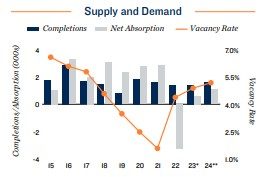
- A cooling development pipeline should support firmer occupancy through 2026
- Rent growth is expected to stay above the national pace as new supply tightens
- Continued absorption of recent Class A deliveries should keep top tier vacancy stable
Virginia Multifamily Loan Programs
As a broker, we compare every large-balance program to find your best fit:
Recent Multifamily Loan Closings
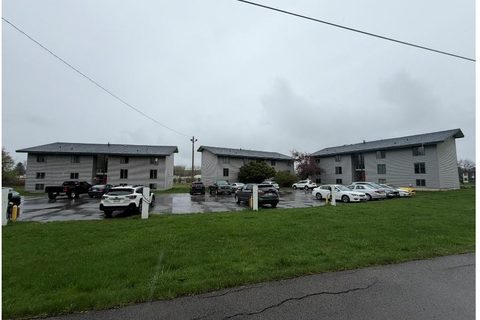
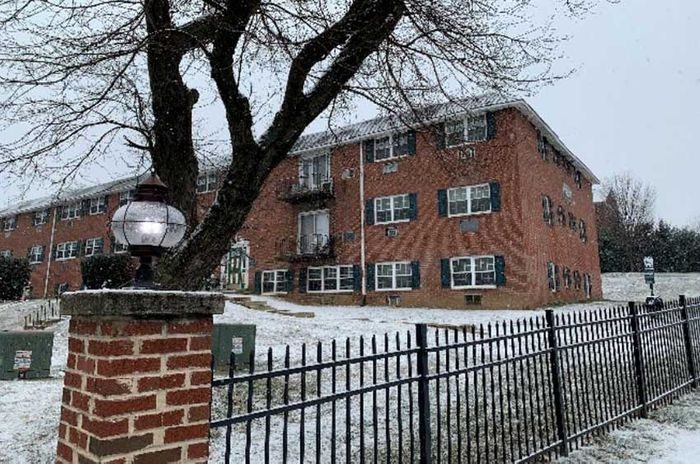
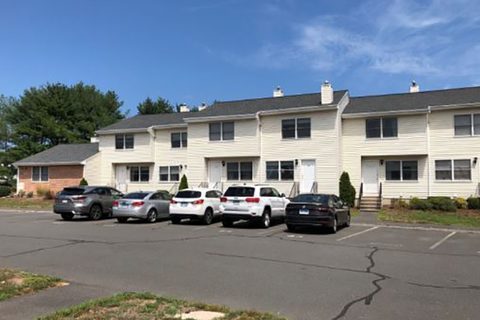
A sample of apartment and multifamily loans we have arranged for investors nationwide.



Other Property & Loan Types We Finance in Virginia
As a full-service commercial mortgage broker, we arrange Virginia financing across every major property and loan type:
We consider commercial loan requests of all sizes, beginning at $1,500,000.
What Our Clients Say
“As a real estate attorney, I trust that Select Commercial will deliver commercial mortgages in a timely manner. My clients are always handled professionally, and the rates and terms are excellent. I heartily recommend them.”
David S. · New York City“I spoke to several commercial lenders before finding Select Commercial. They got me a lower rate and their service was exceptional. If you need a multifamily loan, you need to talk to Stephen.”
Nathan B. · Philadelphia, PA“Select Commercial was very helpful with my multifamily mortgage. Stephen went over several options and we came up with the best lender to meet my needs. I got the funds and also lowered my payments.”
Gary M. · Portland, OR“Select Commercial offered 100% financing for my medical practice when my bank would have required 20% down. They delivered something my bank could not, and handled everything professionally.”
John C. · Boston, MAGet Your Virginia Multifamily Loan Quote
No cost, no obligation. Written answers within 48 hours on Virginia multifamily loans over $6,000,000.
- No application or processing fees
- Written answers within 48 hours
- For 5+ unit and commercial properties, $1.5M and up