
Florida
Florida Apartment Loans
Select Commercial arranges Florida apartment loans from $1,500,000, up to 80% LTV, with no upfront fees. Our lowest apartment rate today is 6.64% as of October 14, 2026. We compare Fannie Mae, Freddie Mac, FHA, bank and bridge programs to fit your property. On bigger loan amounts, see multifamily loans. See current rates on every loan type we offer.
Get a Free Quote2026 Florida Apartment Loan Market
Florida is not one apartment market in 2026. It is two, moving in opposite directions. Miami and Fort Lauderdale held metro vacancy at 6.6% in March 2026, the lowest of any major Southern market and below the national rate of 7.3%, with asking rents still positive at 0.7% over the year. Move up the peninsula and the picture inverts: Tampa ran about 10.3% vacancy with rents down 2.7%, Orlando between 9.5% and 10% with rents off 0.8%, and Jacksonville near 12.2% (Q1 2026 data, published May 2026).
South Florida never took the supply the I-4 corridor did. Miami-Dade absorbed roughly 42,000 units since 2019 and stabilized assets of fifty units and up still show only 4.6% vacancy. Rents rose in 56% of South Florida submarkets over the year, led by Overtown at 13% and by West Palm Beach central and Miami Beach at 10% each, while Brickell and Dania Beach gave back about 4% (March 2026). Miami metro cap rates sat near 5.0%.
The expense line moved in your favor this year. Florida property insurance has been the single biggest drag on apartment net operating income since 2022, and 2026 is the first year it eased. That matters more to your loan amount than a quarter point on the rate does, and it is set out in detail below.
Across Florida we arrange apartment building loans from $1,500,000 through agency, bank, FHA and bridge programs. Rate and leverage follow the rent roll and the trailing twelve months of operating income, not your personal income.
Florida Apartment Loan Rates
Rates updated as of October 14, 2026
| Loan Type | Rate* | Max LTV |
|---|---|---|
| 5 Year Fixed | 6.66% | Up to 80% |
| 7 Year Fixed | 6.75% | Up to 80% |
| 10 Year Fixed | 6.64% | Up to 80% |
- Cash-out refinances are acceptable
- Interest-only and non-recourse options
- Minimum 1.25x debt-service-coverage ratio
See Florida Multifamily Rates Over $6 Million, Starting at 6.44%
Rates last updated October 14, 2026. Rates and maximum LTV shown represent our best-case pricing scenarios. Actual rates, LTV, and loan terms are subject to underwriting approval and may vary.
Florida Metro Markets We Finance
The split between South Florida and the I-4 corridor is the most important thing to understand about financing an apartment building in this state right now. The same borrower, the same loan amount and the same program will produce different leverage in Miami than in Orlando, because the underwriter is looking at two very different vacancy pictures. These are the markets we work in most.
Miami, Fort Lauderdale and the Palm Beaches
The tightest large apartment market in the South. Metro vacancy of 6.6% in March 2026, below the 7.3% national figure, with stabilized Miami-Dade assets of fifty units and up at 4.6% and cap rates near 5.0%. Rents advanced in most South Florida submarkets, though not uniformly: Overtown ran up 13% and Miami Beach 10% while Brickell slipped about 4%. Dense, expensive, condo-adjacent and heavily insurance-driven, this is the part of Florida where agency and life company money competes hardest.
Miami · Fort Lauderdale · Hialeah · Pembroke Pines · Coral Springs · West Palm Beach
Tampa Bay
About 10.3% vacancy on a trailing twelve month basis with asking rents down 2.7% over the year, after more than 7,000 units delivered in twelve months. Concessions are still in circulation, which means effective rent sits under asking rent and an apartment mortgage here gets sized on the lower number. The flip side is that Tampa Bay is where value-add apartment complex financing still pencils, because basis has come back to earth.
Tampa · St. Petersburg · Clearwater
Orlando and Central Florida
Vacancy between 9.5% and 10% in the first quarter of 2026, improved from a peak near 11% in late 2024, with median asking rent between $1,640 and $1,700 and rent growth off 0.8% on the year. The absorption is real and the pipeline is thinning, which is the pattern that usually precedes lenders getting comfortable again. Bank and bridge debt is doing most of the work here until occupancy proves out.
Jacksonville and North Florida
The softest of the major Florida metros at roughly 12.2% vacancy, and the one where the gap between a well-run building and an average one shows up most clearly in the terms. Jacksonville apartment loan rates are competitive for stabilized product with a clean rent roll; anything with occupancy questions is a bank or bridge conversation first.
Southwest Florida and the Treasure Coast
Smaller buildings, local ownership and regional banks that know the collateral. Port St. Lucie posted 3.7% rent growth in March 2026, among the strongest in the state, as households priced out of South Florida moved north. Insurance and wind exposure weigh more heavily on the coast, so the binder tends to drive the sizing more than the rent roll does.
Where we do not yet have a dedicated apartment page for a Florida city, the link goes to our commercial mortgage page for that market, which covers apartment and mixed-use property alongside other commercial types.
Compare Florida Apartment Loan Programs
As a broker we compare every program for your best-fit Florida apartment financing:
| Program | Typical rate* | Max leverage | Best for |
|---|---|---|---|
| Fannie Mae Small Loan | 6.80% | Up to 80% | Non-recourse, fixed to 30 yrs |
| Freddie Mac SBL | 6.66% | Up to 80% | $2M to $10M small balance |
| FHA / HUD | 6.70% | Up to 85% | Highest leverage, longest term |
| Bank / portfolio | 6.50% | Up to 75% | Flexible, value-add |
| Bridge | 9.00% | Up to 80% LTC | Reposition, lease-up |
Most apartment lenders look for a debt-service-coverage ratio (DSCR) of at least 1.25x.
Rates last updated October 14, 2026. Rates and maximum LTV shown represent our best-case pricing scenarios. Actual rates, LTV, and loan terms are subject to underwriting approval and may vary.
What Insurance Costs Mean for Your Florida Apartment Loan
No line item moves a Florida apartment loan further than insurance. Debt service coverage is measured after operating expenses, so a premium that doubles cuts your borrowing capacity even if rents never move. That is precisely what happened to Florida owners between 2022 and 2024, and it is why so many refinances were downsized or declined in those years.
The direction changed in 2026. Florida’s legal reforms brought reinsurers back to the state and a storm-free 2025 season left the market with capital to deploy. Reinsurance renewals at June 1, 2026 came in 15% to 25% below the prior year, after peaking in 2023 at more than double their 2017 trough (June 2026). Cheaper reinsurance works its way down into what property owners pay.
What that does to your loan. Every dollar taken out of the insurance line is a dollar of net operating income, and against a coverage requirement near 1.25x it converts almost directly into loan proceeds. Owners who renewed at a lower premium this year and can document it are seeing sizing the same building would not have supported eighteen months ago.
Do not assume it holds. One major storm can reverse the trend, since a severe event can generate losses several times the premium collected statewide in a year. Lenders know it, which is why they underwrite the bound policy in front of them rather than a projection, and why wind deductible, flood zone, roof age and replacement cost all get examined on a Florida apartment complex. Bring the current binder with the rent roll and you will get a straighter answer, faster.
Financing Options in Florida
Florida apartment, multifamily and commercial properties each have dedicated financing. Pick the page that matches your property:
Financing more of the state? See Florida commercial mortgages.
Financing in another state? Explore our apartment loans, multifamily loans and commercial mortgages nationwide.
Florida City Spotlights: 2026 Apartment Market Notes
Beyond the major metros, we finance apartment buildings across Florida. Current market notes for cities where borrowers ask us to lend:
- St. Petersburg: median 1-bedroom rent about $1,500, down 6.3% year over year (July 2026 rent report), pricing power resetting after the supply wave.
- Cape Coral: median 1-bedroom rent about $1,250, down 2% year over year (Zumper, August 2026), a fast-grown Gulf Coast market.
- West Palm Beach: median 1-bedroom rent about $1,650, flat year over year (Zumper, August 2026), a deep South Florida rental market.
- Hialeah: median 1-bedroom rent about $1,787, up 3% year over year (Zumper, August 2026), one of the densest rental markets in the Miami metro.
National baseline for context: the U.S. median rent was $1,388 in July 2026, down 1.1% year over year, with rental vacancy near 7.2% (national rent report, July 2026). Each city above links to our local commercial mortgage page, and we finance 5+ unit apartment properties in every Florida market from $1,500,000.
Florida Apartment Loan Types We Serve
We arrange financing across Florida for:
- Urban high-rise apartment buildings
- Suburban garden apartment complexes
- Small apartment buildings with 5+ units
- Underlying cooperative apartment loans
- Portfolios of small apartment and rental properties
- Mixed-use and other multifamily property
Refinancing a Florida Apartment Building
A number of Florida refinances that did not work two years ago work now, and the reason is usually the expense line rather than the rate. Buildings that failed coverage in 2023 and 2024 failed because insurance had swallowed the net operating income, not because the rents were bad. If you were declined or downsized then, the file is worth a second look this year.
Start with the current binder and the trailing twelve. An apartment complex refinance in Florida is sized on in-place income after real expenses, so a renewed policy at a lower premium can change your number materially. Send the binder alongside twelve months of operating statements rather than after, because it is often the deciding document.
Then the rent roll. In Tampa, Orlando and Jacksonville, where concessions are still being used, effective rent sits below asking rent and the lender sizes on the lower figure. South Florida has the opposite issue: in-place rents on long-held units can sit well under market, which caps today’s proceeds but is exactly the spread a value-add lender will underwrite on turnover.
Then the note. Confirm the maturity date and whether prepayment is yield maintenance, a step-down or open. Starting six to nine months ahead of a balloon leaves room to shop more than one lender instead of accepting an extension from the incumbent.
Send the rent roll, the trailing twelve and your current insurance binder, and we will underwrite the building the way the lender will, then come back with written options inside 48 hours at no cost. Florida apartment loans start at $1,500,000, whether it is an eight-unit building in Hialeah or a garden complex outside Orlando.
Other Property & Loan Types We Finance in Florida
As a full-service commercial mortgage broker, we arrange Florida financing across every major property and loan type:
We consider commercial loan requests of all sizes, beginning at $1,500,000.
Florida Apartment Complex Financing
Loan size changes the Florida lender set. Smaller Florida balances usually price best with regional banks, credit unions and the agency small-balance programs, where local knowledge of wind exposure and a clean rent roll carry real weight. Larger balances open the field to Fannie Mae, Freddie Mac, FHA, life companies and CMBS, and rates there are frequently tighter because the loan is big enough to securitize, at the cost of a heavier package: full appraisal, property condition report, environmental review, and sizing driven by net operating income, debt service coverage and debt yield.
Florida apartment lenders weigh insurance and submarket more heavily than lenders almost anywhere else. A stabilized Miami building and a lease-up property in Jacksonville underwrite very differently at the same loan amount. Send the rent roll, the trailing twelve and the binder, and we will tell you which lenders are sharpest on your property.
Florida Multifamily Loan Rates
For larger balances, over $6 million
Recent Apartment Loan Closings
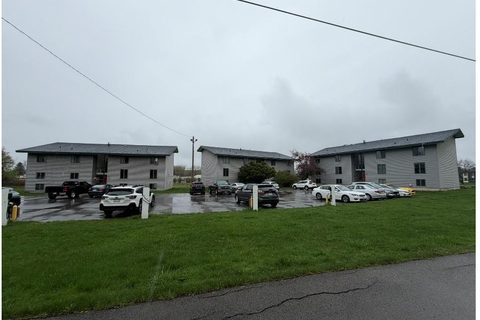
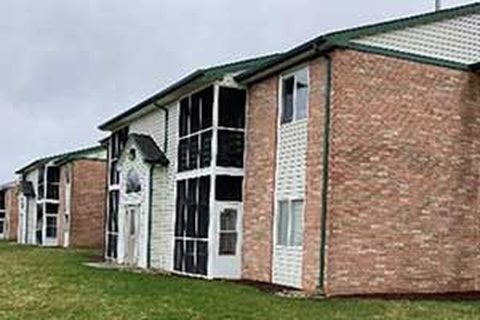
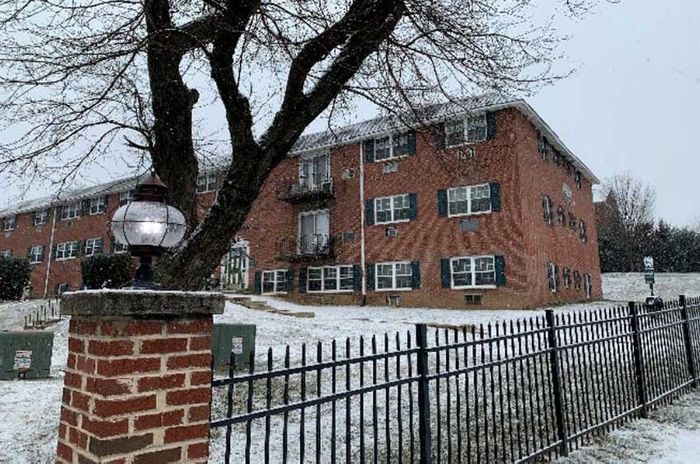
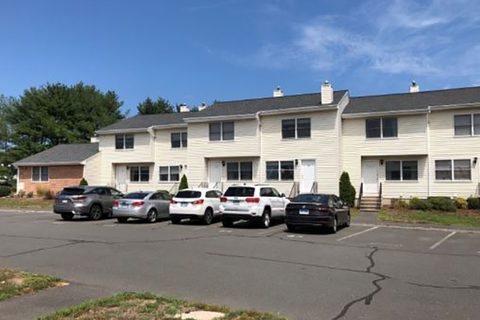
A sample of apartment and multifamily loans we have arranged for investors nationwide.
Apartment Loans Across Florida
We arrange apartment loans in every Florida market, not only the metros above. Secondary cities along both coasts and through the interior are financed with the same agency, bank and credit union programs, and a well-occupied building outside the big four metros often supports more leverage than its owner expects.
For larger balances see our Florida multifamily loans. For office, retail, industrial and owner-occupied property see Florida commercial mortgages, and nationwide we lend in most major U.S. cities.
What Our Clients Say
“I am a veterinarian who purchased an existing practice. I was surprised to find a company that offered 100% financing at a good rate, with great terms and rates for medical office financing.”
Carol K. · Chicago, IL“I spoke to several commercial lenders before finding Select Commercial. They got me a lower rate and their service was exceptional. If you need a multifamily loan, you need to talk to Stephen.”
Nathan B. · Philadelphia, PA“Select Commercial was very helpful with my multifamily mortgage. Stephen went over several options and we came up with the best lender to meet my needs. I got the funds and also lowered my payments.”
Gary M. · Portland, OR“Select Commercial offered 100% financing for my medical practice when my bank would have required 20% down. They delivered something my bank could not, and handled everything professionally.”
John C. · Boston, MAGet Your Florida Apartment Loan Quote
No cost, no obligation. Written answers within 48 hours on Florida apartment loans from $1,500,000.
- No application or processing fees
- Written answers within 48 hours
- For 5+ unit and commercial properties, $1.5M and up