
Mississippi
Mississippi Apartment Loans
Select Commercial arranges Mississippi apartment loans from $1,500,000, up to 80% LTV, with no upfront fees. Our lowest apartment rate today is 6.64% as of October 11, 2026. We compare Fannie Mae, Freddie Mac, FHA, bank and bridge programs to fit your property. For larger balances, see multifamily loans. See current rates on every loan type we offer.
Get a Free Quote2026 Mississippi Apartment Loan Market
The most expensive apartment market in Mississippi is not Jackson, and it is not on the coast. It is a Memphis suburb that happens to sit on the Mississippi side of the state line. That single fact explains a good deal about how apartment lending works here.
Where rents stand. As of August 2026, average asking rent in Southaven was $1,428, up 2.07% over the year. Hattiesburg was $1,266, up 4.07%, the strongest growth of the four. Gulfport was $1,124, up 1.5%. Jackson, the state capital and largest city, was $1,098, up 1.65%, the lowest of the four. Those are RentCafe figures for professionally managed buildings of fifty units and up, measured on the same basis in all four Mississippi markets.
These are low absolute rents, and that is the central underwriting fact about Mississippi. A building here earns a fraction of the gross income a comparable building earns in a coastal state, while roofs, HVAC, insurance, management and turnover cost close to what they cost anywhere else. The expense ratio therefore does more to determine the loan amount in Mississippi than the rent line does. A property that runs efficiently supports meaningfully more debt than a comparable property that does not, and the gap between the two is wider here than in a high rent market where operating leverage hides a multitude of sins.
The upside is basis. Price per unit in Mississippi is among the lowest in the country, going in yields are correspondingly high, and there has been no construction wave to compete against. Nothing on this list of markets is absorbing a supply overhang. What Mississippi asks of a borrower is not optimism about rent growth. It is documentation of steady operations.
What that means for your file. A Mississippi apartment loan is sized on demonstrated in place income at a coverage ratio, with two state specific items that regularly move the number: how the property is classified and assessed for ad valorem tax, and, in the northwest corner of the state, the fact that the market analysis and the legal framework point at two different states. Both are covered below.
Across Mississippi we arrange apartment building loans from $1,500,000 through agency, bank, FHA and bridge programs. Rate and leverage follow the rent roll and the trailing twelve months of operating income.
Mississippi Apartment Loan Rates
Rates updated as of October 11, 2026
| Loan Type | Rate* | Max LTV |
|---|---|---|
| 5 Year Fixed | 6.66% | Up to 80% |
| 7 Year Fixed | 6.75% | Up to 80% |
| 10 Year Fixed | 6.64% | Up to 80% |
- Cash-out refinances are acceptable
- Interest-only and non-recourse options
- Minimum 1.25x debt-service-coverage ratio
See Mississippi Multifamily Rates Over $6 Million, Starting at 6.44%
Rates last updated October 11, 2026. Rates and maximum LTV shown represent our best-case pricing scenarios. Actual rates, LTV, and loan terms are subject to underwriting approval and may vary.
Mississippi Markets We Finance
Mississippi has no metropolitan area of the size that dominates most states, so the apartment business here is spread across four regions that have very little to do with one another economically.
DeSoto County: Southaven, Olive Branch, Horn Lake and Hernando
The most expensive apartment market in the state at about $1,428 as of August 2026, up 2.07% over the year, and the fastest growing part of Mississippi by population for a long time. DeSoto County is functionally the southern suburbs of Memphis, with a renter base that largely works across the state line and a very large distribution and logistics corridor along the interstate. This is the deepest part of Mississippi for institutional and agency capital, and the part where an out of state lender is most likely to already understand the market. It is also the part where the analysis is easiest to get wrong, for reasons set out below.
Jackson and the Metro
The state capital and largest city, at about $1,098 as of August 2026, up 1.65%. State government, a major medical center and the universities anchor demand, and the metro extends well beyond the city limits into Madison, Rankin and Hinds county suburbs, which have taken a substantial share of the metro’s newer apartment product. That split between the city and the suburban ring is important on a Jackson file: two properties in the same metro can face different tenant demand, different insurance pricing and different municipal service questions, and a lender will look closely at exactly where the building sits rather than at a metro average.
Gulfport, Biloxi and the Coast
About $1,124 in Gulfport as of August 2026, up 1.5% over the year. The Gulf Coast runs on gaming, tourism, the port, shipbuilding and the military installations, an economy that is more seasonal and more concentrated than the rest of Mississippi. Two things dominate a coastal file here and neither is the rent roll. Wind and hail coverage is a major operating line, and lenders read the bound policy and the deductible structure rather than a quote, paying particular attention to whether the wind deductible is a flat dollar amount or a percentage of insured value. And flood zone status is a parcel level question rather than a regional one, so the elevation certificate and the flood policy belong in the file with the rent roll. Buildings that have been through post storm rebuilding to current standards should say so in writing, because it is worth real money in both the insurance pricing and the underwriting.
Hattiesburg, Tupelo, Oxford, Starkville and the rest of Mississippi
Hattiesburg posted the strongest growth of the four measured markets at up 4.07% over the year to about $1,266, on a base of two universities, a regional medical presence and a military installation. Tupelo carries manufacturing and a regional retail draw. Oxford and Starkville are university towns where a substantial share of the apartment stock is student oriented, and that distinction matters: by the bed leasing, parental guaranties, an academic leasing calendar and summer vacancy all change how a lender reads a rent roll, and the programs that price student housing well are not always the ones that price conventional apartments well. Say which one you own at the outset. The Delta counties are the thinnest markets in the state for comparable data and are financed almost entirely by community banks.
Rent figures above are average asking rents across professionally managed buildings of fifty units and up as of August 2026. Where we do not yet have a dedicated apartment page for a Mississippi city, the link goes to our commercial mortgage page for that market.
Compare Mississippi Apartment Loan Programs
As a broker we compare every program for your best-fit Mississippi apartment financing:
| Program | Typical rate* | Max leverage | Best for |
|---|---|---|---|
| Fannie Mae Small Loan | 6.84% | Up to 80% | Non-recourse, fixed to 30 yrs |
| Freddie Mac SBL | 6.66% | Up to 80% | $2M to $10M small balance |
| FHA / HUD | 6.70% | Up to 85% | Highest leverage, longest term |
| Bank / portfolio | 6.50% | Up to 75% | Flexible, value-add |
| Bridge | 9.00% | Up to 80% LTC | Reposition, lease-up |
Most apartment lenders look for a debt-service-coverage ratio (DSCR) of at least 1.25x.
Rates last updated October 11, 2026. Rates and maximum LTV shown represent our best-case pricing scenarios. Actual rates, LTV, and loan terms are subject to underwriting approval and may vary.
How Mississippi Taxes an Apartment Building
Mississippi taxes a rental apartment building at half again the ratio it applies to an owner occupied house, and there is no cap in the published guidance on how much an assessment may rise between revaluations. For a state with rents this low, that makes the tax line one of the two or three most important numbers in the file.
The classification. Mississippi assesses ad valorem property by class. Class I is single family owner occupied residential real property, assessed at ten percent of true value. Class II is all other real property, assessed at fifteen percent. An apartment building is not owner occupied single family residential, so it sits in Class II. Class III covers personal property at fifteen percent, Class IV public utility property at thirty percent, and Class V motor vehicles at thirty percent. The arithmetic the county runs is straightforward: true value multiplied by the assessment ratio gives assessed value, and assessed value multiplied by the millage rate gives the tax.
The revaluation cycle is the part to watch. Mississippi tax assessors are required to revalue real property at least once every four years. Between revaluations a property’s taxable value can sit still while market values move, and then catch up in a single step. The Mississippi Department of Revenue’s published property tax guidance sets out the classes, the ratios and the revaluation requirement, and does not describe a cap on the size of an annual increase. That combination is worth understanding before you underwrite: a building bought shortly before a county revaluation can see its largest single expense move materially in the first or second year of ownership.
What to do about it. Ask the county tax assessor two questions before you go under contract. When was this county last revalued, and where does it sit in its cycle. Then ask what the assessor’s current true value on the parcel is, and compare it with your contract price. If the parcel is carried well below what you are paying, and the county is due to revalue, you should be underwriting a higher tax number than the seller’s trailing twelve months shows, not the seller’s number. Take that analysis to your lender with the rent roll.
Why it moves the loan amount so much here. At Mississippi rent levels, a building’s gross income is small relative to its fixed costs, so a given dollar increase in taxes consumes a larger share of net operating income than the same increase would in a high rent market. At a debt service coverage requirement near 1.25x, every dollar of net operating income lost takes several dollars of loan proceeds with it. This is the single most common reason a Mississippi file gets sized lower than the borrower expected, and it is almost always avoidable with two phone calls to the county.
Financing Options in Mississippi
Mississippi apartment, multifamily and commercial properties each have dedicated financing. Pick the page that matches your property:
Financing more of the state? See Mississippi commercial mortgages.
Financing in another state? Explore our apartment loans, multifamily loans and commercial mortgages nationwide.
Southaven Is a Memphis Market Under Mississippi Rules
DeSoto County is the part of Mississippi where the market analysis and the legal framework point at two different states, and files there go wrong in a specific and predictable way. Southaven, Olive Branch, Horn Lake and Hernando sit directly on the Tennessee line. Their renters largely work in the Memphis economy. Their distribution and logistics employment is part of a corridor that does not stop at the border. At about $1,428 as of August 2026, Southaven asks roughly thirty percent more than the state capital, and the reason has nothing to do with Mississippi.
The demand analysis is a Memphis analysis. Employment, household formation, wage growth and competing supply for a Southaven apartment building are Memphis metropolitan questions. An underwriter who evaluates the property against Mississippi statewide data will reach a conclusion that has very little to do with the building, in either direction. Say so in the submission and support it, because the data is readily available and it is genuinely the right frame.
The property is Mississippi in every other respect. It is taxed under the Mississippi classification described above, at the Class II fifteen percent ratio and the local millage, on a Mississippi county’s revaluation cycle. Its landlord and tenant law is Mississippi law. Its insurance market is a Mississippi market. None of that is captured by comparing it to a property across the line.
Where this actually bites is the appraisal. Comparable sales and comparable rents in DeSoto County will frequently cross into Tennessee, because that is where the nearest similar product is. That can be entirely appropriate. What is not appropriate is treating the two sides of the line as interchangeable, because the tax structure differs and the tax line is a real component of net operating income. Ask your appraiser to state plainly which side of the state line each comparable sits on and to address the difference in tax burden explicitly rather than letting it disappear into a general market adjustment. An appraisal that does this is materially more useful to a lender, and lenders notice.
One more DeSoto County item. The distribution and logistics concentration that supports the rental demand is a concentration, and lenders read it the way they read energy exposure in Oklahoma or single employer exposure anywhere else. It has been a strength. It is still one employment sector. Expect a request for a longer operating history than an equally sized file elsewhere in Mississippi would draw, and be ready to show occupancy through more than one good year.
Mississippi Apartment Loan Types We Serve
We arrange financing across Mississippi for:
- Urban high-rise apartment buildings
- Suburban garden apartment complexes
- Small apartment buildings with 5+ units
- Underlying cooperative apartment loans
- Portfolios of small apartment and rental properties
- Mixed-use and other multifamily property
Refinancing a Mississippi Apartment Building
Mississippi refinances are sized on coverage rather than value in almost every case, because basis per unit is low enough that the loan amount runs out of net operating income long before it runs out of loan to value. That puts the whole exercise on the expense line.
The rent roll and the trailing twelve months. Proceeds are set by in place income at a debt service coverage ratio near 1.25x. Send actual figures rather than a budget, and send twelve full months rather than an annualized quarter.
The current tax bill, and where the county sits in its revaluation cycle. If your county has revalued since you bought, the current bill is the number that matters and the lender needs it. If a revaluation is due, say so rather than letting the lender discover it, because a lender that has to find something itself will size conservatively around it.
The bound insurance policy. Not a quote and not last year’s premium. On the coast, the declarations page and the wind deductible structure specifically. Inland, the same document still matters, because insurance pricing across the Southeast has moved enough in recent years that an old figure in a pro forma is no longer a reasonable estimate of the current one.
The property condition report will concentrate on the envelope. Roofs, HVAC and exterior items drive replacement reserves, and reserves come directly off the income a lender will use to size the loan. In this climate, humidity and storm exposure age a building faster than the calendar does. A roof replaced to current standards is one of the more valuable documents a Mississippi owner can put in a file, and it belongs there rather than being left for the walkthrough.
Cash out is available and sized the same way. Agency, bank and life company lenders will all consider cash out on a stabilized Mississippi apartment property. The constraint is the coverage math, not the program. Owners who have held for several years through steady operations frequently have more available than they expect, and the fastest way to find out is to send the rent roll and the trailing twelve months.
Other Property & Loan Types We Finance in Mississippi
As a full-service commercial mortgage broker, we arrange Mississippi financing across every major property and loan type:
We consider commercial loan requests of all sizes, beginning at $1,500,000.
Mississippi Apartment Complex Financing
In Mississippi, loan size decides who competes. Smaller balances usually price best with community and regional banks and the agency small balance programs, where knowing the county, the millage and the building stock counts for a great deal. Larger balances open the field to Fannie Mae, Freddie Mac, FHA, life companies and CMBS, and rates there are frequently tighter because the loan is large enough to securitize. The trade is a heavier package: full appraisal, property condition report, environmental review, and sizing driven by net operating income, debt service coverage and debt yield.
Mississippi apartment lenders settle two questions before most others, and both are expense questions rather than rent questions: what the ad valorem tax will be under your ownership and after the county’s next revaluation, and what property insurance costs at this address. Answer both with documents and the file moves quickly. Send the rent roll and the trailing twelve months and we will tell you which lenders are sharpest on your property.
Mississippi Multifamily Loan Rates
For larger balances, over $6 million
Recent Apartment Loan Closings
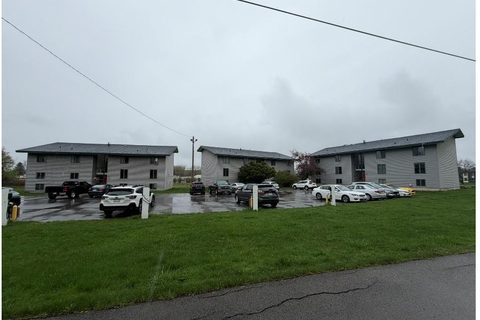
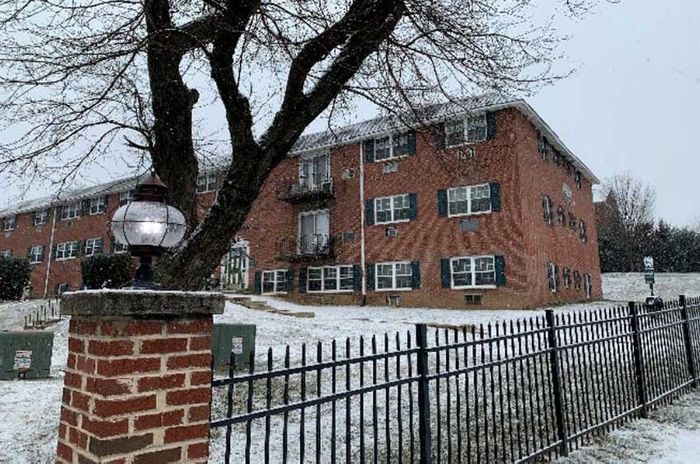
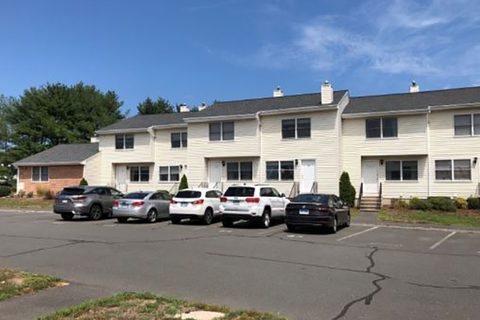
A sample of apartment and multifamily loans we have arranged for investors nationwide.

Apartment Loans Across Mississippi
We arrange apartment loans throughout Mississippi. Southaven, Olive Branch, Horn Lake, Hernando, Jackson, Madison, Ridgeland, Brandon, Gulfport, Biloxi, Ocean Springs, Pascagoula, Hattiesburg, Tupelo, Oxford, Starkville, Meridian and Columbus are all financed through the same agency, bank and FHA programs. What changes from one Mississippi market to the next is the local economy, the county millage and revaluation cycle, the cost of insurance, and how deep the comparable set runs.
For larger balances see our Mississippi multifamily loans. For office, retail, industrial and owner occupied property see Mississippi commercial mortgages, and nationwide we lend in most major U.S. cities.
What Our Clients Say
“I am a veterinarian who purchased an existing practice. I was surprised to find a company that offered 100% financing at a good rate, with great terms and rates for medical office financing.”
Carol K. · Chicago, IL“I spoke to several commercial lenders before finding Select Commercial. They got me a lower rate and their service was exceptional. If you need a multifamily loan, you need to talk to Stephen.”
Nathan B. · Philadelphia, PA“Select Commercial was very helpful with my multifamily mortgage. Stephen went over several options and we came up with the best lender to meet my needs. I got the funds and also lowered my payments.”
Gary M. · Portland, OR“Select Commercial offered 100% financing for my medical practice when my bank would have required 20% down. They delivered something my bank could not, and handled everything professionally.”
John C. · Boston, MAGet Your Mississippi Apartment Loan Quote
No cost, no obligation. Written answers within 48 hours on Mississippi apartment loans from $1,500,000.
- No application or processing fees
- Written answers within 48 hours
- For 5+ unit and commercial properties, $1.5M and up