
South Carolina
South Carolina Apartment Loans
Select Commercial arranges South Carolina apartment loans from $1,500,000, up to 80% LTV, with no upfront fees. Our lowest apartment rate today is 6.55% as of October 22, 2026. We compare Fannie Mae, Freddie Mac, FHA, bank and bridge programs to fit your property. For larger balances, see multifamily loans. See current rates on every loan type we offer.
Get a Free Quote2026 South Carolina Apartment Loan Market
South Carolina’s four largest rental markets are close to reversing themselves. The cheapest of them is growing fastest, the most expensive is growing modestly, the flattest is the one with the strongest job growth story, and the beach market is going backward. There is no single South Carolina rent trend to quote, which is the first thing a lender in South Carolina has to get comfortable with.
Where rents stand. As of August 2026, average asking rent in Charleston was $2,137, up 1.55% over the year. Myrtle Beach was $1,629, down 2.62%. Greenville was $1,595, up 0.22%. Columbia was $1,502, up 2.77%. Those are RentCafe figures for professionally managed buildings of fifty units and up, measured on the same basis in all four South Carolina markets.
Charleston is the outlier and it is worth understanding why. At $2,137, Charleston asks more for an apartment than a good many considerably larger American cities. The port, the manufacturing that has followed it inland, an established tourism economy and a historic peninsula where the supply of anything is constrained by geography and by preservation rules all push in the same direction. Charleston is not priced like a mid-sized southern city because it does not function like one.
Columbia and Greenville are the two growth arguments, and they are different arguments. Columbia carries the South Carolina state government, a very large university and a major military installation, which is about as stable a demand base as a mid-sized market can have, and it is the least expensive of the four. Greenville has been one of the more successful manufacturing and corporate relocation stories in the Southeast, but the apartment supply that followed the story is why its rent line is close to flat this year rather than because demand has softened.
Myrtle Beach is the one to underwrite carefully. A market whose economy is built on visitors carries seasonal operating numbers and a rental base that is thinner outside the season than headline population figures suggest. Down 2.62% over the year is not a crisis, but it does mean a lender will want a longer operating history and will not extend credit to a forward rent assumption.
What that means for your file. South Carolina apartment loans in 2026 are sized on demonstrated in place income, and two state specific items move the number more than most borrowers expect: what the property taxes will be after you own it rather than before, and what wind and hail coverage costs on the coast. Both are covered below, and both are worth settling before you go under contract rather than during due diligence.
Across South Carolina we arrange apartment building loans from $1,500,000 through agency, bank, FHA and bridge programs. Rate and leverage follow the rent roll and the trailing twelve months of operating income.
South Carolina Apartment Loan Rates
Rates updated as of October 22, 2026
| Loan Type | Rate* | Max LTV |
|---|---|---|
| 5 Year Fixed | 6.60% | Up to 80% |
| 7 Year Fixed | 6.63% | Up to 80% |
| 10 Year Fixed | 6.55% | Up to 80% |
- Cash-out refinances are acceptable
- Interest-only and non-recourse options
- Minimum 1.25x debt-service-coverage ratio
See South Carolina Multifamily Rates Over $6 Million, Starting at 6.22%
Rates last updated October 22, 2026. Rates and maximum LTV shown represent our best-case pricing scenarios. Actual rates, LTV, and loan terms are subject to underwriting approval and may vary.
South Carolina Markets We Finance
South Carolina divides cleanly into three regions plus a coastline, and the apartment business in each of them runs on something different. The Lowcountry runs on the port and tourism, the Upstate on manufacturing and corporate relocation, the Midlands on government, education and the military, and the Grand Strand on visitors.
Charleston, North Charleston and the Lowcountry
The most expensive apartment market in South Carolina by a wide margin, at about $2,137 as of August 2026 and up 1.55% over the year. Charleston Harbor and the container terminals anchor a logistics and manufacturing economy that extends well inland along the interstate, and tourism supports a service base on top of it. Two things shape South Carolina apartment financing in this part of the state. On the peninsula and in the older neighborhoods, historic district review governs what can be changed on a building’s exterior, which affects renovation budgets, timelines and the credibility of any value add plan a lender is asked to underwrite. And the whole Lowcountry sits in the coastal insurance market described below, which is often the single largest variable in a Charleston operating statement. North Charleston, Mount Pleasant, Summerville and the Berkeley and Dorchester county suburbs carry most of the conventional garden and mid-rise stock.
Greenville, Spartanburg and the Upstate
About $1,595 in Greenville as of August 2026, up 0.22% over the year. The Upstate corridor along I-85 between Greenville and Spartanburg has drawn automotive, aerospace, tire and advanced manufacturing investment for three decades, and downtown Greenville’s redevelopment is one of the more frequently cited successes of its kind in the Southeast. That success brought apartment construction with it, and the near flat rent line this year is a supply story rather than a demand story, which is a distinction worth making to a lender and worth documenting with occupancy. Basis per unit is well below Charleston and well below the South Carolina coast generally. Anderson, Easley and the smaller Upstate towns are community bank and small balance agency markets, and among the least expensive places to buy an apartment building in South Carolina.
Columbia and the Midlands
The least expensive of the four markets at about $1,502, and the fastest growing at up 2.77% over the year to August 2026. Columbia’s demand base is unusually durable for a South Carolina market its size: state government, one of the largest universities in the region, a large military installation and a healthcare and insurance sector. None of those employment sources moves quickly with the national economy, which is exactly what an underwriter wants to see behind a mid-sized market. As with any market carrying a large university, be clear about whether a building near campus leases conventionally or by the bed, because they are underwritten differently.
Myrtle Beach, Hilton Head and the coast
Myrtle Beach was about $1,629 as of August 2026, down 2.62% over the year, the only one of the four moving backward. Coastal South Carolina markets share a set of characteristics that separate them from inland ones: a seasonal economy, a meaningful share of housing stock that is not conventionally rented at all, thinner comparable data as a result, and wind and hail insurance as a major line item. Hilton Head, Beaufort and Bluffton behave similarly on a smaller base. These files get financed, and regularly, but they are financed on longer operating histories and better documentation than an equivalent Upstate property would need.
Rent figures above are average asking rents across professionally managed buildings of fifty units and up as of August 2026. Where we do not yet have a dedicated apartment page for a South Carolina city, the link goes to our commercial mortgage page for that market.
Compare South Carolina Apartment Loan Programs
As a broker we compare every program for your best-fit South Carolina apartment financing:
| Program | Typical rate* | Max leverage | Best for |
|---|---|---|---|
| Fannie Mae Small Loan | 6.62% | Up to 80% | Non-recourse, fixed to 30 yrs |
| Freddie Mac SBL | 6.60% | Up to 80% | $2M to $10M small balance |
| FHA / HUD | 6.83% | Up to 85% | Highest leverage, longest term |
| Bank / portfolio | 6.50% | Up to 75% | Flexible, value-add |
| Bridge | 9.00% | Up to 80% LTC | Reposition, lease-up |
Most apartment lenders look for a debt-service-coverage ratio (DSCR) of at least 1.25x.
Rates last updated October 22, 2026. Rates and maximum LTV shown represent our best-case pricing scenarios. Actual rates, LTV, and loan terms are subject to underwriting approval and may vary.
The Seller’s Tax Bill Is Not Your Tax Bill
This is the most expensive surprise in South Carolina apartment lending, and out of state buyers walk into it regularly. In most states, buying an apartment building does not by itself reset the property tax assessment. In South Carolina it can, and the difference between the seller’s tax line and yours is often large enough to change how much a lender will lend.
How the system works. South Carolina assesses real property by classification. Owner occupied residences sit in a lower class; apartment and other rental residential property is not owner occupied, so it falls under S.C. Code Ann. Section 12-43-220(e), the 6% ratio that applies to all other real property not otherwise provided for. Between county reassessment cycles, increases in taxable value are subject to a cap under Section 12-43-217. That cap is what keeps a long held South Carolina property’s tax line predictable, and it is also why a seller who has owned a South Carolina building for many years may be paying tax on a value well below what you are about to pay for it.
What a sale does. An assessable transfer of interest, an ATI, triggers a reassessment at fair market value that is not limited by that cap. Section 12-37-3150 sets out a non-exclusive list of the events that count as an ATI, and it is broader than a simple deed transfer, reaching certain transfers of interests in the entity that owns the property. The practical effect is straightforward: the property is revalued off your transaction rather than off the seller’s history, and the tax line in the seller’s trailing twelve months may bear very little relationship to the tax line you will actually pay.
There is a partial exemption, and it has to be claimed. Section 12-37-3135 provides a partial exemption from the ATI fair market value, with a floor tied to the property’s existing taxable value so that it does not reduce the assessment below where it already stood, and it requires notice to the assessor by a deadline in the tax year. Because the exemption is conditional, has a floor, and is lost if the filing is missed, it is not something to assume into your model. Confirm the current rules and the deadline with the county assessor and with your own tax counsel, and do it before you go under contract rather than after.
Why the lender cares as much as you do. A South Carolina underwriter does not size a loan on the seller’s taxes. It sizes on a stabilized expense set that reflects your ownership, which means it will estimate the post transfer tax bill and run debt service coverage against that number. Every dollar of additional annual South Carolina property tax reduces net operating income dollar for dollar, and at a 1.25x coverage requirement a meaningful tax increase can take a real bite out of proceeds. Files where the buyer has already obtained a written estimate from the county and, where appropriate, priced the exemption, get sized correctly the first time. Files that use the seller’s tax line get re-sized late, usually after the appraisal, and that is the worst moment for a number to move.
What to do. Ask the assessor’s office in the South Carolina county where the building sits for an estimate of the assessment following a sale at your contract price. Have your accountant or counsel confirm whether the partial exemption is available to you, what the filing deadline is, and what it would actually save. Then hand that analysis to your lender with the rent roll. It is a short piece of work that regularly protects six figures of loan proceeds on a South Carolina apartment purchase.
Financing Options in South Carolina
South Carolina apartment, multifamily and commercial properties each have dedicated financing. Pick the page that matches your property:
Financing more of the state? See South Carolina commercial mortgages.
Financing in another state? Explore our apartment loans, multifamily loans and commercial mortgages nationwide.
Wind, Hail and the Coastal Insurance Question
On the South Carolina coast, insurance is not a routine line item to be estimated from a national average. It is frequently the largest single controllable expense in a coastal South Carolina operating statement, and it is the second thing that moves a South Carolina Lowcountry or Grand Strand loan amount.
The residual market exists for a reason. S.C. Code Ann. Section 38-75-330 created the South Carolina Wind and Hail Underwriting Association, an association of insurers whose purpose is to provide wind and hail insurance for residential and commercial property to applicants who cannot obtain it in the coastal area. Membership is a condition of an insurer’s authority to write property insurance in the state. The existence of a statutory residual mechanism tells you what the private market for wind coverage on the South Carolina coast is like. The coastal area itself is defined by statute rather than by intuition, so whether a specific parcel falls inside it is a question to put to your insurance broker with the address in hand, not one to answer from a map in your head.
What an underwriter actually reads. Not a quote and not an estimate. The bound policy, the declarations page, and specifically the deductible structure. A named storm or wind and hail deductible expressed as a percentage of insured value behaves very differently from a flat dollar deductible, and on a coastal apartment building the percentage version can represent a large potential out of pocket exposure that the lender will want to see the borrower can carry. Whether wind is included in the main property policy or carried separately, and whether flood is in place where it is required, are the next questions.
Roof age and construction detail carry weight. As on any coastal South Carolina file, documented roof age and condition, opening protection, and any wind mitigation work done to the building are among the most useful documents a South Carolina owner can produce, both for the insurance pricing itself and for the lender reading it.
Budget it honestly. The most common way a coastal South Carolina file gets into trouble is an insurance figure carried at last year’s number, or at the seller’s number under a policy you will not inherit, into an underwriting model. Get a real quote against your intended structure early. Together with the tax question above, insurance is one of the two expense lines in South Carolina that a buyer should treat as a diligence item rather than a formality.
South Carolina Apartment Loan Types We Serve
We arrange financing across South Carolina for:
- Urban high-rise apartment buildings
- Suburban garden apartment complexes
- Small apartment buildings with 5+ units
- Underlying cooperative apartment loans
- Portfolios of small apartment and rental properties
- Mixed-use and other multifamily property
Refinancing a South Carolina Apartment Building
Refinances are usually the easier half of the South Carolina business, because the two items that complicate purchases are already settled. You are not going to trigger a reassessment by refinancing, and your insurance is already bound and priced. What is left is the ordinary South Carolina work of proving income.
The rent roll and the trailing twelve months. Proceeds are sized on in place income at a debt service coverage ratio near 1.25x. Outside Charleston, basis per unit in South Carolina is low enough that sizing is usually coverage driven rather than value driven, which means the expense line does most of the work in setting the loan amount.
The current tax bill and the current insurance policy. Send both, and send the actual documents rather than the budgeted figures. If you bought within the last few years and the assessment reset after your purchase, the lender needs the post reset bill. If you carry a percentage deductible on wind, say so rather than letting it surface in the insurance review.
Deferred maintenance and the roof. The property condition report drives replacement reserves, and reserves come straight off the income a lender will use. In the South Carolina climate, roofs, HVAC and exterior envelope items are where the report tends to concentrate. A roof replaced to current standards is worth documenting in the file rather than leaving to be discovered on the walk.
Cash out is available and it is sized the same way. Agency, bank and life company lenders will all consider cash out on a stabilized South Carolina apartment property. The constraint is the same coverage and leverage math, not a different program. Owners who have held South Carolina apartment property through the last several years frequently have more equity available than they expect, and the fastest way to find out is to send us the rent roll and the trailing twelve months on the South Carolina property.
Other Property & Loan Types We Finance in South Carolina
As a full-service commercial mortgage broker, we arrange South Carolina financing across every major property and loan type:
We consider commercial loan requests of all sizes, beginning at $1,500,000.
South Carolina Apartment Complex Financing
In South Carolina, loan size decides who competes. Smaller balances usually price best with regional banks and the agency small balance programs, where familiarity with the submarket and with the local tax and insurance picture counts for a great deal. Larger balances open the field to Fannie Mae, Freddie Mac, FHA, life companies and CMBS, and rates there are frequently tighter because the loan is large enough to securitize, at the cost of a heavier package: full appraisal, property condition report, environmental review, and sizing driven by net operating income, debt service coverage and debt yield.
South Carolina apartment lenders settle two questions before most others, and both are expense questions rather than rent questions: what the property taxes will be under your ownership, and what wind and hail coverage costs at this address. Answer both with documents and the file moves. Send the rent roll and the trailing twelve months and we will tell you which lenders are sharpest on your property.
South Carolina Multifamily Loan Rates
For larger balances, over $6 million
Recent Apartment Loan Closings
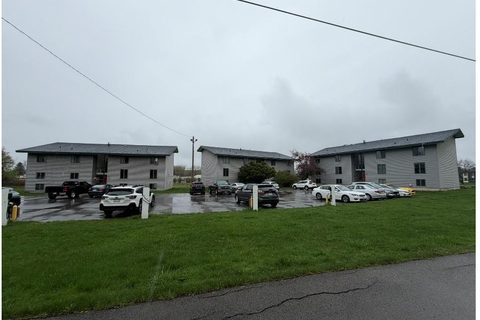
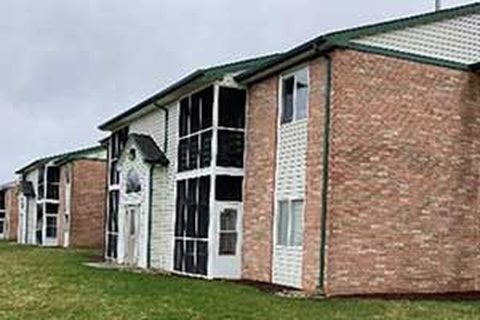
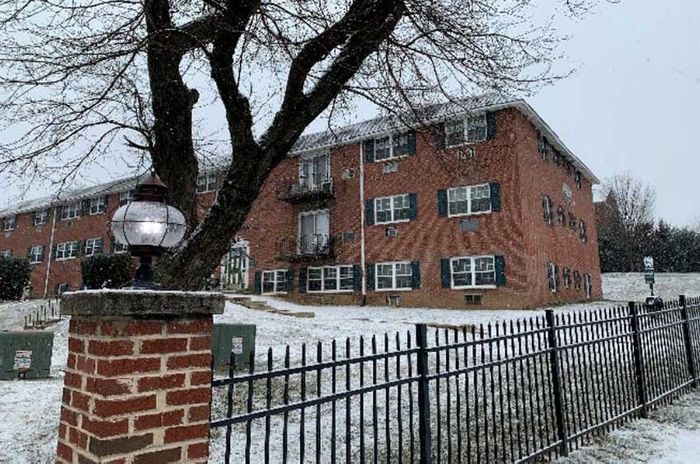
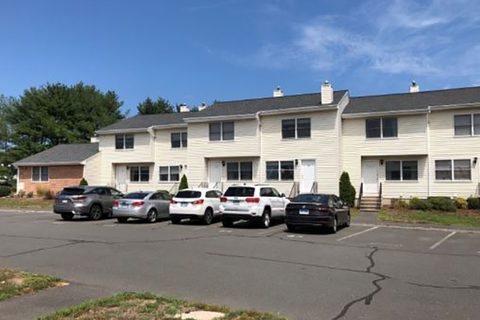
A sample of apartment and multifamily loans we have arranged for investors nationwide.
Apartment Loans Across South Carolina
We arrange apartment loans throughout South Carolina. Charleston, North Charleston, Mount Pleasant, Summerville, Greenville, Spartanburg, Anderson, Columbia, Rock Hill, Florence, Myrtle Beach, Hilton Head and Beaufort are all financed through the same agency, bank and FHA programs, and the differences between them are the ones described above: the tax reset on purchase, the cost of coastal insurance, and how deep the local comparable data runs.
For larger balances see our South Carolina multifamily loans. For office, retail, industrial and owner occupied property see South Carolina commercial mortgages, and nationwide we lend in most major U.S. cities.
What Our Clients Say
“I am a veterinarian who purchased an existing practice. I was surprised to find a company that offered 100% financing at a good rate, with great terms and rates for medical office financing.”
Carol K. · Chicago, IL“I spoke to several commercial lenders before finding Select Commercial. They got me a lower rate and their service was exceptional. If you need a multifamily loan, you need to talk to Stephen.”
Nathan B. · Philadelphia, PA“Select Commercial was very helpful with my multifamily mortgage. Stephen went over several options and we came up with the best lender to meet my needs. I got the funds and also lowered my payments.”
Gary M. · Portland, OR“Select Commercial offered 100% financing for my medical practice when my bank would have required 20% down. They delivered something my bank could not, and handled everything professionally.”
John C. · Boston, MAGet Your South Carolina Apartment Loan Quote
No cost, no obligation. Written answers within 48 hours on South Carolina apartment loans from $1,500,000.
- No application or processing fees
- Written answers within 48 hours
- For 5+ unit and commercial properties, $1.5M and up