
Minnesota · Over $6 Million
Minnesota Multifamily Loans
Select Commercial arranges Minnesota multifamily loans, with rates as low as 6.22%, up to 80% LTV and non-recourse agency options. We compare Fannie Mae, Freddie Mac, FHA/HUD and CMBS. For loans under $6 million, see Minnesota apartment loans. See current rates on every loan type we offer.
Get a Free QuoteFinancing Options in Minnesota
Minnesota apartment, multifamily and commercial properties each have dedicated financing. Pick the page that matches your property:
Financing more of the state? See Minnesota apartment loans and Minnesota commercial mortgages.
Financing in another state? Explore our apartment loans, multifamily loans and commercial mortgages nationwide.
Minnesota Multifamily Loan Rates
Rates updated as of October 19, 2026
| Loan Type | Rate* | Max LTV |
|---|---|---|
| 5 Year Fixed | 6.22% | Up to 80% |
| 7 Year Fixed | 6.26% | Up to 80% |
| 10 Year Fixed | 6.35% | Up to 80% |
- Streamlined underwriting for institutional multifamily
- Cash-out refinances are acceptable
- Interest-only and non-recourse options
- Minimum 1.25x debt-service-coverage ratio
Minnesota Apartment Loans
For smaller apartment building loans, under $6 million
Rates last updated October 19, 2026. Rates and maximum LTV shown represent our best-case pricing scenarios. Actual rates, LTV, and loan terms are subject to underwriting approval and may vary.
Minnesota Apartment Building Loans
Not every Minnesota apartment property is over $6 million, and we finance smaller buildings too. For 5+ unit Minnesota apartment properties from $1,500,000 to $6 million, see our Minnesota apartment loans page for Fannie Mae Small Loan, Freddie Mac SBL, bank and credit union options.
Compare Minnesota Large-Balance Programs
As a broker we place your large-balance Minnesota multifamily loan with the right capital source. Typical starting points for properties over $6 million:
| Program | Typical rate* | Max leverage | Best for |
|---|---|---|---|
| Fannie Mae DUS | 6.22% | Up to 80% | Non-recourse, fixed to 30 yrs |
| Freddie Mac | 6.26% | Up to 80% | Non-recourse large-balance |
| FHA / HUD | 6.83% | Up to 85% | Highest leverage, 35-yr amortization |
| CMBS / conduit | 7.00% | Up to 75% | Non-recourse, flexible underwriting |
Most large-balance lenders look for a debt-service-coverage ratio (DSCR) of at least 1.25x. For properties under $6 million, see our Minnesota apartment loans.
Rates last updated October 19, 2026. Rates and maximum LTV shown represent our best-case pricing scenarios. Actual rates, LTV, and loan terms are subject to underwriting approval and may vary.
2026 Minnesota Multifamily Investment and Lending Outlook
The Twin Cities are posting the kind of operating numbers that were hard to find anywhere in 2024 and 2025.
Northmarq reported Minneapolis and St. Paul annual rent growth of 3.5% in the second quarter of 2026, the sixth consecutive quarter of growth, with whole-market vacancy near 4.6% and stabilized Class A cap rates in the high-4% to mid-5% range. Transaction count in the first half of 2026 ran about 14% below the five-year average, and Class B product has accounted for roughly half of deal flow over that period.
MMG Real Estate Advisors measured net absorption of 5,372 units over twelve months against 4,240 completions, with 6,117 units under construction, equal to 2.1% of inventory, and 34 of 37 submarkets posting positive absorption. Absorption outrunning deliveries, in a pipeline that small, is why rent is moving.
Published rent and vacancy figures for this market vary by vendor. The same quarter shows rent growth of 3.5% from one publisher and 2.7% from another, and vacancy readings 70 basis points apart, because the universes and the asking-versus-effective conventions differ. We cite one source per figure rather than blending them, and so should your underwriter.
What is not in dispute is the direction. Minnesota is one of the few markets in the country where an underwriter can defend a forward rent assumption from six quarters of actual results rather than from a forecast, and that shows up in proceeds.
Minnesota’s 4d Classification Cuts the Tax Rate by 80%, and the Deadline Is March 31
Minnesota offers the largest property tax reduction available to an apartment owner anywhere in this part of the country, and it is gated by a single annual filing date that is easy to miss.
The mechanism. Under Minn. Stat. § 273.13, subdivision 25, an apartment property of four or more units is class 4a, with a classification rate of 1.25%. Certified class 4d(1) low-income rental property carries a classification rate of 0.25%, per the Department of Revenue’s classification rates for taxes payable in 2026. That is an 80% reduction in net tax capacity, and 4d(1) property is included in referendum market value at only 25%.
One thing to understand clearly before you model it. The valuation itself is not discounted. Subdivision 25 requires that the assessor’s market value be based on the normal approach to value using normal unrestricted rents. Only the class rate moves. And only qualifying units get 4d(1); the rest are classified by actual use, with land allocated by the proportionate unit ratio. So the model has to split the rent roll rather than apply one rate to the whole parcel.
Qualification, under Minn. Stat. § 273.128. At least 20% of units must be restricted through Section 8, low-income housing tax credits, USDA Rural Housing Service financing, or a recorded federal, state or local rent-and-income restriction. Restricted-unit household income at initial occupancy must be at or below 60% of the greater of area or state median income, with rents at or below 30% of 60% of that figure. The tax savings are earmarked by statute for property maintenance, security, improvements, rent stabilization or the replacement reserve account.
The calendar is the part that costs people money. Application goes to the Minnesota Housing Finance Agency by March 31 of the levy year, with a fee capped at $10 per unit, and the agency certifies to county assessors by June 1. A property that was not previously 4d(1) also needs approval by resolution of the city or town governing body before applying, unless 4d(1) property already exceeds 2% of that municipality’s tax capacity. The 2025 amendments apply beginning with assessment year 2026.
Four things follow for a loan.
A closing after March 31 cannot capture 4d(1) for that levy year. That is a one-year lag in the benefit, and it has to be modeled rather than assumed away. On a deal where the sizing depends on the reduced tax line, the application date should be driving the closing schedule.
Two approvals are outside your control. A city council resolution and an agency certification both have to land. A lender will not size to a benefit that has not been certified, so the honest sequence is to underwrite without 4d(1), show the deal works, and treat certification as upside.
The statutory earmark can collide with your loan documents. Section 273.128 directs the tax savings to specified uses. A standard cash management waterfall and distribution test may not accommodate that. Reconcile the documents to the statute, or the borrower ends up in breach of one or the other.
Losing certification is a five-fold increase in class rate, from 0.25% back to 1.25%. Verify the remaining term of the recorded restriction against the loan term before you capitalize the benefit.
One more Minnesota cost to budget for, unrelated to classification. Minn. Stat. § 287.035 imposes a mortgage registry tax of .0023 of the debt secured, with no cap, which is $13,800 on a $6,000,000 mortgage and $57,500 on a $25,000,000 one. The deed tax under § 287.21 runs .0033 of net consideration, also uncapped, and Hennepin County adds .0001 to each. Note that under § 287.05 a revolving line of credit is taxed on the maximum credit line, not on the drawn balance, which makes an undrawn facility an expensive structure in this state.
2026 Minnesota Multifamily Metro Snapshots
A look at the Minnesota metros we most actively finance, with 2026 market indicators and the local supply and demand picture:
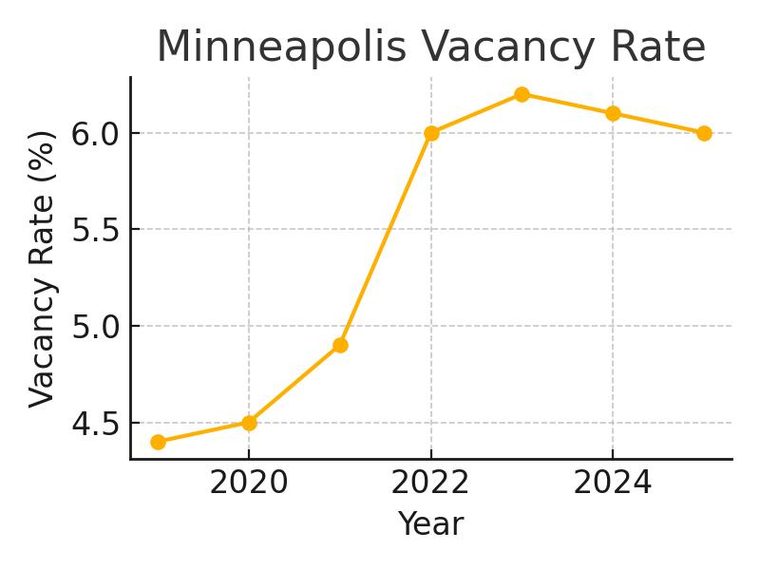
- Employment: A modest job decline is projected in 2026, while total employment remains above 2 million.
- Construction: Completions are expected to edge lower, keeping inventory growth near 0.9%, with deliveries weighted toward the second half of the year.
- Vacancy: Availability is forecast around 3.9%, below the prior 10-year average.
Minnesota Multifamily Loan Programs
As a broker, we compare every large-balance program to find your best fit:
Recent Multifamily Loan Closings
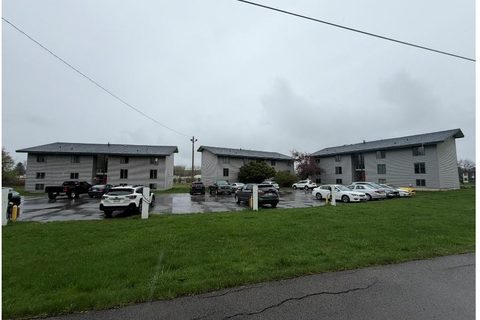
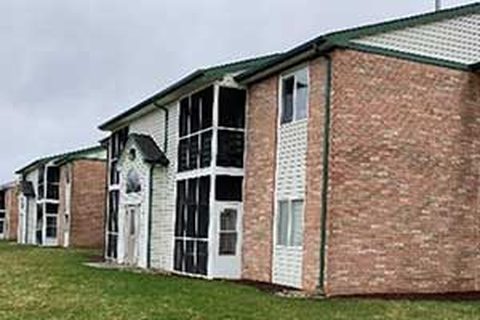
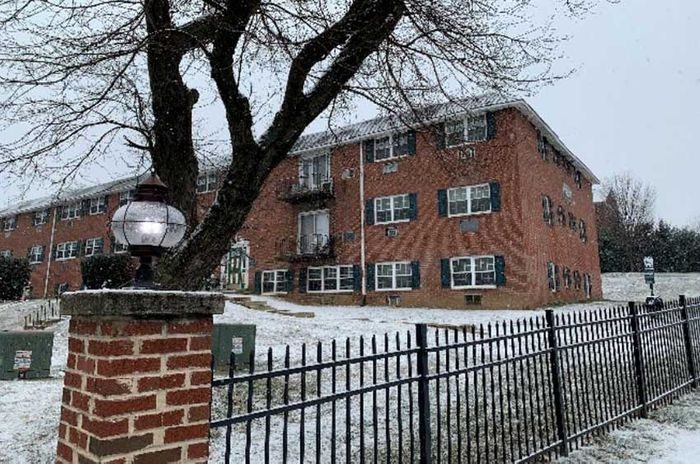
A sample of apartment and multifamily loans we have arranged for investors nationwide.
Other Property & Loan Types We Finance in Minnesota
As a full-service commercial mortgage broker, we arrange Minnesota financing across every major property and loan type:
We consider commercial loan requests of all sizes, beginning at $1,500,000.
What Our Clients Say
“As a real estate attorney, I trust that Select Commercial will deliver commercial mortgages in a timely manner. My clients are always handled professionally, and the rates and terms are excellent. I heartily recommend them.”
David S. · New York City“I spoke to several commercial lenders before finding Select Commercial. They got me a lower rate and their service was exceptional. If you need a multifamily loan, you need to talk to Stephen.”
Nathan B. · Philadelphia, PA“Select Commercial was very helpful with my multifamily mortgage. Stephen went over several options and we came up with the best lender to meet my needs. I got the funds and also lowered my payments.”
Gary M. · Portland, OR“Select Commercial offered 100% financing for my medical practice when my bank would have required 20% down. They delivered something my bank could not, and handled everything professionally.”
John C. · Boston, MAGet Your Minnesota Multifamily Loan Quote
No cost, no obligation. Written answers within 48 hours on Minnesota multifamily loans over $6,000,000.
- No application or processing fees
- Written answers within 48 hours
- For 5+ unit and commercial properties, $1.5M and up