
Nebraska · Over $6 Million
Nebraska Multifamily Loans
Select Commercial arranges Nebraska multifamily loans, with rates as low as 6.22%, up to 80% LTV and non-recourse agency options. We compare Fannie Mae, Freddie Mac, FHA/HUD and CMBS. For loans under $6 million, see Nebraska apartment loans. See current rates on every loan type we offer.
Get a Free QuoteFinancing Options in Nebraska
Nebraska apartment, multifamily and commercial properties each have dedicated financing. Pick the page that matches your property:
Financing more of the state? See Nebraska apartment loans and Nebraska commercial mortgages.
Financing in another state? Explore our apartment loans, multifamily loans and commercial mortgages nationwide.
Nebraska Multifamily Loan Rates
Rates updated as of October 21, 2026
| Loan Type | Rate* | Max LTV |
|---|---|---|
| 5 Year Fixed | 6.22% | Up to 80% |
| 7 Year Fixed | 6.26% | Up to 80% |
| 10 Year Fixed | 6.35% | Up to 80% |
- Streamlined underwriting for institutional multifamily
- Cash-out refinances are acceptable
- Interest-only and non-recourse options
- Minimum 1.25x debt-service-coverage ratio
Nebraska Apartment Loans
For smaller apartment building loans, under $6 million
Rates last updated October 21, 2026. Rates and maximum LTV shown represent our best-case pricing scenarios. Actual rates, LTV, and loan terms are subject to underwriting approval and may vary.
Nebraska Apartment Building Loans
Not every Nebraska apartment property is over $6 million, and we finance smaller buildings too. For 5+ unit Nebraska apartment properties from $1,500,000 to $6 million, see our Nebraska apartment loans page for Fannie Mae Small Loan, Freddie Mac SBL, bank and credit union options.
Compare Nebraska Large-Balance Programs
As a broker we place your large-balance Nebraska multifamily loan with the right capital source. Typical starting points for properties over $6 million:
| Program | Typical rate* | Max leverage | Best for |
|---|---|---|---|
| Fannie Mae DUS | 6.22% | Up to 80% | Non-recourse, fixed to 30 yrs |
| Freddie Mac | 6.26% | Up to 80% | Non-recourse large-balance |
| FHA / HUD | 6.83% | Up to 85% | Highest leverage, 35-yr amortization |
| CMBS / conduit | 7.00% | Up to 75% | Non-recourse, flexible underwriting |
Most large-balance lenders look for a debt-service-coverage ratio (DSCR) of at least 1.25x. For properties under $6 million, see our Nebraska apartment loans.
Rates last updated October 21, 2026. Rates and maximum LTV shown represent our best-case pricing scenarios. Actual rates, LTV, and loan terms are subject to underwriting approval and may vary.
2026 Nebraska Multifamily Investment and Lending Outlook
Omaha delivered nearly twice as many units as it absorbed over the past year, and occupancy moved accordingly.
MMG Real Estate Advisors measured Omaha average rent at $1,275 in the second quarter of 2026, up 0.4% annually, with occupancy near 93.6%, down 105 basis points over twelve months. Net absorption ran 2,057 units across four quarters against 3,930 completions. That roughly 1,870-unit gap is the whole explanation for the occupancy decline, and the numbers are internally consistent, which is more than can be said for a lot of market data.
The forward picture is better. Construction starts ran at roughly half the prior year’s pace, and absorption accelerated sharply in the second quarter, roughly tripling from the prior quarter. A market absorbing at an accelerating rate while starts fall by half is a market that works through its surplus, and the question for an underwriter is only how long it takes.
Be aware of a real limitation when you finance here. Nebraska has thin institutional research coverage. The major national publishers that cover Denver, Kansas City and Minneapolis do not publish Omaha or Lincoln multifamily reports, and there is no reliable published cap rate, price per unit or transaction volume figure for either market. Nebraska’s largest banks are privately held and file no public reports, so even lender-side benchmarks are harder to come by.
The practical consequence is that a Nebraska appraisal leans on property-level data and on the appraiser’s own confidential sales file rather than on published market statistics. Bring a complete rent roll, three years of operating statements and a documented occupancy history, because in this state they carry more weight than anywhere else.
Why a Nebraska Operating Statement Shows a Tax Drop That Is Not Real
Here is a Nebraska trap that will cost a borrower proceeds, and it looks exactly like good news on the page.
Pull a 24-month operating statement on a Nebraska apartment property and you will very likely see property tax expense step down between 2023 and 2024. It is not an operating improvement, it is not better management, and it must not be trended forward. It is a change in how Nebraska delivers property tax relief.
For tax years 2020 through 2023, relief under the Nebraska Property Tax Incentive Act, Neb. Rev. Stat. § 77-6703, was a refundable credit against income tax claimed on the owner’s return. It never touched the property’s expense line. Beginning with tax year 2024, the School District Property Tax Relief Act delivers relief as credits that appear on the property tax statement itself, under § 77-7305, automatically and with no claim required.
So the same economic benefit moved from the owner’s tax return to the property’s expense line. Two consequences follow, and they point in opposite directions. A 2023 property tax figure overstates the true burden on the ownership, because the benefit was being collected at the return level, by the members in a pass-through structure rather than by the property. And the 2024-forward figure is not a durable new baseline either, for the reasons below.
The credit is not a fixed abatement and cannot be escrowed like one. Each parcel’s credit is a pro rata share of a county pot, computed by the county treasurer as the ratio of school district taxes levied on the parcel to those levied on all real property in the county. It floats every year with both the legislative appropriation and the parcel’s share of the county levy base. It is not a percentage, not capped, and not contractual.
It is appropriation-dependent. The statutory minimums run $750 million for 2024, $780 million for 2025 and $808 million for 2026, with later years at the prior year plus 3%, funded by General Fund transfer. The act has been amended in three consecutive legislative sessions. Underwrite the gross school district levy and treat the credit as a sensitivity rather than a base case.
Nebraska gives apartments no classification relief. Under § 77-201 all real property is valued at actual value, with no residential subclass and no commercial subclass. A Nebraska apartment gets none of the protection a Minnesota 4d parcel or a Missouri or Kansas residential-subclass parcel gets. Full market value is the base, reset annually.
And there is a hard June 30 gate. Under § 77-1502 a valuation protest must be signed and filed on or before June 30. County board review ends on or before July 25, extendable to August 10 by resolution in counties over 100,000 population, which captures both Douglas and Lancaster. The deadline is absolute. A deal closing in July leaves the buyer with no way to protest the valuation that will drive the first full year of escrowed taxes. Close before late June, or price the unprotested assessment into the model.
Two further Nebraska items for the closing file. The documentary stamp tax under § 76-901 is $3.32 per $1,000 of value, or 0.332%, uncapped, and it steps down to $2.32 per $1,000 for deeds recorded on or after January 1, 2032. Taxable value expressly includes the amount of any lien assumed, so a loan assumption does not reduce the base. On a $25,000,000 sale that is $83,000 today against $58,000 after the step-down, which is a real reason to think about timing on a long-hold asset.
Finally, Nebraska tax increment financing is a diversion, not an abatement. Under § 18-2147 the property stays on the tax rolls for up to fifteen years, or twenty where an extremely blighted area covers more than half the project; the base portion flows to the taxing bodies and the increment funds redevelopment. The apartment pays its full tax bill. Underwrite the full unabated tax line in net operating income and treat the increment as a separate subordinate revenue stream that ordinarily cannot count toward coverage on the mortgage.
Nebraska Multifamily Loan Programs
As a broker, we compare every large-balance program to find your best fit:
Recent Multifamily Loan Closings
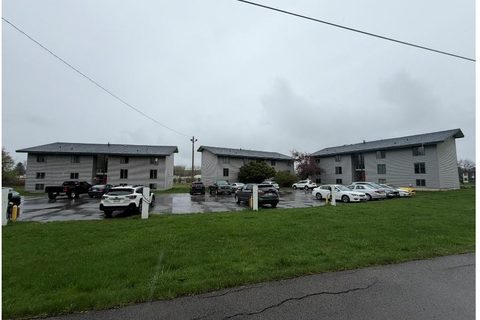
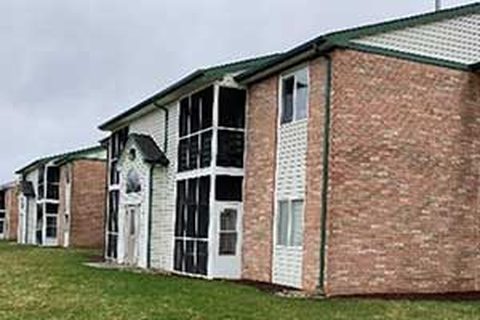
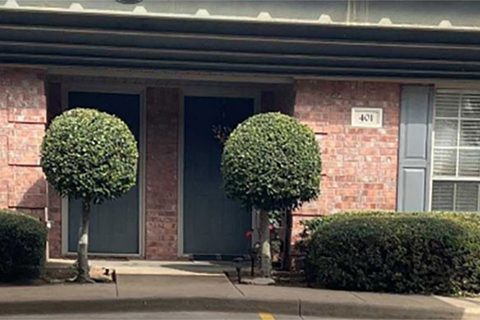
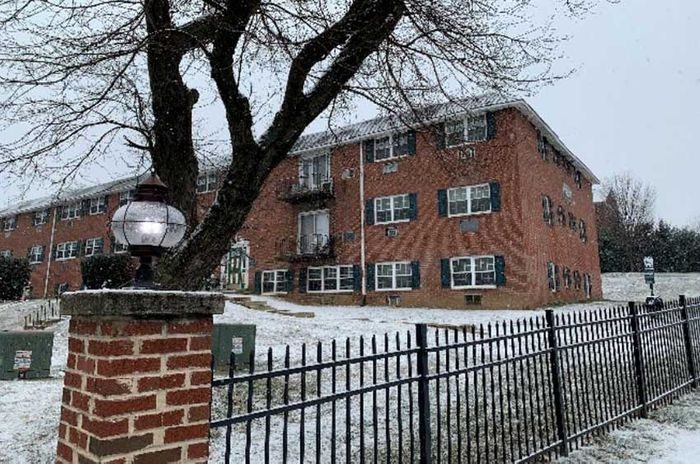
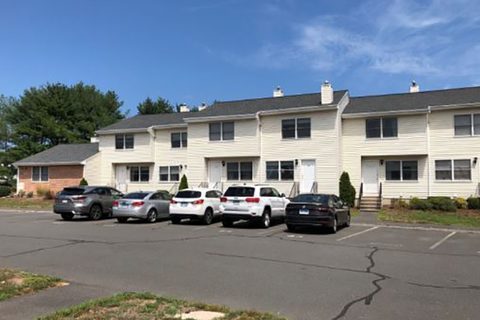
A sample of apartment and multifamily loans we have arranged for investors nationwide.
Nebraska Multifamily Markets We Serve
We arrange large-balance multifamily loans throughout Nebraska, including:
Other Property & Loan Types We Finance in Nebraska
As a full-service commercial mortgage broker, we arrange Nebraska financing across every major property and loan type:
We consider commercial loan requests of all sizes, beginning at $1,500,000.
What Our Clients Say
“As a real estate attorney, I trust that Select Commercial will deliver commercial mortgages in a timely manner. My clients are always handled professionally, and the rates and terms are excellent. I heartily recommend them.”
David S. · New York City“I spoke to several commercial lenders before finding Select Commercial. They got me a lower rate and their service was exceptional. If you need a multifamily loan, you need to talk to Stephen.”
Nathan B. · Philadelphia, PA“Select Commercial was very helpful with my multifamily mortgage. Stephen went over several options and we came up with the best lender to meet my needs. I got the funds and also lowered my payments.”
Gary M. · Portland, OR“Select Commercial offered 100% financing for my medical practice when my bank would have required 20% down. They delivered something my bank could not, and handled everything professionally.”
John C. · Boston, MAGet Your Nebraska Multifamily Loan Quote
No cost, no obligation. Written answers within 48 hours on Nebraska multifamily loans over $6,000,000.
- No application or processing fees
- Written answers within 48 hours
- For 5+ unit and commercial properties, $1.5M and up