
Nebraska
Nebraska Apartment Loans
Select Commercial arranges Nebraska apartment loans from $1,500,000, up to 80% LTV, with no upfront fees. Our lowest apartment rate today is 6.55% as of October 21, 2026. We compare Fannie Mae, Freddie Mac, FHA, bank and bridge programs to fit your property. For larger balances, see multifamily loans. See current rates on every loan type we offer.
Get a Free Quote2026 Nebraska Apartment Loan Market
Most states give an apartment buyer a geographic decision to make. Nebraska does not. The state’s three measured rental markets sit within about a hundred dollars of one another and are all moving in the same direction, which means the difference between a good Nebraska deal and a poor one is almost entirely inside the operating statement rather than on the map.
Where rents stand. As of August 2026, average asking rent in Bellevue was $1,442, up 1.21% over the year. Lincoln was $1,363, up 2.37%. Omaha, the largest city in Nebraska, was $1,338, up 2.51%. Those are RentCafe figures for professionally managed buildings of fifty units and up, measured on the same basis in all three markets. A hundred and four dollars separates the top from the bottom.
The renter base is tightly clustered too. Fifty one percent of Omaha rentals fall between $1,001 and $1,500 a month, and the bedroom spread as of August 2026 ran about $1,045 for a studio, $1,169 for a one bedroom, $1,519 for two bedrooms and $1,812 for three. The distance between a studio and a one bedroom is roughly a hundred and twenty dollars. That compression is worth understanding before you underwrite a renovation plan, because there is not a great deal of room above the market to move into. Nebraska value add arguments are made on occupancy, turnover cost and expense control, and lenders here are receptive to those arguments precisely because they are the ones that hold up.
Nothing here is absorbing a supply wave. Nebraska did not take the construction surge that Sun Belt and mountain west markets did, so a Nebraska apartment building is not competing against a lease-up down the street offering two months free. Rent growth of two and a half percent in a market with no supply overhang is a different thing from two and a half percent in a market recovering off a soft base, and it is worth making that distinction in a submission rather than assuming an out of state underwriter will make it for you.
What that means for your file. Nebraska apartment loans are sized on demonstrated in place income at a coverage ratio, and two state specific items shape the expense side more than most borrowers expect. Nebraska is the only state in the country served entirely by consumer owned electric utilities, which changes how the utility line behaves. And Nebraska assesses real property at or near full actual value and revises those assessments every year. Both are covered below.
Across Nebraska we arrange apartment building loans from $1,500,000 through agency, bank, FHA and bridge programs. Rate and leverage follow the rent roll and the trailing twelve months of operating income.
Nebraska Apartment Loan Rates
Rates updated as of October 21, 2026
| Loan Type | Rate* | Max LTV |
|---|---|---|
| 5 Year Fixed | 6.60% | Up to 80% |
| 7 Year Fixed | 6.63% | Up to 80% |
| 10 Year Fixed | 6.55% | Up to 80% |
- Cash-out refinances are acceptable
- Interest-only and non-recourse options
- Minimum 1.25x debt-service-coverage ratio
See Nebraska Multifamily Rates Over $6 Million, Starting at 6.22%
Rates last updated October 21, 2026. Rates and maximum LTV shown represent our best-case pricing scenarios. Actual rates, LTV, and loan terms are subject to underwriting approval and may vary.
Nebraska Markets We Finance
Nebraska’s apartment stock is concentrated at the eastern end of the state, in a corridor running from the Missouri River west to Lincoln, with a scattering of smaller markets along the Platte.
Omaha and Douglas County
The center of the Nebraska apartment business, at about $1,338 as of August 2026 and up 2.51% over the year, the strongest growth of the three. Omaha carries an unusual concentration of insurance, finance and corporate headquarters activity for a city its size, along with the railroad, food processing, healthcare and a growing data center presence in the metro. The building stock runs from pre-war brick walk ups in the older neighborhoods through mid-century garden courts to newer product downtown, in Aksarben and along the western edge. This is where agency, bank and credit union capital competes hardest in Nebraska, and where the comparable set is deepest.
Lincoln
About $1,363 as of August 2026, up 2.37%, marginally more expensive than Omaha on a considerably smaller base. Lincoln runs on state government, the state’s flagship university and a healthcare and insurance sector, which is about as steady a demand mix as a market this size can have. None of those employers moves quickly with the national cycle. As in any market with a large university, be explicit about whether a building near campus leases conventionally or by the bed, because the two are underwritten differently and the programs that price student housing well are not always the ones that price conventional apartments well.
Bellevue, Papillion and Sarpy County
The most expensive of the three measured Nebraska markets at about $1,442 as of August 2026, though the slowest growing at up 1.21%. Sarpy County holds a major air force base and the headquarters of a unified combatant command, which gives the submarket a demand floor that has very little to do with the regional economy, along with a tenant base that includes a meaningful share of military households. That has practical consequences on a rent roll: shorter average tenancies tied to reassignment cycles, and lease clauses that reflect military status. It also means the demand is about as durable as demand gets. Sarpy County has taken a large share of the metro’s newer suburban apartment product and a substantial share of its data center investment.
Grand Island, Kearney, Norfolk and greater Nebraska
Beyond the eastern corridor, Nebraska is a community bank and small balance agency market. Grand Island, Kearney, Hastings, Norfolk, Columbus and Scottsbluff run on agriculture and food processing, regional healthcare, manufacturing and the state college campuses. Basis per unit is the lowest in Nebraska and going in yields are correspondingly high, with very little new construction competing against existing buildings. The constraint in these markets is not demand, it is the depth of the comparable set, so an appraisal here benefits from being built carefully and defended explicitly rather than assembled from whatever sold most recently.
Rent figures above are average asking rents across professionally managed buildings of fifty units and up as of August 2026. Where we do not yet have a dedicated apartment page for a Nebraska city, the link goes to our commercial mortgage page for that market.
Compare Nebraska Apartment Loan Programs
As a broker we compare every program for your best-fit Nebraska apartment financing:
| Program | Typical rate* | Max leverage | Best for |
|---|---|---|---|
| Fannie Mae Small Loan | 6.62% | Up to 80% | Non-recourse, fixed to 30 yrs |
| Freddie Mac SBL | 6.60% | Up to 80% | $2M to $10M small balance |
| FHA / HUD | 6.83% | Up to 85% | Highest leverage, longest term |
| Bank / portfolio | 6.50% | Up to 75% | Flexible, value-add |
| Bridge | 9.00% | Up to 80% LTC | Reposition, lease-up |
Most apartment lenders look for a debt-service-coverage ratio (DSCR) of at least 1.25x.
Rates last updated October 21, 2026. Rates and maximum LTV shown represent our best-case pricing scenarios. Actual rates, LTV, and loan terms are subject to underwriting approval and may vary.
The Only All Public Power State, and Why It Shows Up in Your Operating Statement
Nebraska is the only state in the country served entirely by consumer owned electric utilities. That is the Nebraska Power Review Board’s own description of the state: unique in being served entirely by consumer owned power entities, meaning public power districts, cooperatives and municipalities. There is no investor owned electric utility operating in Nebraska. For an apartment owner used to any other state, this is a structural difference worth understanding rather than a piece of trivia.
What is structurally different. Rates in Nebraska are set by the boards of publicly owned entities rather than negotiated between an investor owned utility and a state public service commission, and there is no shareholder return component built into them. The Power Review Board, a state agency created in 1963 with five members appointed by the governor and confirmed by the legislature, certifies retail and wholesale service area agreements between utilities, approves the construction of new generating facilities and of transmission lines above a set voltage, and oversees coordinated long range power supply planning. The board is funded through assessments on power suppliers rather than out of general tax revenue.
Why a lender should care. Two reasons. First, service territories are certified, so the supplier for a given Nebraska apartment building is determined by where the building sits rather than by anything the owner chooses. There is no supplier shopping to model and no competitive supply contract to expire mid loan term, which removes a variable that shows up in files from deregulated states. Second, the rate setting mechanism is public and deliberate rather than driven by a rate case cycle, which tends to make the electric line in a Nebraska trailing twelve months a more reliable predictor of the electric line next year than it would be elsewhere. Predictability in a major expense line is worth something in underwriting, and it is worth naming in a submission because an out of state underwriter will not know it.
What this does not mean. It does not mean you should assume a rate. Public power entities in Nebraska set their own rates independently, and what a specific building pays depends on its utility, its rate class, its metering arrangement and how it uses power. Send twelve months of actual utility billing rather than an estimate, and if the building is on a master meter with the owner paying electric, say so plainly, because that materially changes the expense ratio and every lender will want to see how it has behaved through a full year of local weather.
The heating question sits alongside it. Winters here are real and the heating arrangement is part of the same analysis. Buildings where residents pay their own heat carry a structurally lower expense ratio than buildings where the owner does, and a lender reads that difference directly into the loan amount. Where the owner pays, twelve months of actual billing across a full heating season is the document that settles the question.
Financing Options in Nebraska
Nebraska apartment, multifamily and commercial properties each have dedicated financing. Pick the page that matches your property:
Financing more of the state? See Nebraska commercial mortgages.
Financing in another state? Explore our apartment loans, multifamily loans and commercial mortgages nationwide.
Nebraska Assesses at Full Value, Every Year
Nebraska’s property tax mechanism is different from most states, and the difference matters on an apartment file. The Nebraska Department of Revenue states that all real property is assessed at or near one hundred percent of actual value, with agricultural and horticultural land at or near seventy five percent. There is no fractional assessment class for apartments. What the county assessor believes the building is worth is, in substance, what it is taxed on.
And it is revisited annually. Between January 1 and March 19 each year the county assessor updates and revises the real property assessment roll, with an earlier deadline of March 25 in counties above one hundred and fifty thousand residents. The Tax Equalization and Review Commission then reviews valuations between early April and May 15 to equalize across property classes, and on or before October 15 the county board of equalization sets the levies that fund county government, school districts, cities, community colleges, natural resource districts and other local authorities. The Department’s published guidance describes no cap on the size of an annual increase.
Set against how other states do it. The mechanism matters more than the headline rate. In South Carolina, a sale itself can trigger a reassessment that escapes the cap that otherwise applies between cycles. In Mississippi, apartments are assessed at a fraction of true value and counties revalue at least every four years, so the increase arrives in steps. Nebraska does neither. It assesses at full value and looks again every single year, which means a Nebraska tax line tracks the market more closely and more continuously than either.
What that means for underwriting. Two things. Your tax line will follow value rather than lagging it, so a rising market shows up as a rising expense sooner than it would elsewhere, and a pro forma that holds taxes flat for the loan term is not a conservative assumption in Nebraska. And because assessments are annual, there is an annual opportunity to protest a valuation you believe is wrong, on a defined calendar. Owners who track that calendar and protest when the numbers justify it manage the largest controllable line in a Nebraska operating statement. Owners who do not, do not.
Practical step. Before you go under contract, pull the assessor’s current value on the parcel and compare it with your purchase price. If the assessor is carrying the building well below what you are paying, underwrite the higher number, because in a state that assesses annually at full value it is a question of when rather than whether. Take that analysis to your lender with the rent roll and you will be sized correctly the first time.
Nebraska Apartment Loan Types We Serve
We arrange financing across Nebraska for:
- Urban high-rise apartment buildings
- Suburban garden apartment complexes
- Small apartment buildings with 5+ units
- Underlying cooperative apartment loans
- Portfolios of small apartment and rental properties
- Mixed-use and other multifamily property
Refinancing a Nebraska Apartment Building
Nebraska refinances are sized on coverage in most cases, because basis per unit is modest enough that the loan amount runs out of net operating income before it runs out of loan to value. That puts the expense line at the center of the exercise, which in Nebraska means utilities and taxes.
The rent roll and the trailing twelve months. Proceeds are set by in place income at a debt service coverage ratio near 1.25x. Send twelve full months of actuals rather than an annualized partial year, and in a state with a real winter, make sure those twelve months include a full heating season.
Twelve months of utility billing. This is the single most useful document a Nebraska owner can add to a refinance file. It settles the metering question, it shows the owner paid share, and it lets an underwriter size the expense ratio from evidence rather than from a regional assumption that will be applied conservatively if you do not supply the alternative.
The current assessment and the current tax bill. Because Nebraska revises assessments annually, last year’s bill is not automatically this year’s. Send the current one, and if you have protested a valuation and the protest is pending or resolved, include that too rather than letting the lender find a discrepancy between the bill and the assessor’s record.
The property condition report and the envelope. Freeze and thaw cycles, roofs, windows and heating equipment are where a Nebraska property condition report tends to concentrate, and the reserves that come out of it reduce the income a lender will use. Equipment replaced within the last several years is worth documenting in the file rather than leaving to be discovered on the walk.
Cash out is available and is sized the same way. Agency, bank, credit union and life company lenders will all consider cash out on a stabilized Nebraska apartment property. The constraint is the coverage math, not the program. Owners who have operated steadily for several years in a market with no supply overhang frequently have more available than they expect, and the fastest way to find out is to send the rent roll and the trailing twelve months.
Other Property & Loan Types We Finance in Nebraska
As a full-service commercial mortgage broker, we arrange Nebraska financing across every major property and loan type:
We consider commercial loan requests of all sizes, beginning at $1,500,000.
Nebraska Apartment Complex Financing
In Nebraska, loan size decides who competes. Smaller balances usually price best with community and regional banks, credit unions and the agency small balance programs, where knowing the submarket, the county levy and the building stock counts for a great deal. Larger balances open the field to Fannie Mae, Freddie Mac, FHA, life companies and CMBS, and rates there are frequently tighter because the loan is large enough to securitize. The trade is a heavier package: full appraisal, property condition report, environmental review, and sizing driven by net operating income, debt service coverage and debt yield.
Nebraska apartment lenders settle two questions before most others, and both are expense questions: what the utility and heating structure does to the expense ratio, and where the assessor is carrying the property relative to what you are paying for it. Answer both with documents and the file moves quickly. Send the rent roll and the trailing twelve months and we will tell you which lenders are sharpest on your property.
Nebraska Multifamily Loan Rates
For larger balances, over $6 million
Recent Apartment Loan Closings
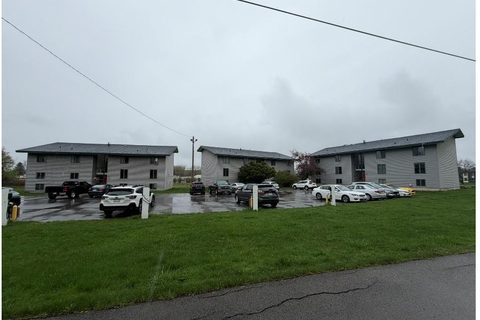
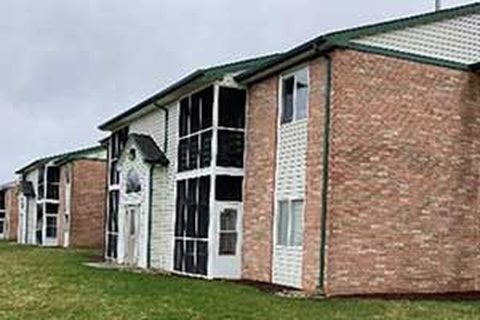
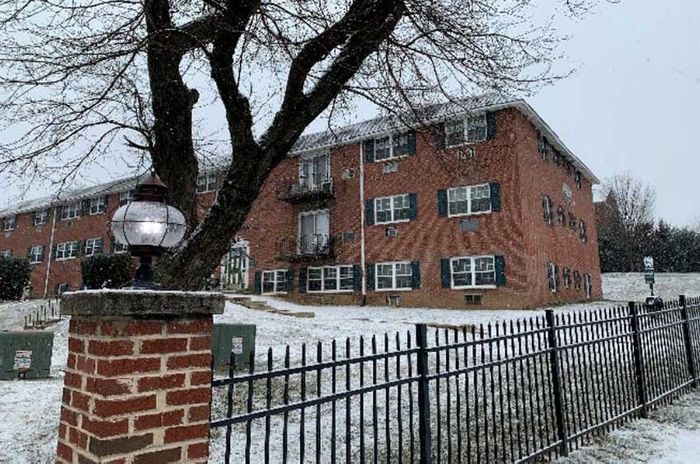
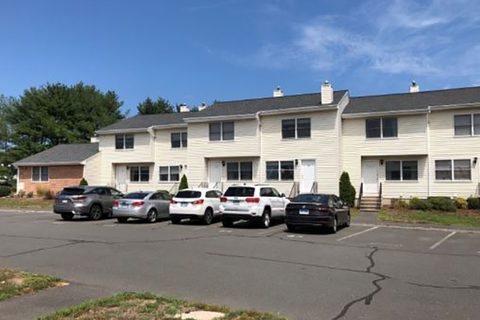
A sample of apartment and multifamily loans we have arranged for investors nationwide.
Apartment Loans Across Nebraska
We arrange apartment loans throughout Nebraska, not only in the Omaha and Lincoln metros. Bellevue, Papillion, La Vista, Gretna, Grand Island, Kearney, Hastings, Norfolk, Columbus, Fremont, North Platte and Scottsbluff are financed through the same agency, bank, credit union and FHA programs. What changes from one market to the next is the local employment base, the county levy and the depth of the comparable set, not the shape of the file.
For larger balances see our Nebraska multifamily loans. For office, retail, industrial and owner occupied property see Nebraska commercial mortgages, and nationwide we lend in most major U.S. cities.
What Our Clients Say
“I am a veterinarian who purchased an existing practice. I was surprised to find a company that offered 100% financing at a good rate, with great terms and rates for medical office financing.”
Carol K. · Chicago, IL“I spoke to several commercial lenders before finding Select Commercial. They got me a lower rate and their service was exceptional. If you need a multifamily loan, you need to talk to Stephen.”
Nathan B. · Philadelphia, PA“Select Commercial was very helpful with my multifamily mortgage. Stephen went over several options and we came up with the best lender to meet my needs. I got the funds and also lowered my payments.”
Gary M. · Portland, OR“Select Commercial offered 100% financing for my medical practice when my bank would have required 20% down. They delivered something my bank could not, and handled everything professionally.”
John C. · Boston, MAGet Your Nebraska Apartment Loan Quote
No cost, no obligation. Written answers within 48 hours on Nebraska apartment loans from $1,500,000.
- No application or processing fees
- Written answers within 48 hours
- For 5+ unit and commercial properties, $1.5M and up