
New Jersey · Over $6 Million
New Jersey Multifamily Loans
Select Commercial arranges New Jersey multifamily loans, with rates as low as 6.22%, up to 80% LTV and non-recourse agency options. We compare Fannie Mae, Freddie Mac, FHA/HUD and CMBS. For loans under $6 million, see New Jersey apartment loans. See current rates on every loan type we offer.
Get a Free QuoteFinancing Options in New Jersey
New Jersey apartment, multifamily and commercial properties each have dedicated financing. Pick the page that matches your property:
Financing more of the state? See New Jersey apartment loans and New Jersey commercial mortgages.
Financing in another state? Explore our apartment loans, multifamily loans and commercial mortgages nationwide.
New Jersey Multifamily Loan Rates
Rates updated as of October 19, 2026
| Loan Type | Rate* | Max LTV |
|---|---|---|
| 5 Year Fixed | 6.22% | Up to 80% |
| 7 Year Fixed | 6.26% | Up to 80% |
| 10 Year Fixed | 6.35% | Up to 80% |
- Streamlined underwriting for institutional multifamily
- Cash-out refinances are acceptable
- Interest-only and non-recourse options
- Minimum 1.25x debt-service-coverage ratio
New Jersey Apartment Loans
For smaller apartment building loans, under $6 million
Rates last updated October 19, 2026. Rates and maximum LTV shown represent our best-case pricing scenarios. Actual rates, LTV, and loan terms are subject to underwriting approval and may vary.
New Jersey Apartment Building Loans
Not every New Jersey apartment property is over $6 million, and we finance smaller buildings too. For 5+ unit New Jersey apartment properties from $1,500,000 to $6 million, see our New Jersey apartment loans page for Fannie Mae Small Loan, Freddie Mac SBL, bank and credit union options.
Compare New Jersey Large-Balance Programs
As a broker we place your large-balance New Jersey multifamily loan with the right capital source. Typical starting points for properties over $6 million:
| Program | Typical rate* | Max leverage | Best for |
|---|---|---|---|
| Fannie Mae DUS | 6.22% | Up to 80% | Non-recourse, fixed to 30 yrs |
| Freddie Mac | 6.26% | Up to 80% | Non-recourse large-balance |
| FHA / HUD | 6.83% | Up to 85% | Highest leverage, 35-yr amortization |
| CMBS / conduit | 7.00% | Up to 75% | Non-recourse, flexible underwriting |
Most large-balance lenders look for a debt-service-coverage ratio (DSCR) of at least 1.25x. For properties under $6 million, see our New Jersey apartment loans.
Rates last updated October 19, 2026. Rates and maximum LTV shown represent our best-case pricing scenarios. Actual rates, LTV, and loan terms are subject to underwriting approval and may vary.
2026 New Jersey Multifamily Investment and Lending Outlook
New Jersey rents are the highest in this part of the country and its vacancy is among the lowest, which is why large-balance capital keeps arriving.
Cushman & Wakefield reported second-quarter 2026 whole-market vacancy of 6.4% in Northern New Jersey across a 109,298-unit inventory, with asking rent at $2,347, net absorption of 1,139 units in the quarter and 5,841 units under construction. Central New Jersey measured 5.3% vacancy across 113,842 units at $2,363 asking rent, with 4,870 units under construction. For context, the same report put national vacancy at 8.9% with 3.5% of inventory under construction.
Recent trades show where pricing sits. The Point Woodbridge, 232 units, traded in October 2026 for $79,000,000, about $340,500 per unit, with the brokers citing the property’s long-term payment-in-lieu-of-taxes benefits as a driver of investor interest. On the construction side, a 426-unit project at Bergen Town Center in Paramus closed a $164,000,000 construction loan in September 2026. Smaller urban product in Essex County trades far lower, with an East Orange portfolio of 88 units at roughly $119,300 per unit.
Lender depth here is real and worth knowing about. Provident Financial Services, headquartered in Jersey City, carried $3.81 billion of multifamily mortgage loans within a $20.05 billion held-for-investment book as of June 30, 2026. That is a bank that underwrites New Jersey apartment product continuously rather than opportunistically, and it competes directly with agency execution on five- and seven-year money.
One data caveat. The vacancy figures above are whole-market, counting units in initial lease-up. With nearly 11,000 units under construction statewide, stabilized vacancy in both markets is lower than the printed figure.
In New Jersey, Your Amortization Schedule Decides When Rent Control Attaches
This is the most consequential New Jersey fact for a new or recently built apartment property, and it is genuinely strange: the length of time your building is exempt from municipal rent control is set by your loan documents, not by your property.
New Jersey has no statewide rent control. The Department of Community Affairs states it plainly in its Truth in Renting guide: the state has no laws establishing, governing or controlling rents, and municipalities may each pass their own ordinance enforced by a local board. Against that patchwork, the Legislature wrote one statewide override, and it keyed the override to the mortgage.
N.J.S.A. 2A:42-84.2 provides that in a municipality with rent control, the provisions limiting periodic increases in base rentals shall not apply to multiple dwellings constructed after the effective date of this act, for a period of time not to exceed the period of amortization of any initial mortgage loan obtained for the multiple dwelling, or for 30 years following completion of construction, whichever is less. A multiple dwelling means a building containing four or more dwelling units, and completion of construction means issuance of the certificate of occupancy. Where there is no initial mortgage financing, N.J.S.A. 2A:42-84.5 sets the period at 30 years.
Work through what that means. A 30-year amortizing permanent loan buys the full statutory 30 years of exemption. A 25-year amortization caps the exemption at 25 years and hands the property to the local rent leveling board five years early. And because the statute keys to the initial mortgage loan, a later refinance cannot extend it.
So the amortization election on a construction-to-permanent takeout is not only a debt service calculation. It sets the date municipal rent regulation attaches to the asset, which belongs in the terminal capitalization rate and the refinance test, not just in the amortization column. On a 40-year hold this is one of the larger value decisions in the capital structure, and it is usually made without anyone noticing.
There is also a hard filing gate. Under N.J.S.A. 2A:42-84.4 the owner must file a written claim of exemption with the municipal construction official at least 30 days before issuance of the certificate of occupancy, stating when the exemption period commences, identifying the building and giving the number of rental units. That filing sits with the construction official, not the assessor and not the rent board, and it is easy to lose in a certificate-of-occupancy scramble. Under § 2A:42-84.3 the owner must also give each prospective tenant written notice that the dwelling is exempt and for how long.
The Legislature was explicit about why. N.J.S.A. 2A:42-84.6 states that the exemptions granted shall not be limited, diminished, altered or impaired during the period afforded, in order to maintain a predictable environment within which the financing, construction and marketing of new multiple dwellings can occur. That is a statute written for lenders, and it is worth citing to one.
If your property has a PILOT, model the step-ups rather than the current payment. Under the Long Term Tax Exemption Law, N.J.S.A. 40A:20-12, the annual service charge is the greater of a percentage of annual gross revenue or a percentage of total project cost, and after a first stage of not less than six nor more than fifteen years it steps up through further stages to 20%, then 40%, then 60%, then 80% of the taxes otherwise due. Agreements run not more than 30 years from completion under § 40A:20-9, with a municipal administrative fee of up to 2%.
And be careful about assuming a PILOT survives a sale. N.J.S.A. 40A:20-10 says the financial agreement may provide that the municipality will consent to a sale to another urban renewal entity, with the exemption continuing upon the transferee’s assumption of the transferor’s obligations, and the municipality may charge a processing fee. Subsection (c) states expressly that it does not authorize a sale between an urban renewal entity and a for-profit developer. PILOT continuation is permissive, conditioned on municipal consent and transferee eligibility. It is a diligence condition and a transfer covenant, not a right.
One last item that can be worth seven figures on a large trade, and that should go to New Jersey counsel rather than be assumed. The graduated realty transfer fee at N.J.S.A. 46:15-7.2, now imposed on the grantor at rates from 1% to 3.5% following the July 2025 amendments, and the controlling interest transfer tax at N.J.S.A. 54:15C-1, both reach Class 4A commercial property. Under N.J.A.C. 18:12-2.2, property designed for the use of five families or more is classified Class 4C, with Class 4A defined as other income-producing property not in Class 4C. Whether that classification carve-out applies to your specific property, and how a retail or mixed-use component is allocated, is worth confirming before you price a sale.
New Jersey Multifamily Loan Programs
As a broker, we compare every large-balance program to find your best fit:
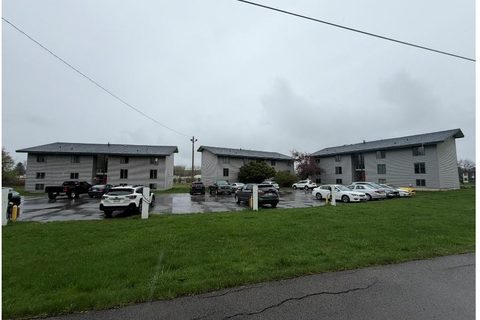
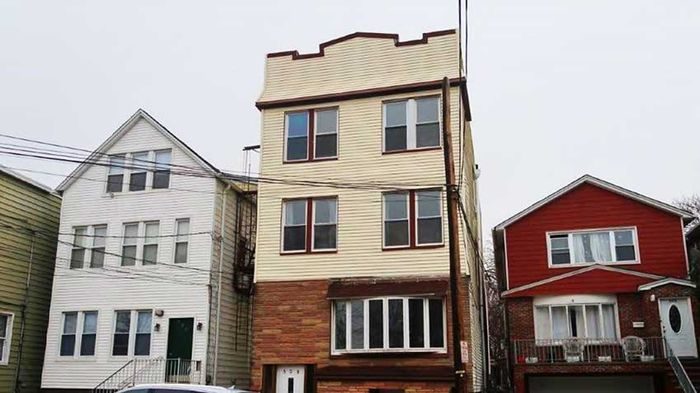
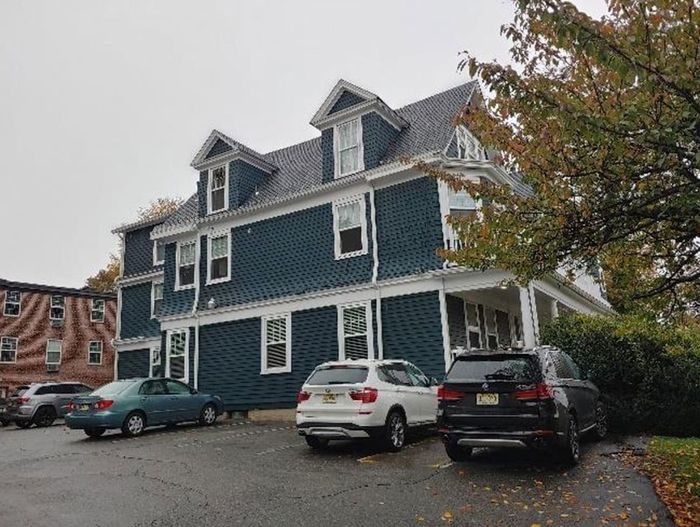
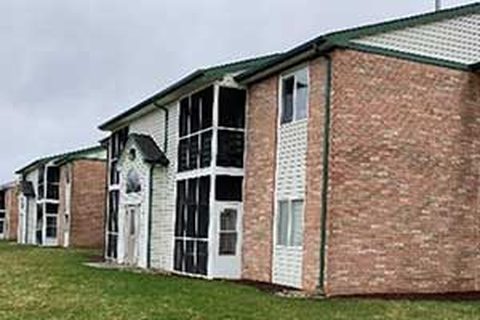
Recent Multifamily Loan Closings
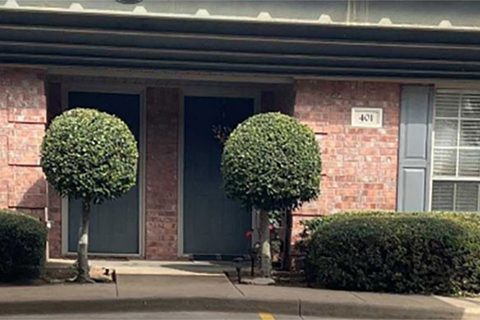
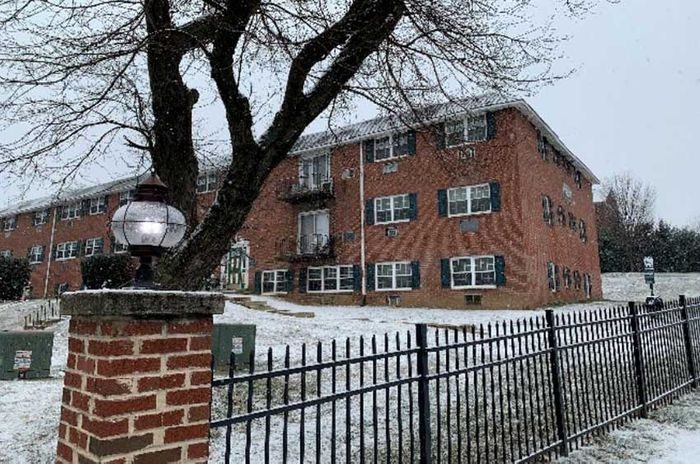
A sample of apartment and multifamily loans we have arranged for investors nationwide.
New Jersey Multifamily Markets We Serve
We arrange large-balance multifamily loans throughout New Jersey, including:
Other Property & Loan Types We Finance in New Jersey
As a full-service commercial mortgage broker, we arrange New Jersey financing across every major property and loan type:
We consider commercial loan requests of all sizes, beginning at $1,500,000.
What Our Clients Say
“As a real estate attorney, I trust that Select Commercial will deliver commercial mortgages in a timely manner. My clients are always handled professionally, and the rates and terms are excellent. I heartily recommend them.”
David S. · New York City“I spoke to several commercial lenders before finding Select Commercial. They got me a lower rate and their service was exceptional. If you need a multifamily loan, you need to talk to Stephen.”
Nathan B. · Philadelphia, PA“Select Commercial was very helpful with my multifamily mortgage. Stephen went over several options and we came up with the best lender to meet my needs. I got the funds and also lowered my payments.”
Gary M. · Portland, OR“Select Commercial offered 100% financing for my medical practice when my bank would have required 20% down. They delivered something my bank could not, and handled everything professionally.”
John C. · Boston, MAGet Your New Jersey Multifamily Loan Quote
No cost, no obligation. Written answers within 48 hours on New Jersey multifamily loans over $6,000,000.
- No application or processing fees
- Written answers within 48 hours
- For 5+ unit and commercial properties, $1.5M and up