
Ohio · Over $6 Million
Ohio Multifamily Loans
Select Commercial arranges Ohio multifamily loans, with rates as low as 6.14%, up to 80% LTV and non-recourse agency options. We compare Fannie Mae, Freddie Mac, FHA/HUD and CMBS. For loans under $6 million, see Ohio apartment loans. See current rates on every loan type we offer.
Get a Free QuoteFinancing Options in Ohio
Ohio apartment, multifamily and commercial properties each have dedicated financing. Pick the page that matches your property:
Financing more of the state? See Ohio apartment loans and Ohio commercial mortgages.
Financing in another state? Explore our apartment loans, multifamily loans and commercial mortgages nationwide.
Ohio Multifamily Loan Rates
Rates updated as of October 23, 2026
| Loan Type | Rate* | Max LTV |
|---|---|---|
| 5 Year Fixed | 6.14% | Up to 80% |
| 7 Year Fixed | 6.17% | Up to 80% |
| 10 Year Fixed | 6.21% | Up to 80% |
- Streamlined underwriting for institutional multifamily
- Cash-out refinances are acceptable
- Interest-only and non-recourse options
- Minimum 1.25x debt-service-coverage ratio
Ohio Apartment Loans
For smaller apartment building loans, under $6 million
Rates last updated October 23, 2026. Rates and maximum LTV shown represent our best-case pricing scenarios. Actual rates, LTV, and loan terms are subject to underwriting approval and may vary.
Ohio Apartment Building Loans
Not every Ohio apartment property is over $6 million, and we finance smaller buildings too. For 5+ unit Ohio apartment properties from $1,500,000 to $6 million, see our Ohio apartment loans page for Fannie Mae Small Loan, Freddie Mac SBL, bank and credit union options.
Compare Ohio Large-Balance Programs
As a broker we place your large-balance Ohio multifamily loan with the right capital source. Typical starting points for properties over $6 million:
| Program | Typical rate* | Max leverage | Best for |
|---|---|---|---|
| Fannie Mae DUS | 6.14% | Up to 80% | Non-recourse, fixed to 30 yrs |
| Freddie Mac | 6.17% | Up to 80% | Non-recourse large-balance |
| FHA / HUD | 6.74% | Up to 85% | Highest leverage, 35-yr amortization |
| CMBS / conduit | 7.03% | Up to 75% | Non-recourse, flexible underwriting |
Most large-balance lenders look for a debt-service-coverage ratio (DSCR) of at least 1.25x. For properties under $6 million, see our Ohio apartment loans.
Rates last updated October 23, 2026. Rates and maximum LTV shown represent our best-case pricing scenarios. Actual rates, LTV, and loan terms are subject to underwriting approval and may vary.
2026 Ohio Multifamily Investment and Lending Outlook
Columbus has a 10.5% vacancy rate and institutional owners there are reporting 94.6% occupancy. Understanding why is the single most useful thing an Ohio borrower can learn.
Cushman & Wakefield reported second-quarter 2026 whole-market vacancy of 10.5% in Columbus at $1,414 asking rent, 10.5% in Cleveland at $1,326, and 9.1% in Cincinnati at $1,456, against 8.9% nationally. Columbus had 9,605 units under construction, Cincinnati 3,829 and Cleveland 2,298.
Independence Realty Trust, reporting its stabilized same-store portfolio for the same quarter, recorded 94.6% average occupancy in Columbus at $1,557 effective rent, up 4.1% year over year, and 96.5% in Cincinnati at $1,727, up 4.5%.
Both sets of numbers are right. A whole-market figure counts every unit in a newly delivered building as vacant while it leases up. Columbus delivered about 9,480 units in 2025, a record, and still has nearly 9,600 under construction. A stabilized Columbus property is operating in a mid-90s occupancy market and pushing rent 4%. A property delivering next quarter is competing with everything else leasing up. Confirm which comparable set your appraisal uses, because the difference is five points of vacancy.
The absorption data says the units are being taken. Columbus recorded 5,844 units of net absorption in 2025, described as the second-highest in the market’s history, against a 197,461-unit inventory. A recent benchmark trade: The Retreat at Canal in Columbus, 140 units, $29,500,000 in January 2026, about $210,700 per unit.
Huntington Bancshares, headquartered in Columbus, carried $6.73 billion of multifamily loans within a $23.46 billion commercial real estate book at June 30, 2026, though much of the recent increase came through acquisition rather than new origination.
Ohio Lets a School District or City Challenge Your Value Up to Your Purchase Price, Above a Threshold You Can Calculate
Ohio handles post-sale property tax exposure differently from almost every other state, and the differences all run in a direction a borrower can plan around. The exposure is real, but it is fenced with numeric thresholds, a public process and a deadline.
The mechanism. Under Ohio Revised Code § 5715.19(A)(6), the legislative authority of a subdivision, the mayor of a municipal corporation, or a third-party complainant may not file an original complaint against property it does not own or lease unless two conditions are both met.
The first condition is a three-part sale test. The complaint must seek an increase in valuation based upon the sale of the property in an arm’s length transaction; the sale must have occurred during the two years preceding the tax lien date; and the sale price must exceed the true value on the tax list by both ten percent and the amount of the filing threshold. The threshold was $500,000 for tax year 2022 and is adjusted annually by the Tax Commissioner using the gross domestic product deflator, rounded to the nearest $1,000.
Both tests have to be cleared. If your price exceeds the auditor’s value by 10% but by less than the threshold, or by more than the threshold but less than 10%, the sale-based increase route is unavailable and the exposure reduces to the ordinary reappraisal cycle.
The second condition is procedural. The legislative authority must first adopt a resolution authorizing the complaint at a public meeting, and under § 5715.19(A)(7) must give written notice to at least one record owner at least seven calendar days before adopting the resolution, identifying the parcel, the owners, the basis and the tax year.
And there is a date after which the year is closed. Under § 5715.19(A)(1) complaints must be filed on or before March 31 of the ensuing tax year.
One more structural point worth knowing, because in most states the school district is the most motivated appellant. Under § 5715.19(B)(2) a board of education may file only a counter-complaint, and only where the original complaint was filed by the owner, the tenant or their agent and states a mis-valuation of at least $17,500 in taxable value. A school board cannot originate a sale-based increase complaint in Ohio.
Put together, that gives three concrete underwriting steps. Pull the auditor’s current true value before you sign, and test your contract price against both the 10% and the dollar threshold. Run a stress case at the full purchase-price assessment against current millage if both tests clear. And size any tax escrow to release against March 31, because after that date the exposure for the year is closed rather than open-ended.
Outside that route, Ohio reappraises on a schedule. Under § 5713.01(B) the county auditor must view and appraise each parcel at true value at least once in each six-year period, with notice of an individual parcel change at least thirty days before tax bills issue. That is the baseline step-up to model, and it has a known date.
Ohio is also one of the cheapest states in the country to record a mortgage. Under § 317.32 the recorder charges a flat base fee of $17 for the first two pages plus a $17 housing trust fund fee, then $4 plus $4 for each subsequent page, with a document preservation surcharge of up to $5. There is no fee indexed to the loan amount. A $25,000,000 Ohio mortgage records for the same few hundred dollars as a $250,000 one, because the fee tracks page count rather than loan size.
The transfer side is small but uncapped. The state conveyance fee under § 319.54(G)(3) is ten cents per $100, or 0.10%, and a county may impose a permissive real property transfer tax under § 322.02 of up to thirty cents per $100, levied upon and paid by the grantor. The combined statutory maximum is 0.40%, which on a $20,000,000 sale is up to $80,000, borne by the seller.
2026 Ohio Multifamily Metro Snapshots
A look at the Ohio metros we most actively finance, with 2026 market indicators and the local supply and demand picture:
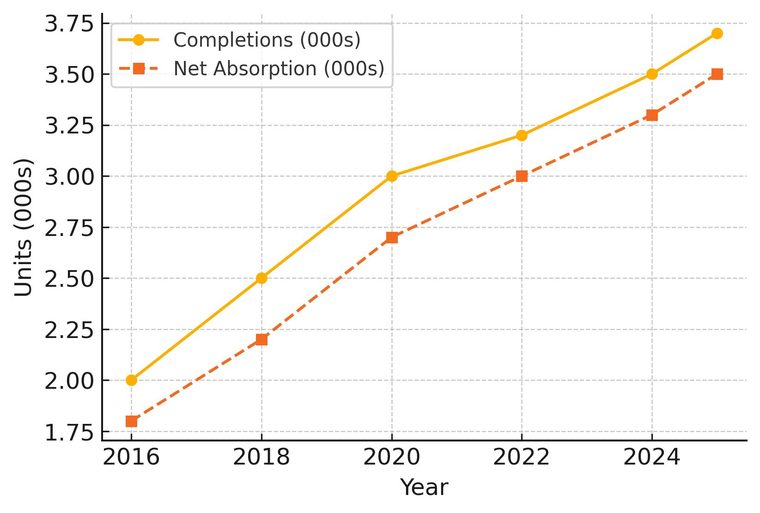
- Employment: about 5,000 new jobs
- Construction: about 2,000 units, inventory growth of 1.2%
- Vacancy: around 3.8% by year-end
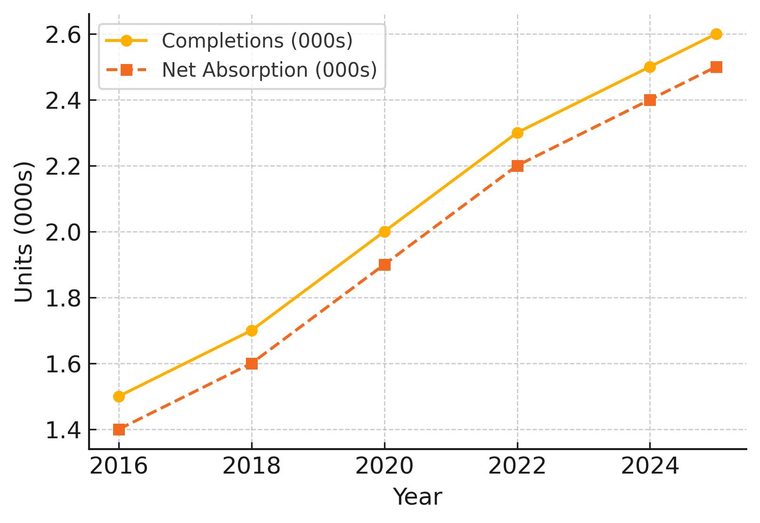
- Employment: about 8,000 new jobs
- Construction: about 1,100 units, inventory growth of 0.6%
- Vacancy: around 4.2% by year-end
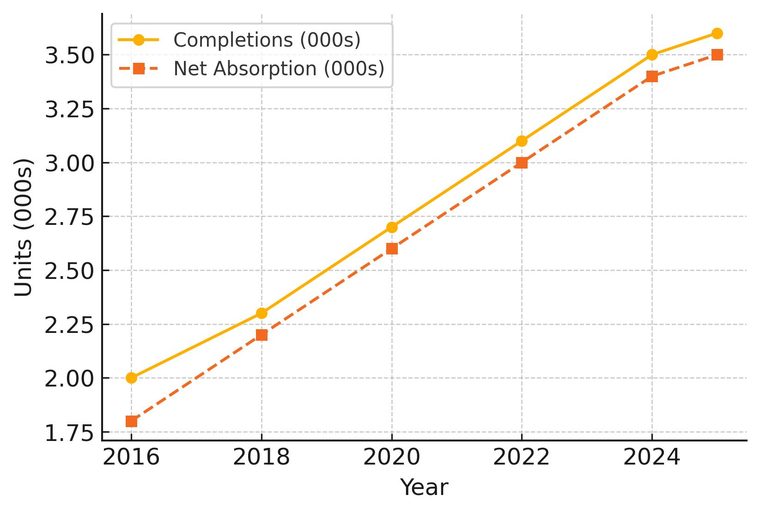
- Employment: about 9,000 new jobs
- Construction: about 4,700 units, inventory growth of 2.2%
- Vacancy: around 4.2% by year-end
Ohio Multifamily Loan Programs
As a broker, we compare every large-balance program to find your best fit:
Recent Multifamily Loan Closings
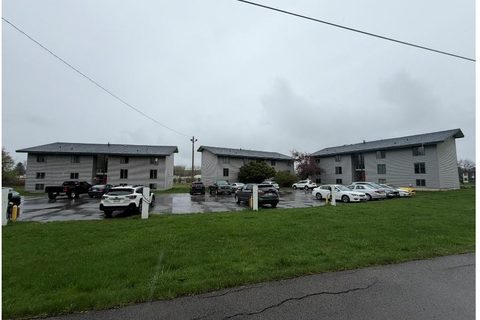
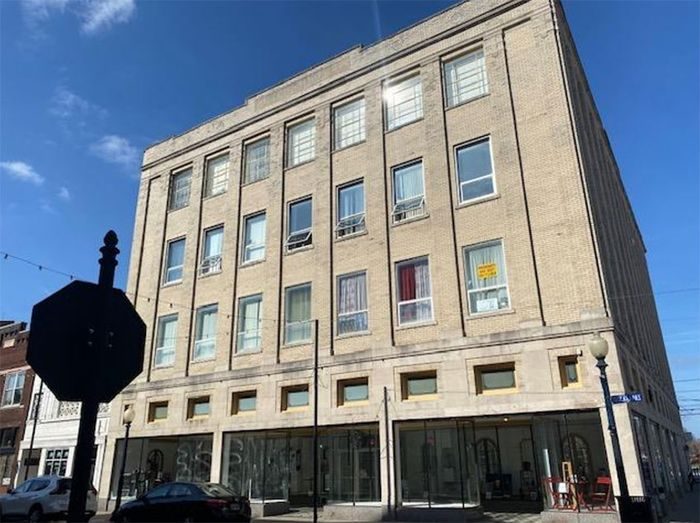
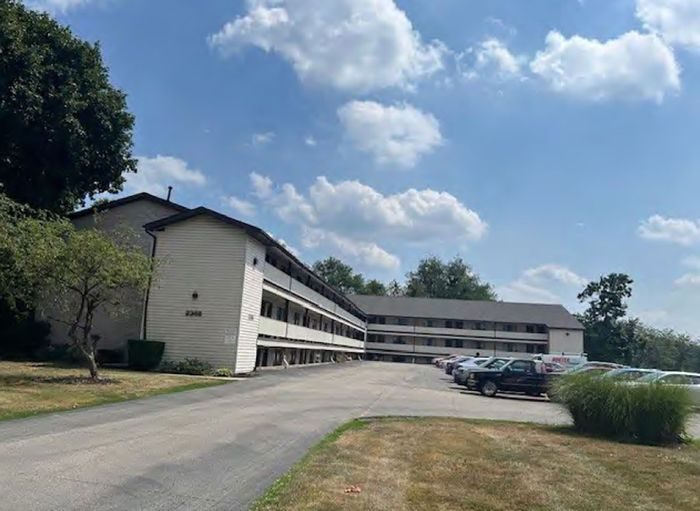
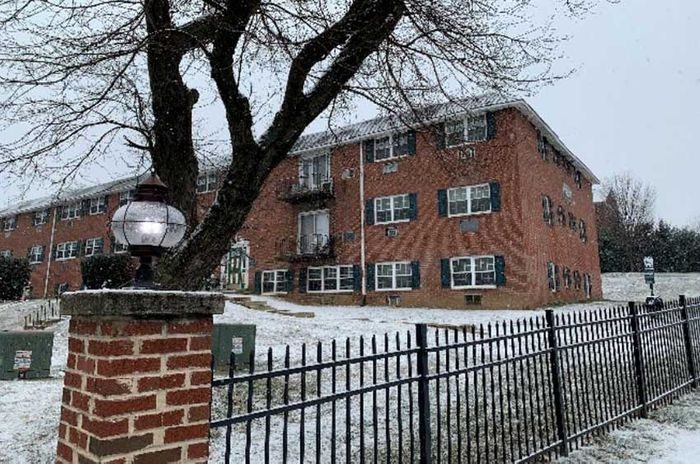
A sample of apartment and multifamily loans we have arranged for investors nationwide.

Other Property & Loan Types We Finance in Ohio
As a full-service commercial mortgage broker, we arrange Ohio financing across every major property and loan type:
We consider commercial loan requests of all sizes, beginning at $1,500,000.
What Our Clients Say
“As a real estate attorney, I trust that Select Commercial will deliver commercial mortgages in a timely manner. My clients are always handled professionally, and the rates and terms are excellent. I heartily recommend them.”
David S. · New York City“I spoke to several commercial lenders before finding Select Commercial. They got me a lower rate and their service was exceptional. If you need a multifamily loan, you need to talk to Stephen.”
Nathan B. · Philadelphia, PA“Select Commercial was very helpful with my multifamily mortgage. Stephen went over several options and we came up with the best lender to meet my needs. I got the funds and also lowered my payments.”
Gary M. · Portland, OR“Select Commercial offered 100% financing for my medical practice when my bank would have required 20% down. They delivered something my bank could not, and handled everything professionally.”
John C. · Boston, MAGet Your Ohio Multifamily Loan Quote
No cost, no obligation. Written answers within 48 hours on Ohio multifamily loans over $6,000,000.
- No application or processing fees
- Written answers within 48 hours
- For 5+ unit and commercial properties, $1.5M and up