
Oklahoma · Over $6 Million
Oklahoma Multifamily Loans
Select Commercial arranges Oklahoma multifamily loans, with rates as low as 6.14%, up to 80% LTV and non-recourse agency options. We compare Fannie Mae, Freddie Mac, FHA/HUD and CMBS. For loans under $6 million, see Oklahoma apartment loans. See current rates on every loan type we offer.
Get a Free QuoteFinancing Options in Oklahoma
Oklahoma apartment, multifamily and commercial properties each have dedicated financing. Pick the page that matches your property:
Financing more of the state? See Oklahoma apartment loans and Oklahoma commercial mortgages.
Financing in another state? Explore our apartment loans, multifamily loans and commercial mortgages nationwide.
Oklahoma Multifamily Loan Rates
Rates updated as of October 23, 2026
| Loan Type | Rate* | Max LTV |
|---|---|---|
| 5 Year Fixed | 6.14% | Up to 80% |
| 7 Year Fixed | 6.17% | Up to 80% |
| 10 Year Fixed | 6.21% | Up to 80% |
- Streamlined underwriting for institutional multifamily
- Cash-out refinances are acceptable
- Interest-only and non-recourse options
- Minimum 1.25x debt-service-coverage ratio
Oklahoma Apartment Loans
For smaller apartment building loans, under $6 million
Rates last updated October 23, 2026. Rates and maximum LTV shown represent our best-case pricing scenarios. Actual rates, LTV, and loan terms are subject to underwriting approval and may vary.
Oklahoma Apartment Building Loans
Not every Oklahoma apartment property is over $6 million, and we finance smaller buildings too. For 5+ unit Oklahoma apartment properties from $1,500,000 to $6 million, see our Oklahoma apartment loans page for Fannie Mae Small Loan, Freddie Mac SBL, bank and credit union options.
Compare Oklahoma Large-Balance Programs
As a broker we place your large-balance Oklahoma multifamily loan with the right capital source. Typical starting points for properties over $6 million:
| Program | Typical rate* | Max leverage | Best for |
|---|---|---|---|
| Fannie Mae DUS | 6.14% | Up to 80% | Non-recourse, fixed to 30 yrs |
| Freddie Mac | 6.17% | Up to 80% | Non-recourse large-balance |
| FHA / HUD | 6.74% | Up to 85% | Highest leverage, 35-yr amortization |
| CMBS / conduit | 7.03% | Up to 75% | Non-recourse, flexible underwriting |
Most large-balance lenders look for a debt-service-coverage ratio (DSCR) of at least 1.25x. For properties under $6 million, see our Oklahoma apartment loans.
Rates last updated October 23, 2026. Rates and maximum LTV shown represent our best-case pricing scenarios. Actual rates, LTV, and loan terms are subject to underwriting approval and may vary.
2026 Oklahoma Multifamily Investment and Lending Outlook
Oklahoma’s two metros have the highest vacancy and the thinnest construction pipelines of any markets in their peer group, and those two facts together are good news.
Cushman & Wakefield reported second-quarter 2026 whole-market vacancy of 11.8% in Oklahoma City at $1,055 asking rent with rent growth of 0.9%, and 11.1% in Tulsa at $1,097 with growth of 2.0%. Against that, Oklahoma City had only 853 units under construction and Tulsa 545. For comparison, Columbus had 9,605 and Nashville 11,714.
A market with double-digit vacancy and essentially no pipeline is in a different position from one with the same vacancy and thousands of units coming. Oklahoma’s vacancy is an absorption problem working itself out, not a supply wave still arriving. Net absorption of 525 units in Oklahoma City and 659 in Tulsa in a single quarter, against those pipeline figures, points one direction.
Rent is the soft spot, and two independent sources agree that Oklahoma City is the weakest of its peer group, though they measure it differently. Independence Realty Trust reported its Oklahoma City same-store portfolio of 2,147 units at 95.6% occupancy and $1,286 average effective rent, down 0.6% year over year. That was the only negative rent figure in that firm’s disclosed markets, and the 0.9% whole-market figure above was the weakest positive among its metro peer group. Underwrite flat to slightly negative rent here, and expect a lender to do the same.
In-state lending capacity is substantial and specifically multifamily. BOK Financial, headquartered in Tulsa, carried $2.57 billion of multifamily loans at June 30, 2026, the single largest property type in its $5.89 billion commercial real estate book at roughly 44% of it. That is a bank whose largest commercial real estate exposure is apartments, which means it underwrites this product continuously.
Oklahoma Prices Your Mortgage Tax Off the Loan Term, and Your Cap Disappears the Year After Closing
Oklahoma has two rules that no other state in this region shares, and one of them is a structuring lever that can save real money on a large loan.
First, the mortgage registration tax is priced off the term of the loan, not just the amount. Under 68 O.S. § 1904, the tax per $100 of principal indebtedness runs by remaining term:
Five years or more: $0.10 per $100, or 0.10%. Four to under five years: $0.08. Three to under four: $0.06. Two to under three: $0.04. Under two years: $0.02. Plus a $10 certification fee per mortgage presented to the county treasurer. The most recent amendment took effect November 1, 2025, and there is no statutory cap.
That is a five-fold spread driven purely by stated term. On a $20,000,000 loan, a ten-year fixed records for $20,000 and an eighteen-month bridge records for $4,000. The $16,000 difference is not a rounding error on a sources and uses, and it is a factor nobody weighs because almost no state charges this way.
There is also meaningful relief on the back end. Under 68 O.S. § 1905, a supplemental instrument recorded to correct or perfect a recorded mortgage, an additional mortgage extending the lien to property not originally covered, or an assignment of mortgage is not subject to the § 1904 tax unless it creates or secures new or further indebtedness, in which case the tax applies to the increment only. So a rate-and-term modification with no principal increase is untaxed, an upsizing is taxed only on the new money, and assignments are exempt, which matters when the paper is sold or securitized.
Second, Oklahoma’s valuation cap switches off in the year you buy. Under Oklahoma Constitution Article X § 8B, the fair cash value of locally assessed real property may not increase by more than five percent in any taxable year. But the section expressly does not apply in any year when title to the property is transferred, changed or conveyed to another person, or when improvements have been made, and in that case the property is assessed for that year based on fair cash value under Article X § 8.
What the reset lands on is constitutionally fenced. Under Article X § 8(A), real property may not be assessed at less than eleven percent nor more than thirteen and one-half percent of fair cash value, and a county cannot raise its ratio without voter approval or by more than one percentage point per year.
So the arithmetic on a $20,000,000 Oklahoma City acquisition is knowable in advance: fair cash value resets to the sale price, the county applies its ratio, and taxable value lands somewhere between $2,200,000 and $2,700,000 regardless of what the capped value was the day before closing. On a property the seller held for a decade while the 5% cap suppressed value, the step-up can be a multiple of trailing taxes, and it arrives in the first assessment year after closing, before any rent growth.
Three things follow. Run year-one taxes off the purchase price, never off the seller’s bill. Treat the exposure as quantifiable rather than speculative, because unlike a discretionary appeal the reset is automatic and the ratio band has a hard ceiling you can underwrite to. And if your business plan includes capital improvements, model a second staged increase, because § 8B switches off the cap on the improvement increment as well. A value-add program in Oklahoma carries two tax events, not one.
One favorable note on the deed side. The documentary stamp tax under 68 O.S. § 3201 is $0.75 per $500 of consideration, or 0.15%, uncapped, but the statute measures consideration exclusive of the value of any lien or encumbrance remaining at the time of sale. Assumed debt is outside the taxable base, so a loan assumption costs materially less stamp tax than a cash-to-new-loan structure.
2026 Oklahoma Multifamily Metro Snapshots
A look at the Oklahoma metros we most actively finance, with 2026 market indicators and the local supply and demand picture:
- Construction pipeline at a decade low
- Vacancy stays near 5 percent
- Rent growth accelerates toward 3 percent
- Construction well below peak levels
- Vacancy stays near 5 percent
- Rent growth in the low single digits
Oklahoma Multifamily Loan Programs
As a broker, we compare every large-balance program to find your best fit:
Recent Multifamily Loan Closings
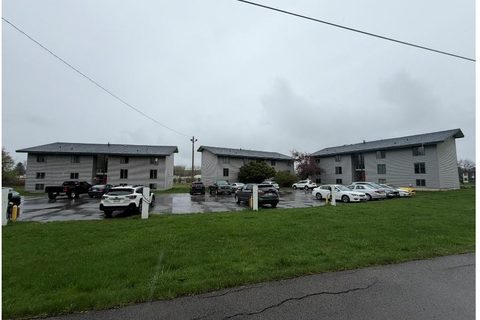
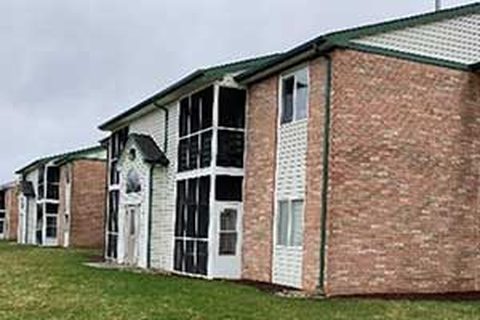
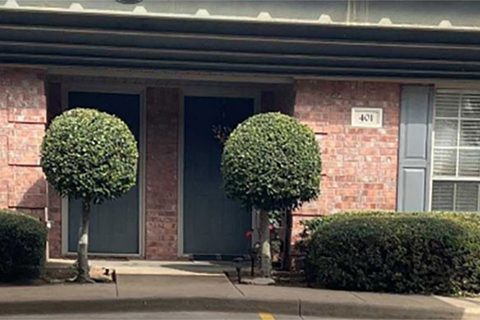
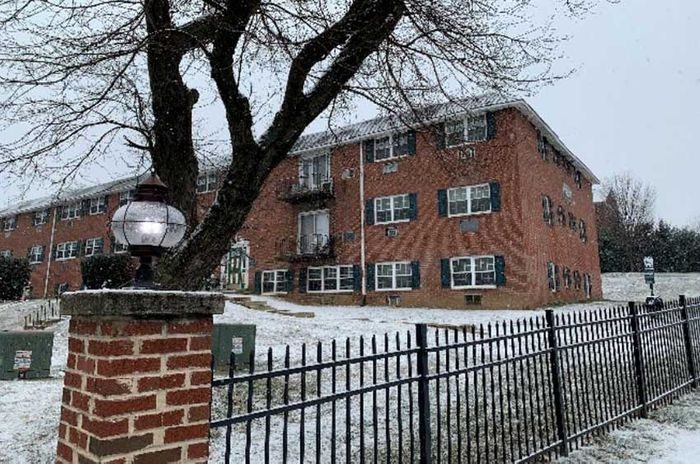
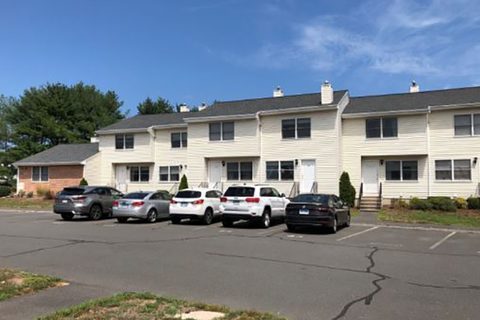
A sample of apartment and multifamily loans we have arranged for investors nationwide.
Other Property & Loan Types We Finance in Oklahoma
As a full-service commercial mortgage broker, we arrange Oklahoma financing across every major property and loan type:
We consider commercial loan requests of all sizes, beginning at $1,500,000.
What Our Clients Say
“As a real estate attorney, I trust that Select Commercial will deliver commercial mortgages in a timely manner. My clients are always handled professionally, and the rates and terms are excellent. I heartily recommend them.”
David S. · New York City“I spoke to several commercial lenders before finding Select Commercial. They got me a lower rate and their service was exceptional. If you need a multifamily loan, you need to talk to Stephen.”
Nathan B. · Philadelphia, PA“Select Commercial was very helpful with my multifamily mortgage. Stephen went over several options and we came up with the best lender to meet my needs. I got the funds and also lowered my payments.”
Gary M. · Portland, OR“Select Commercial offered 100% financing for my medical practice when my bank would have required 20% down. They delivered something my bank could not, and handled everything professionally.”
John C. · Boston, MAGet Your Oklahoma Multifamily Loan Quote
No cost, no obligation. Written answers within 48 hours on Oklahoma multifamily loans over $6,000,000.
- No application or processing fees
- Written answers within 48 hours
- For 5+ unit and commercial properties, $1.5M and up