
Pennsylvania · Over $6 Million
Pennsylvania Multifamily Loans
Select Commercial arranges Pennsylvania multifamily loans, with rates as low as 6.22%, up to 80% LTV and non-recourse agency options. We compare Fannie Mae, Freddie Mac, FHA/HUD and CMBS. For loans under $6 million, see Pennsylvania apartment loans. See current rates on every loan type we offer.
Get a Free QuoteFinancing Options in Pennsylvania
Pennsylvania apartment, multifamily and commercial properties each have dedicated financing. Pick the page that matches your property:
Financing more of the state? See Pennsylvania apartment loans and Pennsylvania commercial mortgages.
Financing in another state? Explore our apartment loans, multifamily loans and commercial mortgages nationwide.
Pennsylvania Multifamily Loan Rates
Rates updated as of October 18, 2026
| Loan Type | Rate* | Max LTV |
|---|---|---|
| 5 Year Fixed | 6.22% | Up to 80% |
| 7 Year Fixed | 6.26% | Up to 80% |
| 10 Year Fixed | 6.35% | Up to 80% |
- Streamlined underwriting for institutional multifamily
- Cash-out refinances are acceptable
- Interest-only and non-recourse options
- Minimum 1.25x debt-service-coverage ratio
Pennsylvania Apartment Loans
For smaller apartment building loans, under $6 million
Rates last updated October 18, 2026. Rates and maximum LTV shown represent our best-case pricing scenarios. Actual rates, LTV, and loan terms are subject to underwriting approval and may vary.
Pennsylvania Apartment Building Loans
Not every Pennsylvania apartment property is over $6 million, and we finance smaller buildings too. For 5+ unit Pennsylvania apartment properties from $1,500,000 to $6 million, see our Pennsylvania apartment loans page for Fannie Mae Small Loan, Freddie Mac SBL, bank and credit union options.
Compare Pennsylvania Large-Balance Programs
As a broker we place your large-balance Pennsylvania multifamily loan with the right capital source. Typical starting points for properties over $6 million:
| Program | Typical rate* | Max leverage | Best for |
|---|---|---|---|
| Fannie Mae DUS | 6.22% | Up to 80% | Non-recourse, fixed to 30 yrs |
| Freddie Mac | 6.26% | Up to 80% | Non-recourse large-balance |
| FHA / HUD | 6.83% | Up to 85% | Highest leverage, 35-yr amortization |
| CMBS / conduit | 7.00% | Up to 75% | Non-recourse, flexible underwriting |
Most large-balance lenders look for a debt-service-coverage ratio (DSCR) of at least 1.25x. For properties under $6 million, see our Pennsylvania apartment loans.
Rates last updated October 18, 2026. Rates and maximum LTV shown represent our best-case pricing scenarios. Actual rates, LTV, and loan terms are subject to underwriting approval and may vary.
2026 Pennsylvania Multifamily Investment and Lending Outlook
Both Pennsylvania metros are running more than two points tighter than the national vacancy rate, and Pittsburgh is posting some of the strongest rent growth in the country.
Cushman & Wakefield reported second-quarter 2026 whole-market vacancy of 6.8% in Philadelphia at $1,910 asking rent with rent growth of 2.3%, and 6.5% in Pittsburgh at $1,523 with rent growth of 3.5%. National vacancy in the same report was 8.9% with rent growth of 1.5%.
Pittsburgh’s 3.5% was among the highest of any metro in that report, and it came on a pipeline of only 2,061 units under construction. Philadelphia had 6,599 under construction against net absorption of 1,917 units in the quarter. Neither market is carrying the kind of supply overhang that has flattened rent in the Sun Belt.
What Pennsylvania lacks is published transaction data. Neither market has a current, citable multifamily cap rate or price-per-unit figure from a source we would quote, so pricing conversations here have to run on property-specific comparable sales rather than on a published average. Ask for them early, because the property tax question below depends on knowing what the market thinks your building is worth.
Bank capacity is strong and explicitly multifamily. Customers Bancorp, headquartered in West Reading, carried $2.62 billion of multifamily loans at June 30, 2026, up 5.4% in six months and representing about 16% of its total loan book. That is a Pennsylvania institution with multifamily as a named, growing business line rather than a slice of a general commercial real estate category.
In Pennsylvania the Sale Price Is the Appeal, and the School District Can File It
Pennsylvania has the most predictable post-sale tax exposure in the country and also one of the largest. Both are true because of how the state assesses property, and the whole thing is arithmetic you can do before you sign.
The base-year system. Pennsylvania counties do not reassess annually. They assess against a frozen base year, defined at 53 Pa.C.S. § 8802 as the year on which market values are based for the most recent countywide revision of assessment. Under § 8842(a) the county assessment office assesses real property at a value based upon an established predetermined ratio, which may not exceed 100% of actual value.
How stale can a base year be? Allegheny County, which includes Pittsburgh, states on its own assessment pages that its current base year is 2012, with an effective date of value of January 1, 2012, used for tax year 2013 and every tax year since. Its last countywide reassessment was 2013. A fourteen-year-old valuation date still governs.
The common level ratio is what bridges the gap. Section 8802 defines it as the ratio of assessed value to current market value used generally in the county, published annually by the State Tax Equalization Board on or before July 1 of the year prior to the tax year on appeal. A sale establishes current market value; the ratio converts that back to base-year assessed value.
Which ratio applies is decided by a 15% test. Under § 8854(a)(3), after determining market value the court applies the established predetermined ratio unless the corresponding common level ratio varies by more than 15% from it, in which case the court applies the common level ratio. So you need both numbers for your county, not one of them.
And any taxing body can file. Under § 8855 a taxing district has the right to appeal any assessment within its jurisdiction, using the same procedures as an owner, may appeal a decision of the board or the court of common pleas as though it had been a party, and may intervene in an owner’s appeal as a matter of right. Allegheny County states it directly: assessments can be appealed by the property owner or any taxing body with a vested interest in the parcel, naming county, school district and municipal appeals.
Assume the school district is the appellant. It has independent standing and the strongest revenue incentive, and unlike Ohio it is not procedurally limited. A large arm’s length apartment sale in a stale-base-year county is exactly the fact pattern a district’s counsel looks for.
Four underwriting actions follow.
Quantify the step-up before you commit. Sale price multiplied by the applicable ratio multiplied by millage, less current taxes, gives you the exposure. In a county whose base year predates the last two cycles of value growth, that gap is often the single largest year-one expense variance in the deal.
Calendar the county’s appeal window as a closing item. Allegheny County, for example, took annual appeals for the 2027 tax year between July 1 and September 1, 2026 under County Ordinance 06-24-OR, so that window has closed and the 2027 exposure on a property bought now is already fixed. The equivalent window for the 2028 tax year opens next July, and special appeals remain available year round in response to a written determination notice. Confirm the current dates with the county. Once the window closes, that year’s exposure is known, which lets you size an escrow with a defined release.
If your property carries rent restrictions, preserve the statutory argument in writing at closing. Under § 8842(c), in arriving at actual value the impact of applicable rent restrictions, affordability requirements or any other related restrictions shall be considered. That is mandatory, not permissive. For a tax credit, Section 8 or inclusionary-restricted property it is a real defense against an appeal priced off unrestricted comparables.
If your property has a LERTA abatement, it survives the sale. Under the Local Economic Revitalization Tax Assistance Act at 72 P.S. § 4726(c), the exemption shall be upon the property exempted and shall not terminate upon the sale or exchange of the property. Schedules run no more than ten years under § 4726(b)(1), with the abated percentages set locally. Check one thing in the local ordinance: § 4726(b)(3) allows a municipality to cap the abated amount per unit, which on a large apartment project can cut the benefit well below the full improvement value. Confirm the per-unit cap, not just the term.
Two Pennsylvania transaction costs that catch people.
Philadelphia is the most expensive place in the state to transfer real estate. The Commonwealth rate is 1% of the value of real estate transferred. Philadelphia adds 3.578%, for a combined 4.578%. On a $20,000,000 Philadelphia apartment sale that is roughly $915,600.
And Philadelphia’s entity-transfer threshold is tighter than the Commonwealth’s. The Commonwealth’s acquired company rule at 72 P.S. § 8102-C.5 triggers at ninety percent or more of total ownership interest transferred within a period of three years, with transfers aggregated across that window and a declaration of acquisition due with the recorder within thirty days. The City’s realty transfer tax applies to transfers of an interest in a real estate company where the transfer is 75% or more. The classic structure that stays under the Commonwealth’s 90% test does not clear Philadelphia’s 75% test, so a deal structured to avoid the 1% state tax can still incur the 3.578% city tax. Get Philadelphia counsel on any entity-level transfer before you rely on a structure.
Finally, if you are developing in Philadelphia, two of the four abatement programs require filing within 60 days of permit issuance: the ten-year commercial and industrial abatement under Ordinance 1130 and the ten-year new residential construction abatement under Ordinance 1456-A. Miss it and a ten-year abatement is gone with no cure. On a construction loan, abatement filing evidence belongs in the initial advance conditions rather than in post-closing covenants.
2026 Pennsylvania Multifamily Metro Snapshots
A look at the Pennsylvania metros we most actively finance, with 2026 market indicators and the local supply and demand picture:
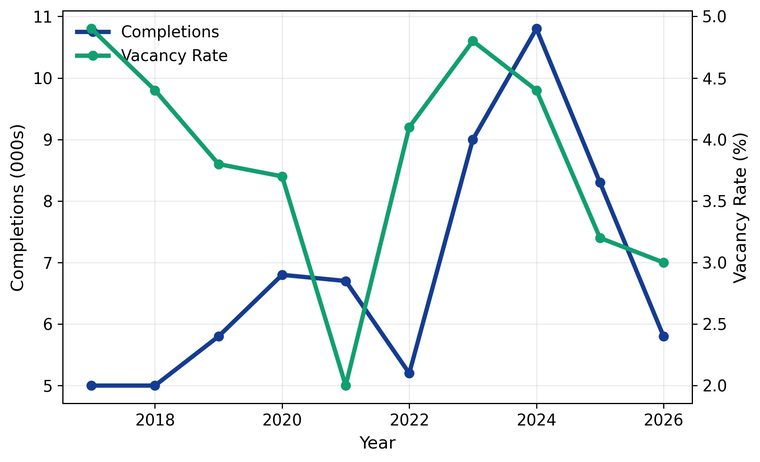
- Employment: about 26,000 jobs added in 2026 (approximately +0.8%)
- Construction: about 5,500 units projected, with inventory growth near 1.3%
- Vacancy: projected near 3.0%, improving by roughly 20 bps
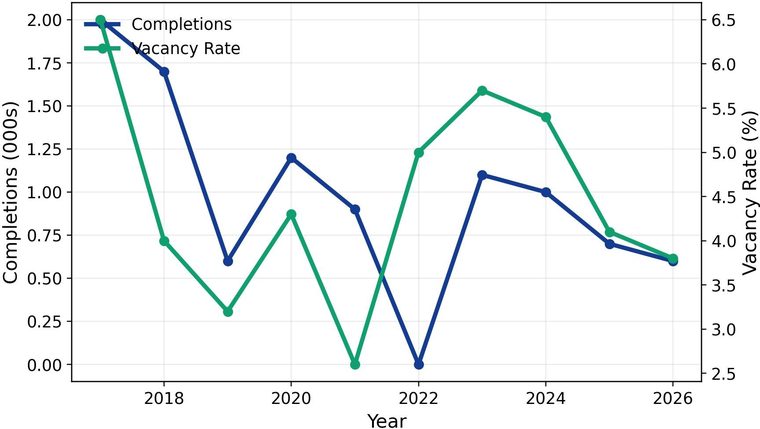
- Employment expands by 6,000 roles, near the 2019 pace.
- Completions fall to a seven-year low as development slows again.
- Vacancy dips to 3.8 percent, below 4 percent for a rare fourth time in 25 years.
Pennsylvania Multifamily Loan Programs
As a broker, we compare every large-balance program to find your best fit:
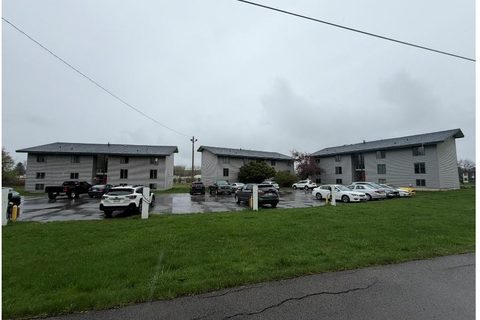
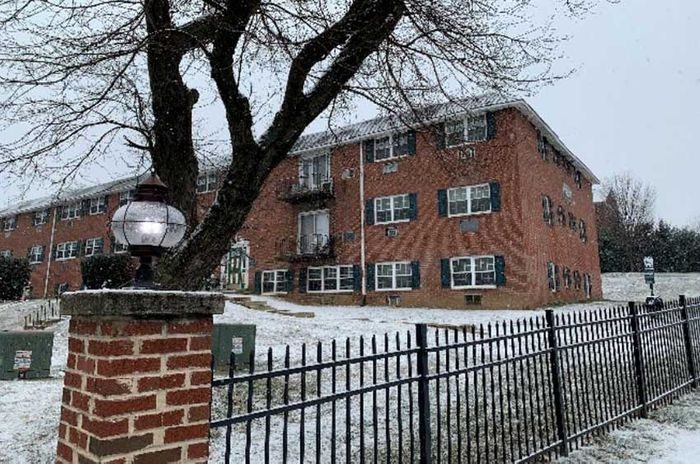
Recent Multifamily Loan Closings
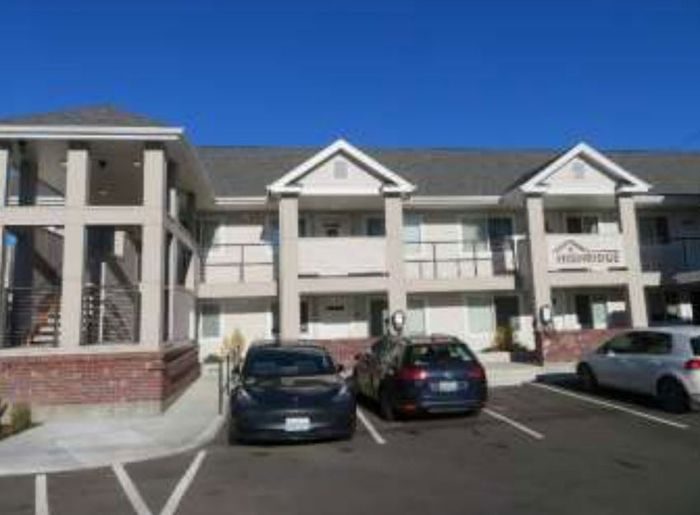
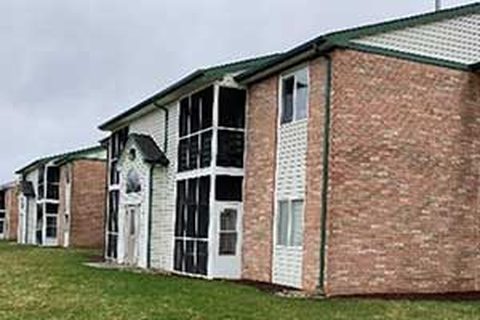
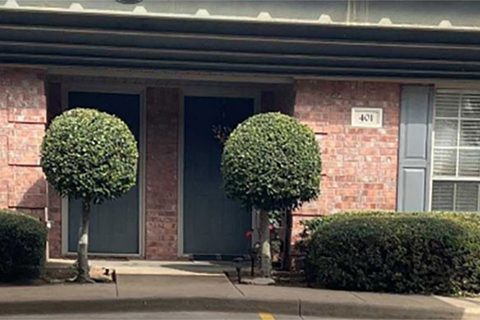
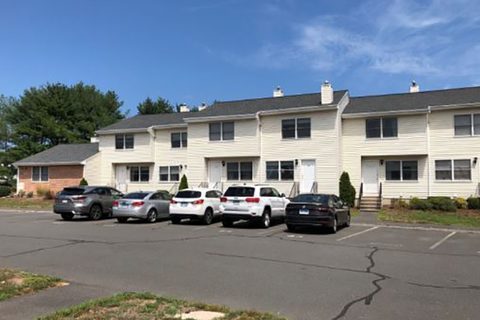
A sample of apartment and multifamily loans we have arranged for investors nationwide.
Other Property & Loan Types We Finance in Pennsylvania
As a full-service commercial mortgage broker, we arrange Pennsylvania financing across every major property and loan type:
We consider commercial loan requests of all sizes, beginning at $1,500,000.
What Our Clients Say
“As a real estate attorney, I trust that Select Commercial will deliver commercial mortgages in a timely manner. My clients are always handled professionally, and the rates and terms are excellent. I heartily recommend them.”
David S. · New York City“I spoke to several commercial lenders before finding Select Commercial. They got me a lower rate and their service was exceptional. If you need a multifamily loan, you need to talk to Stephen.”
Nathan B. · Philadelphia, PA“Select Commercial was very helpful with my multifamily mortgage. Stephen went over several options and we came up with the best lender to meet my needs. I got the funds and also lowered my payments.”
Gary M. · Portland, OR“Select Commercial offered 100% financing for my medical practice when my bank would have required 20% down. They delivered something my bank could not, and handled everything professionally.”
John C. · Boston, MAGet Your Pennsylvania Multifamily Loan Quote
No cost, no obligation. Written answers within 48 hours on Pennsylvania multifamily loans over $6,000,000.
- No application or processing fees
- Written answers within 48 hours
- For 5+ unit and commercial properties, $1.5M and up