
Washington · Over $6 Million
Washington Multifamily Loans
Select Commercial arranges Washington multifamily loans, with rates as low as 6.22%, up to 80% LTV and non-recourse agency options. We compare Fannie Mae, Freddie Mac, FHA/HUD and CMBS. For loans under $6 million, see Washington apartment loans. See current rates on every loan type we offer.
Get a Free QuoteFinancing Options in Washington
Washington apartment, multifamily and commercial properties each have dedicated financing. Pick the page that matches your property:
Financing more of the state? See Washington apartment loans and Washington commercial mortgages.
Financing in another state? Explore our apartment loans, multifamily loans and commercial mortgages nationwide.
Washington Multifamily Loan Rates
Rates updated as of October 21, 2026
| Loan Type | Rate* | Max LTV |
|---|---|---|
| 5 Year Fixed | 6.22% | Up to 80% |
| 7 Year Fixed | 6.26% | Up to 80% |
| 10 Year Fixed | 6.35% | Up to 80% |
- Streamlined underwriting for institutional multifamily
- Cash-out refinances are acceptable
- Interest-only and non-recourse options
- Minimum 1.25x debt-service-coverage ratio
Washington Apartment Loans
For smaller apartment building loans, under $6 million
Rates last updated October 21, 2026. Rates and maximum LTV shown represent our best-case pricing scenarios. Actual rates, LTV, and loan terms are subject to underwriting approval and may vary.
Washington Apartment Building Loans
Not every Washington apartment property is over $6 million, and we finance smaller buildings too. For 5+ unit Washington apartment properties from $1,500,000 to $6 million, see our Washington apartment loans page for Fannie Mae Small Loan, Freddie Mac SBL, bank and credit union options.
Compare Washington Large-Balance Programs
As a broker we place your large-balance Washington multifamily loan with the right capital source. Typical starting points for properties over $6 million:
| Program | Typical rate* | Max leverage | Best for |
|---|---|---|---|
| Fannie Mae DUS | 6.22% | Up to 80% | Non-recourse, fixed to 30 yrs |
| Freddie Mac | 6.26% | Up to 80% | Non-recourse large-balance |
| FHA / HUD | 6.83% | Up to 85% | Highest leverage, 35-yr amortization |
| CMBS / conduit | 7.00% | Up to 75% | Non-recourse, flexible underwriting |
Most large-balance lenders look for a debt-service-coverage ratio (DSCR) of at least 1.25x. For properties under $6 million, see our Washington apartment loans.
Rates last updated October 21, 2026. Rates and maximum LTV shown represent our best-case pricing scenarios. Actual rates, LTV, and loan terms are subject to underwriting approval and may vary.
2026 Washington Multifamily Investment and Lending Outlook
Seattle apartment pricing has reset by roughly fifteen percent per unit in a year while vacancy tightened. That combination is what a buyer’s market looks like.
Kidder Mathews reported Seattle multifamily figures for the second quarter of 2026 showing vacancy at 6.7%, down 30 basis points year over year, average asking rent at $2,048 up 0.94%, an average cap rate of 5.7% up 10 basis points from a year earlier, and an average sale price of $276,610 per unit, down 14.75% year over year.
Occupancy improving while price per unit falls almost fifteen percent is not a demand problem. It is a repricing of capital, and it means a 2026 Seattle acquisition is being underwritten against materially lower basis than the same asset carried in 2025. Deliveries help: 3,813 units year to date, down 53.15% from the prior year, against 6,085 units of absorption, though 19,368 units remain under construction.
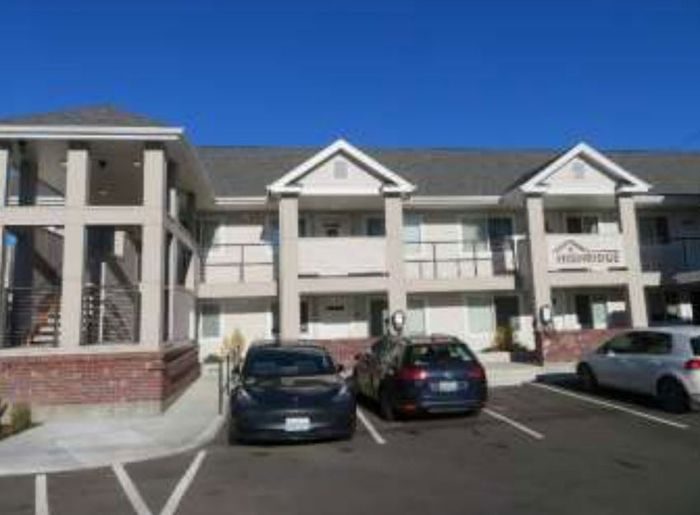
Recent trades show the dispersion. The largest in the quarter was Terra at Monroe, 222 units at $66,500,000, about $299,500 per unit. On the Eastside, Vista Ridge in Issaquah, 91 units built in 1992, traded for $37,000,000, roughly $406,600 per unit, at 97.8% occupancy with a $27,000,000 acquisition and renovation loan. The seller had held it since 1996, when it cost $7.3 million. Issaquah at $406,600 per door is 47% above the market average and should be read as an Eastside premium rather than a market indicator.
Published Seattle rent levels differ by vendor by roughly $178 per unit, or about 8.7%, because the survey universes differ. Cite one and name it.
WaFd, headquartered in Seattle, is the largest Washington multifamily portfolio lender and the direction of its book is informative: $4.72 billion of five-or-more-unit loans at September 30, 2025, or 22.2% of a $21.27 billion gross loan book, up in both dollars and share while total loans shrank by about $1.1 billion. It leaned into apartments while deleveraging elsewhere.
Washington Caps Your Rent Increases, Unless Your Building Is Under Twelve Years Old
Washington adopted statewide rent stabilization in 2025. It is the most consequential single fact for any Washington apartment loan, and the exemption that matters most is tied to one date on one document.
The cap. Under RCW 59.18.700, enacted by House Bill 1217 and effective May 7, 2025, a landlord may not increase rent over any twelve-month period by more than seven percent plus the Consumer Price Index, or ten percent, whichever is less. The index is the June twelve-month percent change in the Consumer Price Index for all urban consumers, all items, Seattle area. No rent increase at all is permitted during the first twelve months of a tenancy. The Department of Commerce publishes the annual maximum, and ninety days of advance written notice is required.
The published maximums are 10% through December 31, 2025, 9.683% for calendar 2026, and 10% for calendar 2027. The 2027 figure is worth noting: the formula produced 11.53% and was cut to the statutory ten percent ceiling.
The statute expires July 1, 2040. Both RCW 59.18.700 and 59.18.710 carry that date.
The exemption that matters. Under RCW 59.18.710, the cap does not apply to units whose first certificate of occupancy was issued 12 or less years before the date of the notice. Also exempt: public housing authorities, public development authorities and nonprofits where maximum rents are regulated under other affordable housing program requirements; units in developments allocated federal low-income housing tax credits under 26 U.S.C. § 42 with an enforceable regulatory agreement; and several owner-occupancy situations.
Read the owner-occupancy exemptions carefully, because they do not reach an institutional borrower. The statute provides that those exemptions do not apply to real estate investment trusts, corporations, or limited liability companies with corporate members. The standard single-purpose borrowing entity gets no benefit from them, and sponsors regularly assume otherwise.
Six consequences for a large-balance Washington loan.
The revenue line has a legal ceiling. For any property more than twelve years past its first certificate of occupancy, trended rent growth above roughly ten percent is not legally available. A pro forma assuming a double-digit market recovery is not underwritable here, however the market behaves.
The twelve-year exemption is a rolling cliff, and the certificate of occupancy date is a load-bearing fact. The test is twelve or fewer years before the date of the notice, so it expires notice by notice. A ten-year loan on a property whose certificate of occupancy was issued five years ago has roughly seven exempt years and three capped years inside the term, and the refinance and exit underwriting changes at that date. Make the certificate of occupancy a closing deliverable with its exact date, not an assumption.
Loss-to-lease recapture is throttled. A value-add acquisition bought below market cannot be marked up quickly. That lengthens the business plan, defers the coverage improvement that supports an exit, and argues for a longer interest-only period or a longer term than the same deal would need in an unregulated state.
Prior-owner compliance is a diligence and escrow item. A tenant or the Attorney General may sue. Damages include excess rent paid plus up to three months of unlawful charges plus attorney fees, and the Attorney General may recover civil penalties of up to $7,500 per violation. Review the last twenty-four months of rent increase notices on any acquisition, including whether exemption facts were stated in them as the statute requires.
The 2040 sunset sits inside your loan. A 2026-vintage ten-year loan matures well inside the regulated period, a fifteen-year loan matures only just after it, and a thirty-year amortization schedule runs far past it. Exit cap rate assumptions should not price in deregulation.
Two Washington transaction costs that are larger than most states.
The real estate excise tax under RCW 82.45 is graduated: 1.1%, 1.28%, 2.75% and 3.0%, with the top rate applying above $3,025,000 for 2025 and 2026 and above $3,051,000 from January 1, 2027. Thresholds adjust every four years by the lesser of shelter index growth or five percent. On a $25,000,000 apartment sale the state portion alone comes to roughly $719,000, about 2.88% of price, before any local excise tax. Confirm the local rate with the jurisdiction, because it is added on top.
And an entity-level transfer does not avoid it. Under RCW 82.45.033 a controlling interest is fifty percent or more of voting power or of capital, profits or beneficial interest, transfers within any thirty-six months are aggregated, and the Department of Revenue applies an “acting in concert” test under which persons with common ownership or control, or whose collective negotiation shows they function as a single entity, are treated together. Staged forty-nine percent structures do not clear it. The return is due within five days of the completed transfer, with penalties beyond one month, which is a hard calendar item on an entity closing.
If your property carries a multifamily property tax exemption, model its expiration. Under chapter 84.14 RCW the terms run eight years with no affordability condition, twelve years with at least twenty percent of units affordable to low and moderate income households, or twenty years under inclusionary or station-area provisions carrying 99-year or 50-year covenants. A twelve-year extension is available on initial eight- and twelve-year exemptions where the owner commits to twenty percent low-income affordability and applies within eighteen months of expiration. At expiration the value is treated as new construction for property tax purposes, which is a step-up inside most loan terms: an eight-year exemption granted in 2021 reverts in 2029, mid-term on a 2026 ten-year loan. Underwrite the post-expiration tax for the exit, not the current abated figure. No new exemptions may be granted on or after January 1, 2032.
One lender-specific caution on that program. Under RCW 84.14.110, conversion to non-residential use or discontinuance of the affordability commitment triggers cancellation, with additional tax retroactive to the conversion date plus a twenty percent penalty and statutory interest, and a thirty-day owner appeal. The priority of the resulting lien relative to a recorded mortgage should be confirmed with Washington counsel before closing, because it is the kind of exposure that is triggered by borrower conduct rather than by market conditions.
Finally, a point in the borrower’s favor: Washington has no state income tax, and under WAC 458-20-118 amounts derived from the rental of real estate are exempt from the business and occupation tax where the arrangement is a true lease conveying exclusive possession. But the same rule provides no exemption for a mere license to use or enjoy real property, so stays under thirty days, storage, parking and similar license income can be taxable under the service classification. Material short-term, furnished or co-living revenue carries a tax the conventional rent roll does not, and should not be underwritten at the same margin.
2026 Washington Multifamily Metro Snapshots
A look at the Washington metros we most actively finance, with 2026 market indicators and the local supply and demand picture:
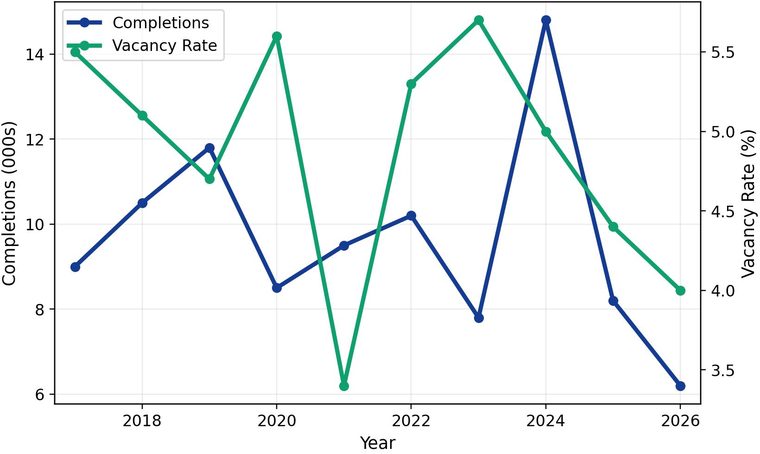
- Employment: about 8,000 jobs added in 2026 (approximately +0.4%)
- Construction: about 6,200 units projected for delivery, roughly 25% fewer than 2025
- Vacancy: projected near 4.0%, improving by roughly 30 bps
Washington Multifamily Loan Programs
As a broker, we compare every large-balance program to find your best fit:
Recent Multifamily Loan Closings
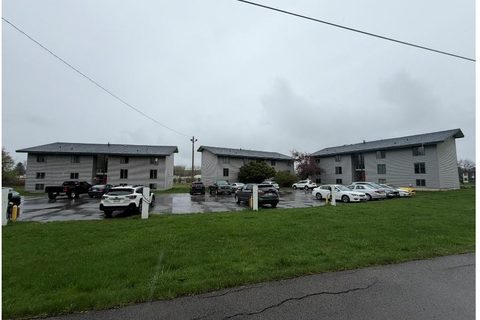
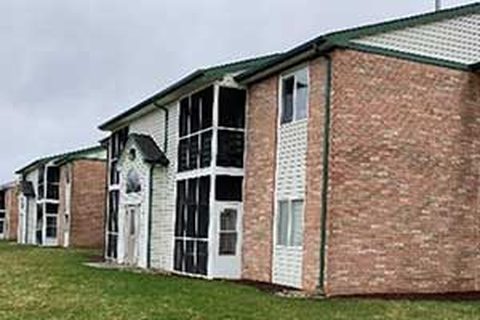
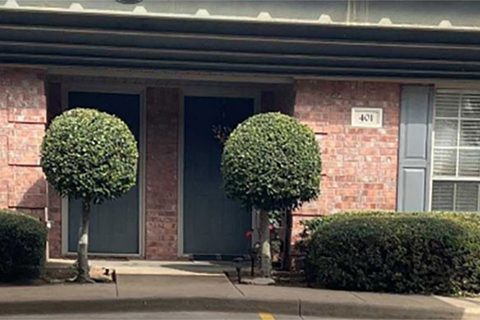
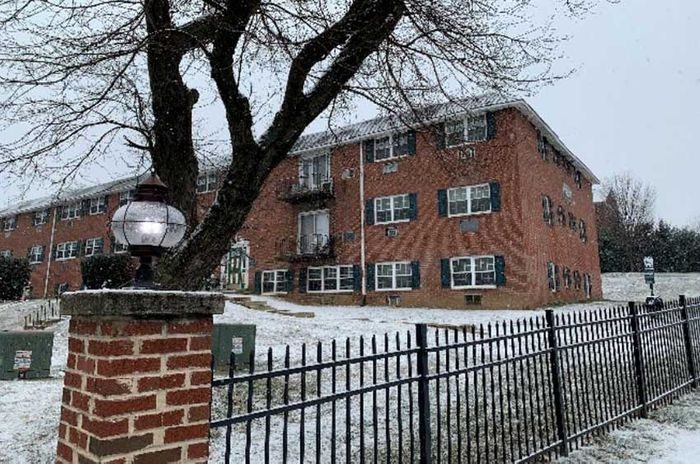
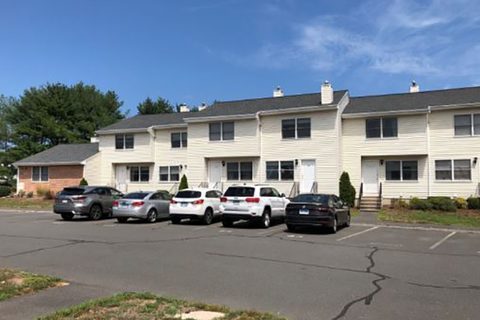
A sample of apartment and multifamily loans we have arranged for investors nationwide.
Other Property & Loan Types We Finance in Washington
As a full-service commercial mortgage broker, we arrange Washington financing across every major property and loan type:
We consider commercial loan requests of all sizes, beginning at $1,500,000.
What Our Clients Say
“As a real estate attorney, I trust that Select Commercial will deliver commercial mortgages in a timely manner. My clients are always handled professionally, and the rates and terms are excellent. I heartily recommend them.”
David S. · New York City“I spoke to several commercial lenders before finding Select Commercial. They got me a lower rate and their service was exceptional. If you need a multifamily loan, you need to talk to Stephen.”
Nathan B. · Philadelphia, PA“Select Commercial was very helpful with my multifamily mortgage. Stephen went over several options and we came up with the best lender to meet my needs. I got the funds and also lowered my payments.”
Gary M. · Portland, OR“Select Commercial offered 100% financing for my medical practice when my bank would have required 20% down. They delivered something my bank could not, and handled everything professionally.”
John C. · Boston, MAGet Your Washington Multifamily Loan Quote
No cost, no obligation. Written answers within 48 hours on Washington multifamily loans over $6,000,000.
- No application or processing fees
- Written answers within 48 hours
- For 5+ unit and commercial properties, $1.5M and up