
West Virginia · Over $6 Million
West Virginia Multifamily Loans
Select Commercial arranges West Virginia multifamily loans, with rates as low as 6.22%, up to 80% LTV and non-recourse agency options. We compare Fannie Mae, Freddie Mac, FHA/HUD and CMBS. For loans under $6 million, see West Virginia apartment loans. See current rates on every loan type we offer.
Get a Free QuoteFinancing Options in West Virginia
West Virginia apartment, multifamily and commercial properties each have dedicated financing. Pick the page that matches your property:
Financing more of the state? See West Virginia apartment loans and West Virginia commercial mortgages.
Financing in another state? Explore our apartment loans, multifamily loans and commercial mortgages nationwide.
West Virginia Multifamily Loan Rates
Rates updated as of October 21, 2026
| Loan Type | Rate* | Max LTV |
|---|---|---|
| 5 Year Fixed | 6.22% | Up to 80% |
| 7 Year Fixed | 6.26% | Up to 80% |
| 10 Year Fixed | 6.35% | Up to 80% |
- Streamlined underwriting for institutional multifamily
- Cash-out refinances are acceptable
- Interest-only and non-recourse options
- Minimum 1.25x debt-service-coverage ratio
West Virginia Apartment Loans
For smaller apartment building loans, under $6 million
Rates last updated October 21, 2026. Rates and maximum LTV shown represent our best-case pricing scenarios. Actual rates, LTV, and loan terms are subject to underwriting approval and may vary.
West Virginia Apartment Building Loans
Not every West Virginia apartment property is over $6 million, and we finance smaller buildings too. For 5+ unit West Virginia apartment properties from $1,500,000 to $6 million, see our West Virginia apartment loans page for Fannie Mae Small Loan, Freddie Mac SBL, bank and credit union options.
Compare West Virginia Large-Balance Programs
As a broker we place your large-balance West Virginia multifamily loan with the right capital source. Typical starting points for properties over $6 million:
| Program | Typical rate* | Max leverage | Best for |
|---|---|---|---|
| Fannie Mae DUS | 6.22% | Up to 80% | Non-recourse, fixed to 30 yrs |
| Freddie Mac | 6.26% | Up to 80% | Non-recourse large-balance |
| FHA / HUD | 6.83% | Up to 85% | Highest leverage, 35-yr amortization |
| CMBS / conduit | 7.00% | Up to 75% | Non-recourse, flexible underwriting |
Most large-balance lenders look for a debt-service-coverage ratio (DSCR) of at least 1.25x. For properties under $6 million, see our West Virginia apartment loans.
Rates last updated October 21, 2026. Rates and maximum LTV shown represent our best-case pricing scenarios. Actual rates, LTV, and loan terms are subject to underwriting approval and may vary.
2026 West Virginia Multifamily Investment and Lending Outlook
Be plain about the data: there is none to speak of, and that shapes how a West Virginia loan has to be presented.
No national research house publishes a West Virginia multifamily market report. We checked the major brokerage and research publishers that cover Columbus, Pittsburgh, Louisville and Richmond, and none of them covers Charleston, Huntington, Morgantown or Martinsburg. There is no published West Virginia apartment cap rate, price per unit, vacancy rate, rent growth figure, absorption number or construction pipeline that we would put on this page.
That absence has a practical consequence worth understanding before you go to market. An appraiser working a West Virginia apartment property has no published market data to anchor to, which puts more weight on the income approach and on whatever comparable sales the appraiser can source privately. The files that move fastest here arrive with a complete rent roll, three years of operating statements, a documented occupancy history and, where possible, the borrower’s own comparable sales research. The files that stall are the ones that assume the appraiser will find the data.
Two named West Virginia transactions give some sense of scale, and both need their dates read. Meadow Creek Apartments in Bridgeport, a Class A property across 29 residential buildings on 31.5 acres, carried a $33,000,000 Fannie Mae fixed-rate acquisition loan on a seven-year term, reported in May 2023. Elmtree Townhouse Apartments in Martinsburg, 97 units built in 2006, traded for $10,000,000, about $103,100 per unit, in September 2020. A 2020 price per unit is historical context, not a current market indicator.
In-state bank capacity exists and is heavily weighted to commercial real estate. WesBanco, headquartered in Wheeling, carried $11.09 billion of commercial real estate loans at June 30, 2026, roughly 57% of a $19.48 billion portfolio. It does not break out a multifamily figure, so apartments sit inside its improved-property category rather than as a disclosed line.
In West Virginia a Municipal Boundary Decides Your Tax Ceiling
West Virginia assigns every property to one of four classes with different constitutional levy ceilings, and for an apartment building the class turns on something that has nothing to do with the building: whether it sits inside a municipality.
The assessment base. Under W.Va. Code § 11-3-1, property is assessed annually at sixty percent of its true and actual value, as of a July 1 assessment date preceding the tax year. True and actual value means the price for which the property would sell if voluntarily offered for sale by the owner, excluding forced-sale prices, and for residential property the assessor must also consider potential rental income under normal local conditions.
The classes, under § 11-8-5. Class I covers intangible personal property and certain agricultural personal property. Class II is owner-occupied residential property used exclusively for residential purposes, plus farmland used by its owner or bona fide tenant. Class III is all real and personal property situated outside a municipality not taxed in Class I or II. Class IV is all property situated inside a municipality not taxed in Class I or II.
The ceilings, under § 11-8-6. The aggregate of taxes assessed in any one year by all levying bodies combined may not exceed fifty cents per $100 of assessed valuation on Class I, one dollar on Class II, one dollar fifty on Class III, and two dollars on Class IV. The statute frames these as the limits of the Tax Limitation Amendment.
An apartment building is not owner-occupied, so it cannot be Class II. It falls in Class III outside municipal limits and Class IV inside them, carrying a levy ceiling of one and a half times, or twice, the ceiling that applies to otherwise identical owner-occupied housing. And the Class III to Class IV split turns on a boundary line, not on the building, the tenants or the rents.
What that is worth. Take a $10,000,000 apartment property, assessed at sixty percent, so $6,000,000 of assessed value. At the Class IV ceiling of $2.00 per $100 that is $120,000 a year. At the Class III ceiling of $1.50 it is $90,000. The Class II ceiling, for comparison, would be $60,000.
The $30,000 annual difference between Class III and Class IV is not abstract. Capitalized at six percent it is roughly $500,000 of value. Run through a 1.25 times coverage test at a typical fixed-rate mortgage constant, it supports roughly $300,000 of additional loan proceeds. Two identical buildings a block apart, one inside city limits and one outside, support measurably different debt.
So a West Virginia multifamily credit file needs three things that most borrowers do not think to assemble.
The municipal boundary determination in writing, not an inference from the mailing address. Addresses frequently carry a city name for properties outside the corporate limits.
The actual current aggregate levy rate for that specific taxing jurisdiction and class. The figures above are statutory ceilings. Actual levies are typically well below them, so the ceilings are the right number for a stress case and the wrong number for a base case. Get the current rate from the county.
A check for pending annexation. Annexation moves a property from Class III to Class IV and raises the ceiling by a third mid-loan, with no borrower action and no lender consent right. That belongs in the stress case on any property near a municipal boundary. Because classification follows from the statutory definitions rather than from a published schedule, confirm with the county assessor how your specific parcel is classified before you fix a tax assumption.
Two further West Virginia items at this loan size.
The transfer tax is county-variable and uncapped, but it does not touch the mortgage. Under § 11-22-2 the state excise tax on the privilege of transferring real property is $1.10 for each $500 of value, or 0.22%. The county base share is 55 cents per $500, and a county may increase its portion to a maximum of $1.65 per $500, or 0.33%, by majority vote of the county commission with published notice. Add a flat $20 fee per transfer into the Affordable Housing Fund. At the maximum county rate the combined tax reaches 0.55% of value, which is $55,000 on a $10,000,000 purchase. The grantor pays, but if the grantee accepts the document without payment the grantee becomes liable, and on transfers from trustees and county clerk tax sales the grantee pays.
Because the tax falls on the transfer rather than on the loan, a West Virginia refinance carries no excise tax. That makes this an inexpensive state in which to put on or increase large apartment debt, as distinct from acquiring. Confirm the rate with the specific county, since the option makes it variable.
And be careful with the BUILD WV incentive, because it does not do what its name suggests. Under W.Va. Code § 5B-2L-10 the property value adjustment credit is computed as approved costs multiplied by sixty percent, multiplied by the statewide average Class III property tax rate for the year of completion, multiplied by ten, and applied at one tenth per year over ten consecutive years. But § 5B-2L-9 makes it a credit against the taxes imposed under the personal and corporate income tax chapters. It is not a property tax abatement. The property still pays its full Class III or Class IV bill.
That distinction is worth a paragraph because getting it wrong oversizes a loan. The credit does not reduce the property tax line in net operating income, so it cannot support proceeds on a coverage or debt yield test. It is an equity-side benefit, it is non-transferable with no carryback or carryforward and is forfeited if unused in the year, and whether a given sponsor can actually use it depends on its own West Virginia tax position. It is also conditioned on the project sitting inside a certified district whose ten-year certification can lapse, and on clearing an annual statewide cap on aggregate approved project costs. Treat it as a return enhancement in the equity model and keep it out of the debt sizing.
West Virginia Multifamily Loan Programs
As a broker, we compare every large-balance program to find your best fit:
Recent Multifamily Loan Closings
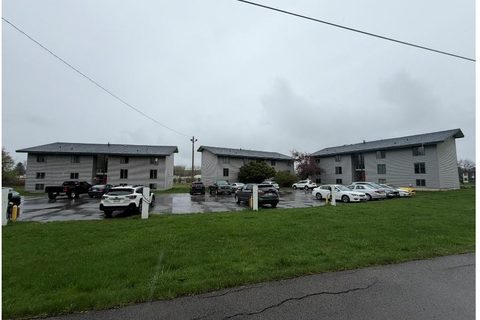
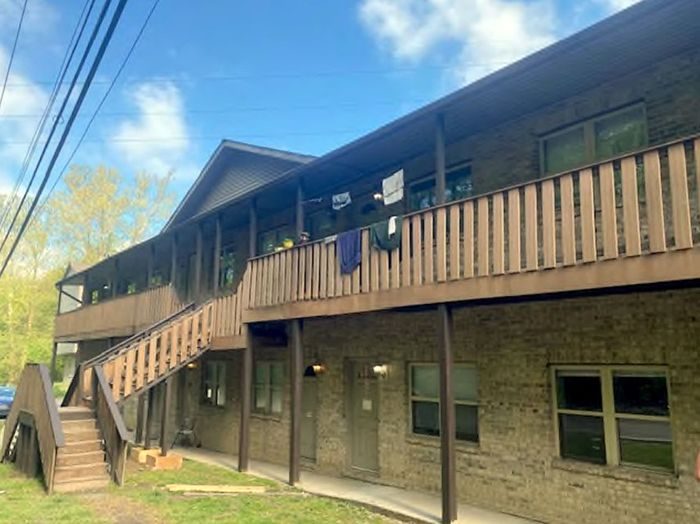
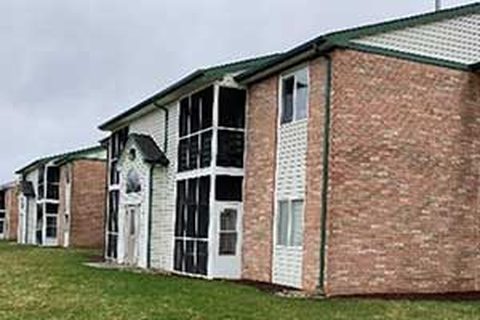
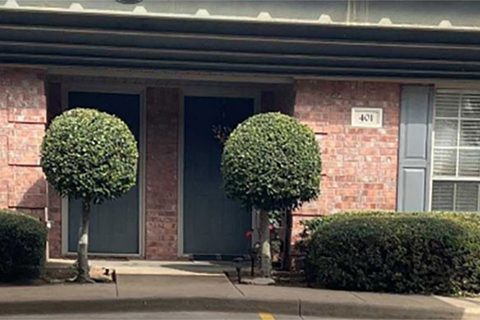
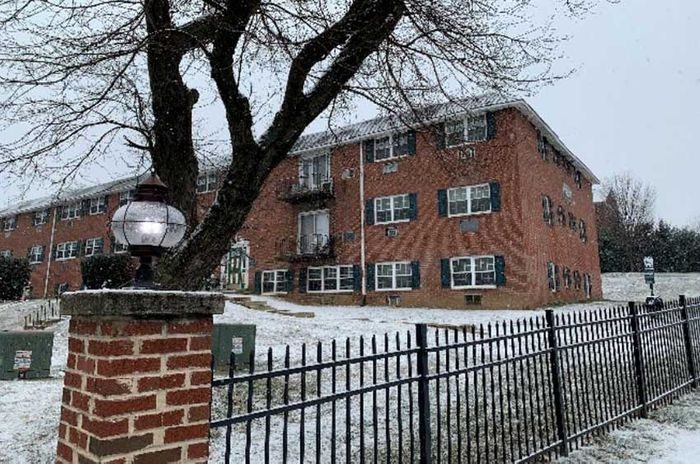
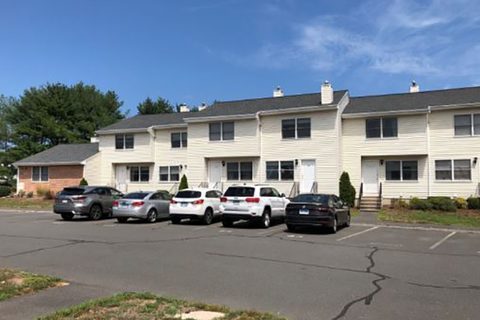
A sample of apartment and multifamily loans we have arranged for investors nationwide.
Other Property & Loan Types We Finance in West Virginia
As a full-service commercial mortgage broker, we arrange West Virginia financing across every major property and loan type:
We consider commercial loan requests of all sizes, beginning at $1,500,000.
What Our Clients Say
“As a real estate attorney, I trust that Select Commercial will deliver commercial mortgages in a timely manner. My clients are always handled professionally, and the rates and terms are excellent. I heartily recommend them.”
David S. · New York City“I spoke to several commercial lenders before finding Select Commercial. They got me a lower rate and their service was exceptional. If you need a multifamily loan, you need to talk to Stephen.”
Nathan B. · Philadelphia, PA“Select Commercial was very helpful with my multifamily mortgage. Stephen went over several options and we came up with the best lender to meet my needs. I got the funds and also lowered my payments.”
Gary M. · Portland, OR“Select Commercial offered 100% financing for my medical practice when my bank would have required 20% down. They delivered something my bank could not, and handled everything professionally.”
John C. · Boston, MAGet Your West Virginia Multifamily Loan Quote
No cost, no obligation. Written answers within 48 hours on West Virginia multifamily loans over $6,000,000.
- No application or processing fees
- Written answers within 48 hours
- For 5+ unit and commercial properties, $1.5M and up