
Delaware
Delaware Apartment Loans
Select Commercial arranges Delaware apartment loans from $1,500,000, up to 80% LTV, with no upfront fees. Our lowest apartment rate today is 6.54% as of October 25, 2026. We compare Fannie Mae, Freddie Mac, FHA, bank and bridge programs to fit your property. For larger balances, see multifamily loans. See current rates on every loan type we offer.
Get a Free Quote2026 Delaware Apartment Loan Market
The most important thing happening to Delaware apartment buildings in 2026 is not the rent line. Delaware reassessed every property in the state for the first time in decades, and for a great many owners the tax line no longer bears any relationship to its own history. That is covered in detail below, and it should be the first thing you look at on any Delaware apartment purchase.
Where rents stand. As of August 2026, average asking rent in Wilmington was $1,721, up 2.51% over the year. Newark was $1,704, down 0.45%. Dover was $1,678, up 0.1%. Those are RentCafe figures for professionally managed buildings of fifty units and up, measured on the same basis in all three Delaware markets. The three sit within about forty five dollars of each other, which is a remarkably tight band across an entire state, and only one of them is really moving.
A flat rent line does not mean a flat operating statement. That is the central Delaware point in 2026. A building whose rents rose two percent and whose tax bill rose considerably more has gone backwards on net operating income, and net operating income is what sizes the loan. This is currently a state where the expense side is doing more to the loan amount than the revenue side, and where an underwriter who reads only the rent trend is reading the wrong half of the file.
Where the Wilmington market clears. Forty two percent of Wilmington rentals fall between $1,501 and $2,000 a month, and the bedroom spread as of August 2026 ran about $1,508 for a studio, $1,579 for a one bedroom, $1,811 for two bedrooms and $2,223 for three. The step from a studio to a one bedroom is about seventy dollars, which is very compressed at the bottom, while the top step is wide. A building weighted toward studios and small one bedrooms is competing hard for a narrow premium; one with genuine three bedroom units is reaching further.
What that means for your file. Delaware apartment loans are sized on demonstrated in place income at a coverage ratio. Two Delaware specific items decide more files here than any market statistic: the reassessment and what it did to your tax line, and the realty transfer tax, which is an acquisition cost large enough to change your equity requirement. Both are below.
Across Delaware we arrange apartment building loans from $1,500,000 through agency, bank, FHA and bridge programs. Rate and leverage follow the rent roll and the trailing twelve months of operating income.
Delaware Apartment Loan Rates
Rates updated as of October 25, 2026
| Loan Type | Rate* | Max LTV |
|---|---|---|
| 5 Year Fixed | 6.54% | Up to 80% |
| 7 Year Fixed | 6.57% | Up to 80% |
| 10 Year Fixed | 6.61% | Up to 80% |
- Cash-out refinances are acceptable
- Interest-only and non-recourse options
- Minimum 1.25x debt-service-coverage ratio
See Delaware Multifamily Rates Over $6 Million, Starting at 6.14%
Rates last updated October 25, 2026. Rates and maximum LTV shown represent our best-case pricing scenarios. Actual rates, LTV, and loan terms are subject to underwriting approval and may vary.
Delaware Markets We Finance
Delaware is three counties and four apartment markets, running from a dense northern city that functions as part of the Philadelphia region down to a seasonal coast.
Wilmington and northern New Castle County
The largest apartment market in Delaware, at about $1,721 as of August 2026 and up 2.51% over the year, the only one of the three really moving. Wilmington runs on banking and financial services, the corporate and legal economy that follows from Delaware’s role in business formation, healthcare and chemicals, and it sits close enough to Philadelphia to draw on that labor market. The stock ranges from older brick rowhouse and walk up product in the city to mid-century and newer garden apartments through Brandywine Hundred and along the corridor. This is the deepest part of Delaware for agency small balance, bank and credit union competition. It is also the county where the reassessment landed hardest and where the school district rate question described below is live.
Newark and Middletown
Newark was about $1,704 as of August 2026, down 0.45%. It is a university town with a large state flagship campus, which means part of its rental stock is student oriented and needs to be identified as such at the outset, because by the bed leasing, parental guaranties, an academic calendar and summer vacancy change how a lender reads a rent roll. Middletown and the southern New Castle County towns have taken most of the county’s recent residential growth and carry newer product at a lower basis than Wilmington.
Dover and Kent County
About $1,678 as of August 2026 and essentially unchanged at up 0.1%. Dover carries state government, a large air force base, a university and a regional healthcare and retail role. It is the most affordable of the three measured Delaware markets and the steadiest, with a demand base that does not move quickly with the national cycle. Kent County completed its reassessment ahead of the other two counties, which matters for how you read a Dover trailing twelve months. Basis per unit is low and these are community bank and small balance agency files.
Sussex County and the beaches
A genuinely different business. Rehoboth Beach, Lewes, Bethany Beach and the coastal communities run on tourism, retirement and second home demand, with a large share of housing that is not conventionally rented year round and short term rental competition that is a real part of the analysis. Inland Sussex runs on agriculture and poultry processing. Conventional apartment comparables across the county are thin, the economy is seasonal, and Sussex had by far the oldest assessments in Delaware before the reassessment, so the change there was the largest of the three counties in relative terms. Loans get done throughout Sussex, on longer operating histories and better documentation.
Rent figures above are average asking rents across professionally managed buildings of fifty units and up as of August 2026. Where we do not yet have a dedicated apartment page for a Delaware city, the link goes to our commercial mortgage page for that market.
Compare Delaware Apartment Loan Programs
As a broker we compare every program for your best-fit Delaware apartment financing:
| Program | Typical rate* | Max leverage | Best for |
|---|---|---|---|
| Fannie Mae Small Loan | 6.54% | Up to 80% | Non-recourse, fixed to 30 yrs |
| Freddie Mac SBL | 6.60% | Up to 80% | $2M to $10M small balance |
| FHA / HUD | 6.74% | Up to 85% | Highest leverage, longest term |
| Bank / portfolio | 6.50% | Up to 75% | Flexible, value-add |
| Bridge | 9.00% | Up to 80% LTC | Reposition, lease-up |
Most apartment lenders look for a debt-service-coverage ratio (DSCR) of at least 1.25x.
Rates last updated October 25, 2026. Rates and maximum LTV shown represent our best-case pricing scenarios. Actual rates, LTV, and loan terms are subject to underwriting approval and may vary.
Delaware Just Reassessed for the First Time in Decades
Before the current cycle, Delaware counties were billing property taxes off assessments set in 1974, 1983 and 1987. Sussex County had not reassessed since 1974. New Castle County had not since 1983. Kent County had not since 1987. Whatever an apartment building’s tax line looked like a few years ago, it was calculated off a value struck when the building may not have existed and the neighborhood certainly looked different.
What changed. In May 2020 the Delaware Court of Chancery held that the system was unlawful, finding that the outdated values the three counties used to calculate annual bills failed the state constitutional requirement that property owners be taxed equally, and failed the statutory requirement to assess at true value in money. The case settled on terms requiring county wide reassessments, and legislation now requires reassessments on a recurring cycle rather than leaving them to county discretion.
When the new values landed. Kent County completed its reassessment for the 2024 tax year. New Castle and Sussex completed theirs for the 2025 tax year, with notices of tentative assessed values mailed to owners in November 2024. New Castle County tax bills reflecting the new values went out in July 2025, and the shift for individual properties was large in both directions.
Why this dominates a Delaware apartment file right now. A trailing twelve months that straddles the change describes two different tax regimes in one document. A trailing twelve months that predates it describes a regime that no longer exists. Neither is a reliable basis for sizing a loan, and a lender will not treat it as one. What an underwriter wants on a Delaware property in 2026 is the current bill under the new assessment, and where the twelve month history predates it, an explicit reconciliation showing what the annualized tax figure actually is going forward. Bring that yourself. It is the single most useful thing a Delaware borrower can put in a file this year.
The appeal window is real and it closes. Each county runs its own appeal process on its own deadlines. Delaware counsel writing on the reassessment has been blunt about the consequence of missing them: an owner who does not file on time is barred from appealing that year’s taxes. If you are buying, find out whether the seller appealed, what the outcome was, and whether an appeal is still open. If you own, know your county’s deadline and diary it, because with reassessments now on a recurring cycle this is a permanent part of operating in Delaware rather than a one time event.
One open question specific to New Castle County. In August 2025 the General Assembly met in special session on the fallout and passed a package of measures. One of them, House Bill 242, permitted school districts in New Castle County to adopt split rate structures charging a higher rate on commercial property in order to lower the residential rate. Landlord and hotel owner plaintiffs filed suit in September 2025 challenging it. We are not going to tell you how that came out or what the current position is, because it is exactly the kind of thing that moves. What we will tell you is the question to ask: how is apartment property classified under the rate structure applying to your parcel, and is that classification settled. On a multi-unit building in New Castle County that is no technicality. Whether an apartment building is billed at a residential rate or a commercial one can move the expense line materially, and therefore the loan amount. Put it to your Delaware counsel and the school district before you go under contract.
Financing Options in Delaware
Delaware apartment, multifamily and commercial properties each have dedicated financing. Pick the page that matches your property:
Financing more of the state? See Delaware commercial mortgages.
Financing in another state? Explore our apartment loans, multifamily loans and commercial mortgages nationwide.
Budget the Realty Transfer Tax Before You Bid
Delaware’s realty transfer tax is among the largest single closing costs in American commercial real estate, and it is not financed. Buyers from states where transfer taxes are a rounding error routinely underestimate the equity they need to close a Delaware apartment purchase.
How it is structured. The tax is imposed under Title 30, Chapter 54 of the Delaware Code on the fair market value of the property, and it is divided between grantor and grantee. There is a state rate and a local rate, and the state rate steps down where the county or municipality imposes a high enough local rate. The Delaware Department of Finance describes the practical outcome as a combined rate reaching four percent of value in most jurisdictions. Because the split between state and local varies by where the property sits, confirm the exact combined rate and the division for your specific county or municipality with your title company and your Delaware counsel rather than assuming a figure.
What that means in cash. At a combined four percent, the transfer tax on a three million dollar apartment purchase is one hundred and twenty thousand dollars, and the buyer’s statutory share of that is sixty thousand. That sixty thousand is not part of the purchase price, is not part of the appraised value, and is not covered by the loan. It is additional equity, on top of your down payment and your other closing costs, and it needs to be in the model from the first time you run the numbers rather than discovered at the closing table.
How it interacts with your loan. Lenders size to loan to value and loan to cost, and a large unfinanced transaction cost pushes total capitalization above purchase price. If you are targeting a specific cash in yield, the transfer tax is part of the denominator. It also affects hold period math: a cost of this size at acquisition takes longer to earn back, which is one reason Delaware apartment ownership tends to reward longer holds than a quick reposition.
The good news for refinances. The transfer tax is an acquisition cost, not a financing cost. Delaware’s statute lists mortgages among the instruments outside the tax, so refinancing a Delaware apartment building you already own does not trigger it. If you are weighing a refinance and a sale, that asymmetry belongs in the comparison, and it is a meaningful argument for pulling equity out of a Delaware property rather than trading it.
Entity level transfers deserve real advice, not a rule of thumb. Whether and how the tax reaches transfers of interests in an entity that owns Delaware real estate is a question with a statutory answer and a history behind it, and it is not one to work out from a web page. If your transaction is structured at the entity level, get a written answer from Delaware counsel early, because the difference is measured in tens of thousands of dollars and it can change how the deal is papered.
Delaware Apartment Loan Types We Serve
We arrange financing across Delaware for:
- Urban high-rise apartment buildings
- Suburban garden apartment complexes
- Small apartment buildings with 5+ units
- Underlying cooperative apartment loans
- Portfolios of small apartment and rental properties
- Mixed-use and other multifamily property
Refinancing a Delaware Apartment Building
Refinancing is the easier half of the Delaware business at the moment, for two reasons. There is no transfer tax on a refinance, and if you have owned through the reassessment your current bill is a known number rather than a projection.
The rent roll and the trailing twelve months. Proceeds are set by in place income at a debt service coverage ratio near 1.25x. Send twelve full months of actuals rather than an annualized partial year.
The current tax bill under the new assessment, and a reconciliation if your history straddles it. This is the Delaware document that matters most in 2026. If your trailing twelve months contains part of a year at the old assessment and part at the new, show the annualized figure going forward and how you got to it. If you appealed, include the outcome. Do not leave a lender to work it out, because a lender working it out alone will work it out conservatively.
Utilities, metering and the plant. Buildings where residents pay their own heat and electricity carry a structurally lower expense ratio than buildings where the owner does, and a lender reads that difference straight into the loan amount. On older Wilmington stock in particular, send actual billing rather than an estimate.
The property condition report. On rowhouse, walk up and mid-century garden product, roofs, heating plant, wiring and the envelope drive the reserve number, and reserves come off the income used for sizing. Capital work completed in the last several years belongs in the file with invoices.
Cash out is available and is sized the same way. Agency, bank, credit union and life company lenders will all consider cash out on a stabilized Delaware apartment property. The constraint is the coverage math, not the program. Given what the transfer tax costs on a sale, Delaware owners considering a trade should price a cash out refinance against it before deciding, and the fastest way to start is to send the rent roll and the trailing twelve months.
Other Property & Loan Types We Finance in Delaware
As a full-service commercial mortgage broker, we arrange Delaware financing across every major property and loan type:
We consider commercial loan requests of all sizes, beginning at $1,500,000.
Delaware Apartment Complex Financing
In Delaware, loan size decides who competes. Smaller balances usually price best with regional banks, credit unions and the agency small balance programs, where familiarity with the county, its assessment position and the building stock counts for a great deal. Larger balances open the field to Fannie Mae, Freddie Mac, FHA, life companies and CMBS, and rates there are frequently tighter because the loan is large enough to securitize. The trade is a heavier package: full appraisal, property condition report, environmental review, and sizing driven by net operating income, debt service coverage and debt yield.
Delaware apartment lenders settle two questions before most others, and neither is about rent: what the property tax is under the new assessment and whether it is settled, and what total capitalization looks like once the transfer tax is included. Answer both with documents and the file moves. Send the rent roll and the trailing twelve months and we will tell you which lenders are sharpest on your property.
Delaware Multifamily Loan Rates
For larger balances, over $6 million
Recent Apartment Loan Closings
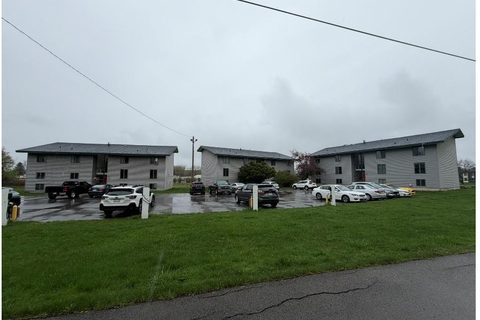
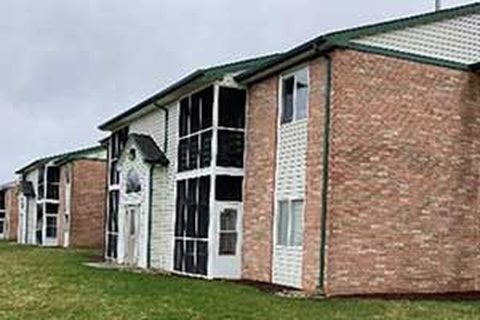
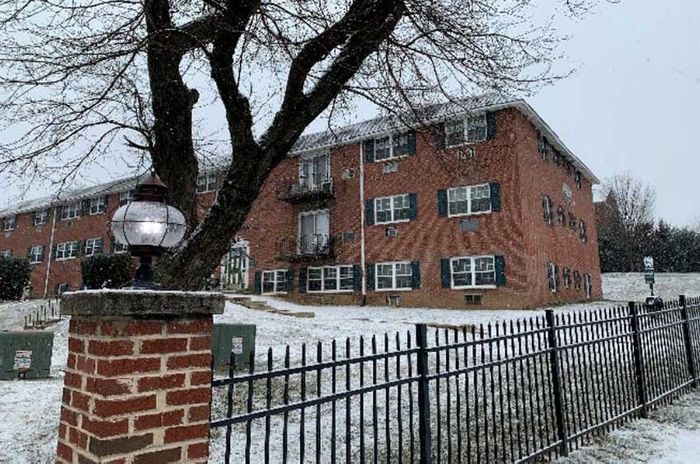
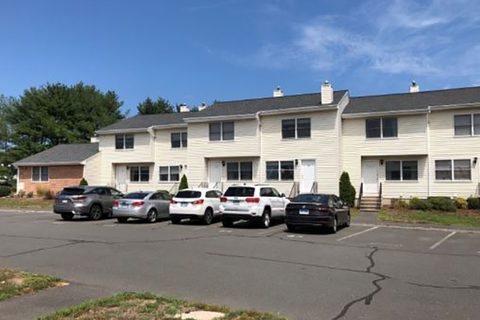
A sample of apartment and multifamily loans we have arranged for investors nationwide.
Apartment Loans Across Delaware
We arrange apartment loans throughout Delaware. Wilmington, Newark, Middletown, New Castle, Bear, Claymont, Dover, Smyrna, Milford, Seaford, Georgetown, Lewes, Rehoboth Beach and Millsboro are all financed through the same agency, bank, credit union and FHA programs. What changes from one market to the next is the county, its assessment and rate position, the age of the stock and the depth of the comparable set.
For larger balances see our Delaware multifamily loans. For office, retail, industrial and owner occupied property see Delaware commercial mortgages, and nationwide we lend in most major U.S. cities.
What Our Clients Say
“I am a veterinarian who purchased an existing practice. I was surprised to find a company that offered 100% financing at a good rate, with great terms and rates for medical office financing.”
Carol K. · Chicago, IL“I spoke to several commercial lenders before finding Select Commercial. They got me a lower rate and their service was exceptional. If you need a multifamily loan, you need to talk to Stephen.”
Nathan B. · Philadelphia, PA“Select Commercial was very helpful with my multifamily mortgage. Stephen went over several options and we came up with the best lender to meet my needs. I got the funds and also lowered my payments.”
Gary M. · Portland, OR“Select Commercial offered 100% financing for my medical practice when my bank would have required 20% down. They delivered something my bank could not, and handled everything professionally.”
John C. · Boston, MAGet Your Delaware Apartment Loan Quote
No cost, no obligation. Written answers within 48 hours on Delaware apartment loans from $1,500,000.
- No application or processing fees
- Written answers within 48 hours
- For 5+ unit and commercial properties, $1.5M and up