
Indiana
Indiana Apartment Loans
Select Commercial arranges Indiana apartment loans from $1,500,000, up to 80% LTV, with no upfront fees. Our lowest apartment rate today is 6.55% as of October 21, 2026. We compare Fannie Mae, Freddie Mac, FHA, bank and bridge programs to fit your property. For larger balances, see multifamily loans. See current rates on every loan type we offer.
Get a Free Quote2026 Indiana Apartment Loan Market
Indiana is a cash flow market with an unusual advantage that most borrowers never think to ask about: the state constitution puts a hard ceiling on your property tax bill as a percentage of assessed value. In a business where the tax line can quietly reprice a deal, that ceiling is worth real money, and it is set out further down this page.
Indianapolis took a genuine supply wave and is working through it. The metro added 6,075 units in 2025, about 2.9% of its existing stock, which is a large number for a market this size. Average asking rent across the metro was roughly $1,310 on a trailing three-month basis through February 2026, up 1.1% over the year, which was eighth best among the thirty largest metros. At city level, average rent across professionally managed buildings of fifty units and up was $1,266 as of August 2026, essentially flat at down 0.2%. The two figures cover different geographies and different building sets, so read them separately.
The smaller Indiana markets have been growing faster. Fort Wayne average rent reached $1,198 as of August 2026, up 5.25% over the year, well ahead of Indianapolis. Less new construction competing against existing buildings is most of the explanation, and it is a pattern that repeats across the state’s secondary cities.
Basis is why lenders like Indiana. Cost per unit sits well below the national average across every market in the state, which means an Indiana apartment loan is generally sized on debt service coverage rather than on loan to value. It also means the stock is older, so roofs, boilers and electrical service carry real weight in the property condition report.
Across Indiana we arrange apartment building loans from $1,500,000 through agency, bank, FHA and bridge programs. Rate and leverage follow the rent roll and the trailing twelve months of operating income, not your personal income.
Indiana Apartment Loan Rates
Rates updated as of October 21, 2026
| Loan Type | Rate* | Max LTV |
|---|---|---|
| 5 Year Fixed | 6.60% | Up to 80% |
| 7 Year Fixed | 6.63% | Up to 80% |
| 10 Year Fixed | 6.55% | Up to 80% |
- Cash-out refinances are acceptable
- Interest-only and non-recourse options
- Minimum 1.25x debt-service-coverage ratio
See Indiana Multifamily Rates Over $6 Million, Starting at 6.22%
Rates last updated October 21, 2026. Rates and maximum LTV shown represent our best-case pricing scenarios. Actual rates, LTV, and loan terms are subject to underwriting approval and may vary.
Indiana Markets We Finance
Indianapolis carries most of the state’s institutional apartment stock, but the smaller Indiana cities have been growing rents faster, and they finance differently. An Indiana apartment mortgage gets structured to the market rather than to the state.
Indianapolis
The largest apartment market in the state and the only one that took a real supply wave, with 6,075 units delivered in 2025, roughly 2.9% of existing stock. Rent growth of 1.1% over the year still placed the metro eighth among the thirty largest, which tells you demand held up while the new product was absorbed. Logistics, life sciences, healthcare and motorsport-adjacent manufacturing give the metro a broader base than it is usually given credit for. Agency, bank and credit union money all compete here, and Indianapolis apartment loan rates on a stabilized building with a clean rent roll are as sharp as anywhere in the Midwest.
Indianapolis apartment loans · Indianapolis commercial
Fort Wayne and northeast Indiana
The strongest rent growth in the state, at 5.25% over the year to an average of about $1,198 as of August 2026. Almost no new construction has competed against existing buildings, and a diversified manufacturing, healthcare and defense employment base has kept occupancy durable. Apartment building financing here is dominated by regional banks and credit unions who know the submarkets directly, and a well-run building frequently clears more leverage than an equivalent asset in Indianapolis.
South Bend and northern Indiana
University demand from Notre Dame anchors South Bend, with Elkhart’s recreational vehicle manufacturing and the wider Michiana economy around it. Stock is older and cost per unit is low, which puts the property condition report and a documented capital plan at the center of how an apartment complex loan gets sized here.
Evansville and southern Indiana
Evansville anchors the southwest on healthcare, manufacturing and river logistics, with the Louisville-adjacent counties across the south of the state running partly on that metro’s economy. Basis per unit is among the lowest in Indiana and going-in yields correspondingly higher, with very little new supply. These are relationship markets served by community banks, credit unions and the agency small-balance programs.
Rent figures above are average asking rents across professionally managed buildings of fifty units and up as of August 2026, except the Indianapolis metro figure, which is a trailing three-month average through February 2026. Where we do not yet have a dedicated apartment page for an Indiana city, the link goes to our commercial mortgage page for that market.
Compare Indiana Apartment Loan Programs
As a broker we compare every program for your best-fit Indiana apartment financing:
| Program | Typical rate* | Max leverage | Best for |
|---|---|---|---|
| Fannie Mae Small Loan | 6.62% | Up to 80% | Non-recourse, fixed to 30 yrs |
| Freddie Mac SBL | 6.60% | Up to 80% | $2M to $10M small balance |
| FHA / HUD | 6.83% | Up to 85% | Highest leverage, longest term |
| Bank / portfolio | 6.50% | Up to 75% | Flexible, value-add |
| Bridge | 9.00% | Up to 80% LTC | Reposition, lease-up |
Most apartment lenders look for a debt-service-coverage ratio (DSCR) of at least 1.25x.
Rates last updated October 21, 2026. Rates and maximum LTV shown represent our best-case pricing scenarios. Actual rates, LTV, and loan terms are subject to underwriting approval and may vary.
Indiana’s Property Tax Cap and Why Lenders Like It
Indiana is one of very few states that puts a constitutional ceiling on property tax. Rather than simply limiting how fast an assessment can rise, Indiana caps the tax bill itself as a percentage of a property’s gross assessed value. Homestead property is capped at 1%. Other residential property and agricultural land is capped at 2%. All other real and personal property is capped at 3%. Whatever the local rate would otherwise produce, the bill cannot exceed the applicable percentage.
Why that matters more than it sounds. In most states the property tax line is genuinely open-ended: a reassessment or a levy increase can move it far enough to change debt service coverage on its own, which is why lenders in Ohio, Michigan and New Jersey underwrite a forward tax figure rather than your current one. In Indiana there is a hard ceiling on how bad that can get. A lender stressing your net operating income against a tax increase knows exactly where the worst case stops, and that certainty shows up in how comfortably a file gets sized.
The question to settle is which cap applies to your building. The state uses three broad categories and does not spell out in the constitutional language where every apartment property lands, so the classification of your specific parcel is what governs. The difference between the 2% and 3% cap is a third of your maximum tax exposure, which is not a detail. Confirm the classification actually applied with the county assessor before you finalize a pro forma, and ask what figure your lender intends to underwrite.
Indiana also preempts local rent regulation, and goes further than most states. State law provides that a local unit may not regulate rental rates for privately owned real property, through a zoning ordinance or otherwise, unless the general assembly has authorized it. Property receiving government funds or benefits designated to provide reduced rents to low or moderate income tenants is carved out. Separately, local units are also barred from regulating a range of landlord and tenant relationship matters without state authorization. The practical effect is that you deal with one set of rules across the state rather than a different ordinance in every city, which is the opposite of the position in New Jersey, and a lender projecting your income here is not working against a statutory ceiling.
Financing Options in Indiana
Indiana apartment, multifamily and commercial properties each have dedicated financing. Pick the page that matches your property:
Financing more of the state? See Indiana commercial mortgages.
Financing in another state? Explore our apartment loans, multifamily loans and commercial mortgages nationwide.
Indiana City Spotlights: 2026 Apartment Market Notes
Beyond the major metros, we finance apartment buildings across Indiana. Current market notes for cities where borrowers ask us to lend:
- Fort Wayne: median 1-bedroom rent about $875, up 2% year over year (Zumper, August 2026), highly affordable with steady demand.
- South Bend: median 1-bedroom rent about $897, up 17% year over year (Zumper, August 2026), one of the fastest rent-growth small metros in the Midwest.
- Evansville: median 1-bedroom rent about $750 (Zumper, August 2026), among the most affordable apartment markets we serve.
National baseline for context: the U.S. median rent was $1,388 in July 2026, down 1.1% year over year, with rental vacancy near 7.2% (national rent report, July 2026). Each city above links to our local commercial mortgage page, and we finance 5+ unit apartment properties in every Indiana market from $1,500,000.
Indiana Apartment Loan Types We Serve
We arrange financing across Indiana for:
- Urban high-rise apartment buildings
- Suburban garden apartment complexes
- Small apartment buildings with 5+ units
- Underlying cooperative apartment loans
- Portfolios of small apartment and rental properties
- Mixed-use and other multifamily property
Refinancing an Indiana Apartment Building
Indiana refinances are usually straightforward, and the two things that decide them are the expense line and the condition of the building rather than anything about rent growth.
Start with the rent roll and the trailing twelve. Proceeds are sized on in-place income, and because Indiana basis is low, sizing is nearly always driven by debt service coverage rather than by loan to value. That puts every dollar of operating expense directly into the loan calculation. Insurance, utilities and payroll deserve a careful look before you send the statements, and if you have renewed anything at a lower cost, document it.
Then confirm your tax cap category. This is the Indiana-specific step. Knowing whether your parcel sits under the 2% or the 3% ceiling tells you the worst case on your largest fixed expense, and it is a useful thing to be able to state plainly to a lender rather than leave them to assume.
Then the building. Much of Indiana’s rental stock is old. Roofs, boilers, windows and electrical service are priced into the property condition report rather than overlooked, and deferred maintenance reduces proceeds. Owners who arrive with three clean years of operating statements and a funded capital plan consistently out-borrow owners with an identical building and a thin file. On a low-basis asset that documentation is frequently worth more than a modest improvement in rate.
Then the note. Confirm the maturity date and whether prepayment is yield maintenance, a step-down or open, and start six to nine months ahead of a balloon so there is room to shop more than one lender rather than accept an extension. Cash-out is available on most programs where the equity supports it.
Send the rent roll and the trailing twelve and we will underwrite the building the way the lender will, then come back with written options inside 48 hours at no cost. Indiana apartment loans start at $1,500,000, whether it is an eighteen-unit building in Evansville or a garden complex outside Indianapolis.
Other Property & Loan Types We Finance in Indiana
As a full-service commercial mortgage broker, we arrange Indiana financing across every major property and loan type:
We consider commercial loan requests of all sizes, beginning at $1,500,000.
Indiana Apartment Complex Financing
Loan size decides who competes. Because Indiana basis is low, a great many buildings here fall in the range where regional banks, credit unions and the agency small-balance programs are sharpest, and where a local relationship and a clean rent roll do most of the work. Larger balances open the field to Fannie Mae, Freddie Mac, FHA, life companies and CMBS, and rates there are often tighter because the loan is big enough to securitize, at the cost of a heavier package: full appraisal, property condition report, environmental review, and sizing driven by net operating income, debt service coverage and debt yield.
Indiana apartment lenders concentrate on the condition of older stock and on the expense line, since the tax ceiling already answers one of the questions they would otherwise have to model. Document both and the file moves quickly. Send the rent roll and the trailing twelve months and we will tell you which lenders are sharpest on your building.
Indiana Multifamily Loan Rates
For larger balances, over $6 million
Recent Apartment Loan Closings
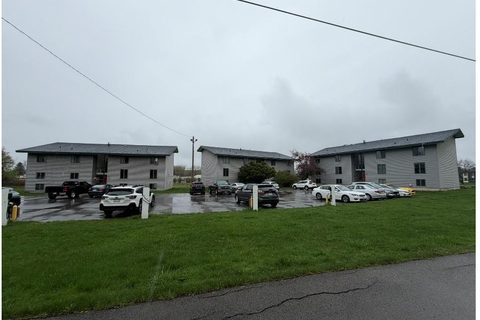
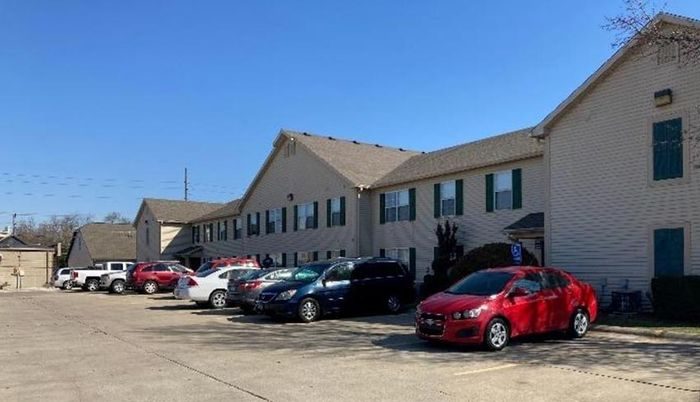
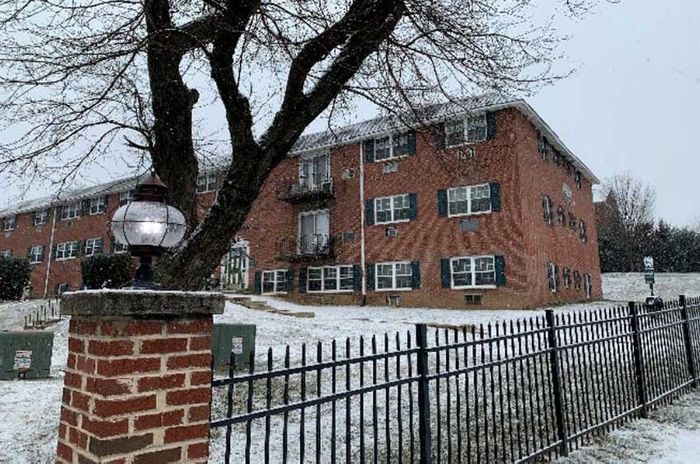
A sample of apartment and multifamily loans we have arranged for investors nationwide.

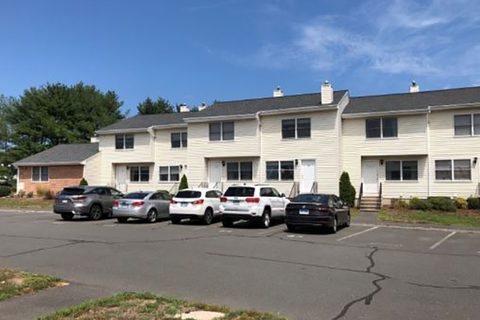
Apartment Loans Across Indiana
We arrange apartment loans throughout Indiana, not only in the metros above. Bloomington, West Lafayette, Muncie, Terre Haute, Elkhart and the smaller cities are financed through the same agency, bank and credit union programs, and the university markets in particular carry demand bases that do not track the industrial cycle.
For larger balances see our Indiana multifamily loans. For office, retail, industrial and owner-occupied property see Indiana commercial mortgages, and nationwide we lend in most major U.S. cities.
What Our Clients Say
“I am a veterinarian who purchased an existing practice. I was surprised to find a company that offered 100% financing at a good rate, with great terms and rates for medical office financing.”
Carol K. · Chicago, IL“I spoke to several commercial lenders before finding Select Commercial. They got me a lower rate and their service was exceptional. If you need a multifamily loan, you need to talk to Stephen.”
Nathan B. · Philadelphia, PA“Select Commercial was very helpful with my multifamily mortgage. Stephen went over several options and we came up with the best lender to meet my needs. I got the funds and also lowered my payments.”
Gary M. · Portland, OR“Select Commercial offered 100% financing for my medical practice when my bank would have required 20% down. They delivered something my bank could not, and handled everything professionally.”
John C. · Boston, MAGet Your Indiana Apartment Loan Quote
No cost, no obligation. Written answers within 48 hours on Indiana apartment loans from $1,500,000.
- No application or processing fees
- Written answers within 48 hours
- For 5+ unit and commercial properties, $1.5M and up