
Rhode Island
Rhode Island Apartment Loans
Select Commercial arranges Rhode Island apartment loans from $1,500,000, up to 80% LTV, with no upfront fees. Our lowest apartment rate today is 6.64% as of October 9, 2026. We compare Fannie Mae, Freddie Mac, FHA, bank and bridge programs to fit your property. For larger balances, see multifamily loans. See current rates on every loan type we offer.
Get a Free Quote2026 Rhode Island Apartment Loan Market
Rhode Island is small enough to drive across in under an hour, and in 2026 its capital is the only market in the state going backward while the cities around it are posting some of the strongest rent gains in New England.
Where rents stand. As of August 2026, average asking rent in Providence was $2,500, down 1.02% over the year. Warwick was $2,035, up 5.84%. Pawtucket was $1,951, up 3.74%. Those are RentCafe figures for professionally managed buildings of fifty units and up, measured on the same basis. Providence remains by far the most expensive of the three and is the only one that fell.
We will not tell you what caused that, and you should be suspicious of anyone who does. What is not in dispute is the underwriting consequence. In a state this compact, the submarket you are buying in is a ten minute drive from a submarket behaving very differently, and a Rhode Island appraisal built on statewide or even metro averages will describe neither. Insist that the comparable set comes from the right city.
The Providence unit ladder tells you what the stock is. As of August 2026 the bedroom spread in Providence ran about $1,916 for a studio, $2,262 for a one bedroom, $2,801 for two bedrooms and $3,944 for three. Two things stand out. The step from two bedrooms to three is more than eleven hundred dollars, one of the widest in the country, so a Rhode Island building with real three bedroom units is serving a part of the market that most competing stock cannot. And the average Providence studio is listed at roughly seven hundred and forty square feet against roughly seven hundred for a one bedroom, which is to say the studios are larger than the one bedrooms. That is the signature of an older housing stock carved into apartments rather than built as them, and it points directly at the issue that dominates Rhode Island apartment lending.
What that means for your file. Rhode Island apartment loans are sized on demonstrated in place income at a coverage ratio. The state specific item that decides more Rhode Island files than any market number is the age of the building and what Rhode Island law requires of a landlord because of it. That is covered below, and it is not a formality.
Across Rhode Island we arrange apartment building loans from $1,500,000 through agency, bank, FHA and bridge programs. Rate and leverage follow the rent roll and the trailing twelve months of operating income.
Rhode Island Apartment Loan Rates
Rates updated as of October 9, 2026
| Loan Type | Rate* | Max LTV |
|---|---|---|
| 5 Year Fixed | 6.66% | Up to 80% |
| 7 Year Fixed | 6.75% | Up to 80% |
| 10 Year Fixed | 6.64% | Up to 80% |
- Cash-out refinances are acceptable
- Interest-only and non-recourse options
- Minimum 1.25x debt-service-coverage ratio
See Rhode Island Multifamily Rates Over $6 Million, Starting at 6.44%
Rates last updated October 9, 2026. Rates and maximum LTV shown represent our best-case pricing scenarios. Actual rates, LTV, and loan terms are subject to underwriting approval and may vary.
Rhode Island Markets We Finance
Rhode Island is effectively one metropolitan area with several distinct submarkets inside it, plus a seasonal coast. What separates them is not distance, it is building stock, basis and tenant profile.
Providence
The capital and the center of the Rhode Island apartment market, at about $2,500 as of August 2026 and down 1.02% over the year, the only decline among the three markets we measure. Providence runs on healthcare and hospital systems, an unusual concentration of higher education for a city its size, state government, insurance and financial services, and a design and creative economy. The residential stock is among the oldest in the country, largely nineteenth and early twentieth century wood frame, including a great deal of the two and three family triple decker that defines southern New England. That stock is the reason the lead law below matters here more than almost anywhere.
Providence commercial mortgages
Pawtucket, Central Falls and the Blackstone valley
Pawtucket was about $1,951 as of August 2026 and up 3.74% over the year. The Blackstone valley mill cities carry the densest and oldest apartment stock in Rhode Island at the lowest basis per unit in the state, which produces attractive going in yields and a correspondingly heavy property condition report. Central Falls is the densest municipality in Rhode Island. Woonsocket sits further up the valley on the same profile. These are community bank, credit union and small balance agency markets, and they are where a buyer with the appetite and the operating capability to handle older stock finds the best yields in Rhode Island.
Warwick, Cranston and the East Bay
Warwick posted the strongest growth in the state as of August 2026 at about $2,035 and up 5.84%. Warwick and Cranston are the suburban core of Rhode Island, carrying the airport, a substantial retail and service base and a mix of mid-century garden apartment product and newer construction that is meaningfully younger than the Providence and Blackstone stock. East Providence, Barrington and Bristol on the East Bay run similarly. For a buyer who wants Rhode Island exposure without the deepest end of the old building question, this is where the stock is newest.
Newport, South County and the coast
Newport, Middletown, Portsmouth, Narragansett and South Kingstown are a different business. The economy is tourism, sailing, defense and university, heavily seasonal, with a meaningful share of housing serving visitors and second home owners rather than year round renters. Conventional apartment comparables thin out quickly and short term rental competition is a genuine part of the analysis. Loans get done here regularly, but on longer operating histories and better documentation than an equivalent inland Rhode Island property would need.
Rent figures above are average asking rents across professionally managed buildings of fifty units and up as of August 2026. Where we do not yet have a dedicated apartment page for a Rhode Island city, the link goes to our commercial mortgage page for that market.
Compare Rhode Island Apartment Loan Programs
As a broker we compare every program for your best-fit Rhode Island apartment financing:
| Program | Typical rate* | Max leverage | Best for |
|---|---|---|---|
| Fannie Mae Small Loan | 6.84% | Up to 80% | Non-recourse, fixed to 30 yrs |
| Freddie Mac SBL | 6.66% | Up to 80% | $2M to $10M small balance |
| FHA / HUD | 6.70% | Up to 85% | Highest leverage, longest term |
| Bank / portfolio | 6.50% | Up to 75% | Flexible, value-add |
| Bridge | 9.00% | Up to 80% LTC | Reposition, lease-up |
Most apartment lenders look for a debt-service-coverage ratio (DSCR) of at least 1.25x.
Rates last updated October 9, 2026. Rates and maximum LTV shown represent our best-case pricing scenarios. Actual rates, LTV, and loan terms are subject to underwriting approval and may vary.
Rhode Island’s Lead Law Is a Financing Issue, Not a Formality
Rhode Island has one of the oldest housing stocks in the country and one of the most specific landlord lead regimes to go with it, and non compliance can cost you the insurance your lender requires. That last point is why this belongs on a page about apartment loans rather than in a property management guide.
What is covered. The Rhode Island Department of Health applies the lead hazard mitigation requirements to rental units built before 1978 unless exempt. The exemptions it lists are properties holding a valid lead safe certificate, housing for residents aged sixty two and over, and temporary seasonal housing rented to the same tenant for one hundred days a year or less. Given the age of the stock in Providence and the Blackstone valley, most apartment buildings a buyer will look at in Rhode Island are inside this, not outside it.
What an owner has to do. The Department sets out a specific list. Obtain a lead inspection from a licensed inspector. Inform tenants, share the inspection results, distribute the federal pamphlet on protecting your family from lead in the home, and include the required lead warning statements in leases, keeping evidence of distribution for three years or the length of the tenancy, whichever is longer. Complete a lead hazard awareness class. Inspect for damaged paint every two years or between tenants. Repair paint damage promptly using lead safe practices, using licensed firms for work that disturbs surfaces. Carry lead paint liability insurance. And comply with the state property maintenance code.
The Certificate of Lead Conformance. Where a licensed inspector’s hazard mitigation inspection finds no hazards, the property receives a Certificate of Lead Conformance. The Rhode Island certificate is renewed every two years. Where the tenant has not changed for two years or more, the Department describes a visual inspection affidavit route for maintaining it. In practice the certificate is the document that proves the building is where it is supposed to be, and it is the document to ask a seller for on day one of diligence.
Now the part that reaches the loan. The Department states that a violation brings a notice of violation with a ninety day deadline to remediate, and that failure to comply results in loss of eligibility for lead paint liability insurance. Read that in the context of a mortgage. Every lender requires insurance and names itself on the policy. A Rhode Island apartment building that cannot obtain lead paint liability coverage is a building that has an insurance problem, and an insurance problem is a loan covenant problem. This is not a theoretical risk that gets priced into the rate. It is a condition that can stop a closing or, on an existing loan, put a borrower in default on the insurance covenant while the underlying rent roll is perfectly healthy.
How to handle it on a purchase. Ask for the current Certificate of Lead Conformance and its expiration date before you go under contract, not during diligence. Ask for the last inspection report and any notice of violation, open or closed, together with proof of remediation. Ask for the current lead paint liability policy and confirm with your own broker that it can be replaced or assigned at your closing. If certificates are missing or expired across part of a portfolio, price the inspection and remediation work into your acquisition budget explicitly and tell your lender you have done so. A buyer who arrives with that analysis already done is treated very differently from one who has to be walked through it.
How to handle it on a refinance. Put the certificates in the file with the rent roll. It costs nothing and it removes a question that would otherwise sit open through underwriting. If a unit is out of certificate, say so and show the plan and the timeline rather than waiting for the insurance review to surface it.
None of this makes Rhode Island a difficult state to finance. It makes Rhode Island a state where the documents around the building matter as much as the numbers inside it, and where an owner who runs the compliance properly has a real and demonstrable advantage over one who does not.
Financing Options in Rhode Island
Rhode Island apartment, multifamily and commercial properties each have dedicated financing. Pick the page that matches your property:
Financing more of the state? See Rhode Island commercial mortgages.
Financing in another state? Explore our apartment loans, multifamily loans and commercial mortgages nationwide.
Rhode Island City Spotlights: 2026 Apartment Market Notes
Beyond the major metros, we finance apartment buildings across Rhode Island. Current market notes for cities where borrowers ask us to lend:
- Providence: median 1-bedroom rent near $1,870, up 2.7% year over year (July 2026 rent report), the dominant apartment market in the state.
National baseline for context: the U.S. median rent was $1,388 in July 2026, down 1.1% year over year, with rental vacancy near 7.2% (national rent report, July 2026). Each city above links to our local commercial mortgage page, and we finance 5+ unit apartment properties in every Rhode Island market from $1,500,000.
Rhode Island Apartment Loan Types We Serve
We arrange financing across Rhode Island for:
- Urban high-rise apartment buildings
- Suburban garden apartment complexes
- Small apartment buildings with 5+ units
- Underlying cooperative apartment loans
- Portfolios of small apartment and rental properties
- Mixed-use and other multifamily property
Refinancing a Rhode Island Apartment Building
Rhode Island refinances are sized on coverage rather than value in most cases. Rents here are high but so is basis, and the loan amount generally runs out of net operating income before it runs out of loan to value.
The rent roll and the trailing twelve months. Proceeds are set by in place income at a debt service coverage ratio near 1.25x. Send twelve full months of actuals covering a complete heating season rather than an annualized partial year.
Lead certificates and the insurance file. As above, this belongs with the rent roll rather than at the end of the process. Current Certificate of Lead Conformance, current lead paint liability policy, and any open notice of violation with its remediation plan. This is the fastest way to take the most Rhode Island specific risk in the file off the table.
Heat, metering and the age of the plant. Southern New England winters are real, and a great deal of Rhode Island apartment stock was built around older heating systems. Buildings where residents pay their own heat carry a structurally lower and more predictable expense ratio, and a lender reads that difference straight into the loan amount. Where the owner pays, send actual billing across a full heating season and state plainly how each unit is heated.
The property condition report will be substantial. On triple decker and mill era stock, roofs, heating plant, wiring, windows, porches and the exterior envelope drive the reserve number, and reserves come directly off the income used to size the loan. Capital work completed in the last several years belongs in the file with invoices. On this vintage of Rhode Island building, documentation is worth more than argument.
Cash out is available and is sized the same way. Agency, bank, credit union and life company lenders will all consider cash out on a stabilized Rhode Island apartment property. The constraint is the coverage math, not the program. Owners who have held Blackstone valley or Providence property through the last several years frequently have more available than they expect, and the fastest way to find out is to send the rent roll and the trailing twelve months.
Other Property & Loan Types We Finance in Rhode Island
As a full-service commercial mortgage broker, we arrange Rhode Island financing across every major property and loan type:
We consider commercial loan requests of all sizes, beginning at $1,500,000.
Rhode Island Apartment Complex Financing
In Rhode Island, loan size decides who competes. Smaller balances usually price best with Rhode Island banks, credit unions and the agency small balance programs, where familiarity with the building stock and with the lead compliance regime counts for a great deal. Larger balances open the field to Fannie Mae, Freddie Mac, FHA, life companies and CMBS, and rates there are frequently tighter because the loan is large enough to securitize. The trade is a heavier package: full appraisal, property condition report, environmental review, and sizing driven by net operating income, debt service coverage and debt yield.
Rhode Island apartment lenders settle two questions before most others: whether the building’s lead compliance and insurance are in order, and what the age of the structure implies for reserves. Answer both with documents and the file moves quickly. Send the rent roll and the trailing twelve months and we will tell you which lenders are sharpest on your property.
Rhode Island Multifamily Loan Rates
For larger balances, over $6 million
Recent Apartment Loan Closings
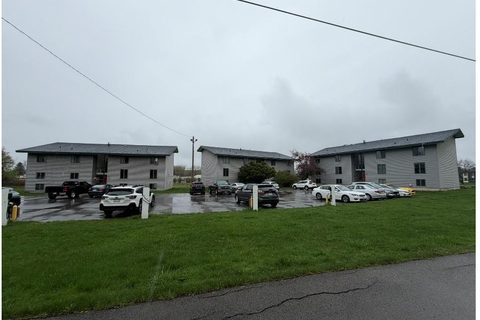
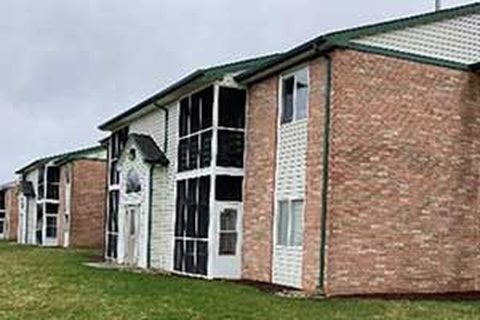
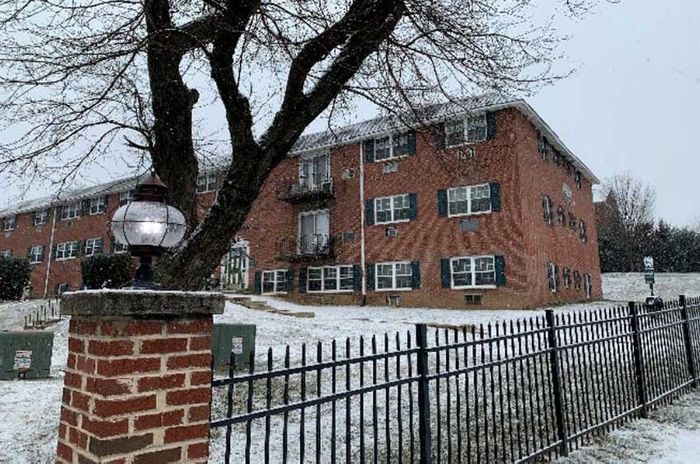
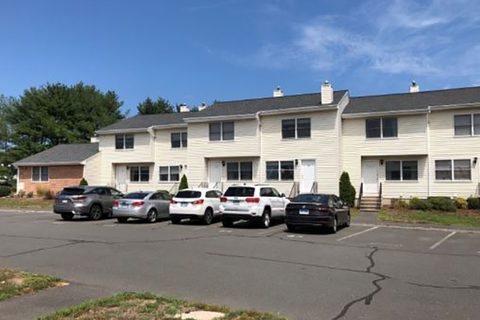
A sample of apartment and multifamily loans we have arranged for investors nationwide.
Apartment Loans Across Rhode Island
We arrange apartment loans throughout Rhode Island. Providence, Pawtucket, Central Falls, Woonsocket, Cranston, Warwick, East Providence, North Providence, Johnston, Cumberland, Lincoln, West Warwick, Bristol, Newport, Middletown, Narragansett and South Kingstown are all financed through the same agency, bank, credit union and FHA programs. What changes from one Rhode Island city to the next is the age and type of the stock, the basis per unit and the depth of the comparable set, not the shape of the file.
For larger balances see our Rhode Island multifamily loans. For office, retail, industrial and owner occupied property see Rhode Island commercial mortgages, and nationwide we lend in most major U.S. cities.
What Our Clients Say
“I am a veterinarian who purchased an existing practice. I was surprised to find a company that offered 100% financing at a good rate, with great terms and rates for medical office financing.”
Carol K. · Chicago, IL“I spoke to several commercial lenders before finding Select Commercial. They got me a lower rate and their service was exceptional. If you need a multifamily loan, you need to talk to Stephen.”
Nathan B. · Philadelphia, PA“Select Commercial was very helpful with my multifamily mortgage. Stephen went over several options and we came up with the best lender to meet my needs. I got the funds and also lowered my payments.”
Gary M. · Portland, OR“Select Commercial offered 100% financing for my medical practice when my bank would have required 20% down. They delivered something my bank could not, and handled everything professionally.”
John C. · Boston, MAGet Your Rhode Island Apartment Loan Quote
No cost, no obligation. Written answers within 48 hours on Rhode Island apartment loans from $1,500,000.
- No application or processing fees
- Written answers within 48 hours
- For 5+ unit and commercial properties, $1.5M and up