
Connecticut
Connecticut Apartment Loans
Select Commercial arranges Connecticut apartment loans from $1,500,000, up to 80% LTV, with no upfront fees. Our lowest apartment rate today is 6.64% as of October 11, 2026. We compare Fannie Mae, Freddie Mac, FHA, bank and bridge programs to fit your property. On larger balances, see multifamily loans. See current rates on every loan type we offer.
Get a Free Quote2026 Connecticut Apartment Loan Market
Connecticut rents are growing across the board in 2026, and the state has one regulatory feature that almost no borrower from outside New England knows about until it comes up in underwriting: every Connecticut municipality of twenty-five thousand people or more is required by state law to operate a fair rent commission. It is not rent control, but it is not nothing either, and it is explained further down this page.
Growth is broad and strongest in the middle of the state. Measured across professionally managed buildings of fifty units and up as of August 2026, Hartford average rent reached about $1,688, up 5.19% over the year, the strongest of the major Connecticut markets. New Haven ran $2,362, up 2.51%, and Stamford $3,044, up 2.42%. That Hartford is outgrowing the Gold Coast is the notable part: the capital region has been absorbing households priced out of Fairfield County and out of New York, and its basis per unit is a fraction of Stamford’s.
The spread across the state is unusually wide. Stamford rents are roughly 80% higher than Hartford’s, and the buildings, the lender pools and the underwriting all differ accordingly. Fairfield County trades on New York comparables with institutional capital in the mix. Hartford, New Haven, Waterbury and the eastern half of the state are regional bank and credit union territory on older stock at a much lower basis.
Across Connecticut we arrange apartment building loans from $1,500,000 through agency, bank, FHA and bridge programs. Rate and leverage follow the rent roll and the trailing twelve months of operating income, not your personal income.
Connecticut Apartment Loan Rates
Rates updated as of October 11, 2026
| Loan Type | Rate* | Max LTV |
|---|---|---|
| 5 Year Fixed | 6.66% | Up to 80% |
| 7 Year Fixed | 6.75% | Up to 80% |
| 10 Year Fixed | 6.64% | Up to 80% |
- Cash-out refinances are acceptable
- Interest-only and non-recourse options
- Minimum 1.25x debt-service-coverage ratio
See Connecticut Multifamily Rates Over $6 Million, Starting at 6.44%
Rates last updated October 11, 2026. Rates and maximum LTV shown represent our best-case pricing scenarios. Actual rates, LTV, and loan terms are subject to underwriting approval and may vary.
Connecticut Markets We Finance
Connecticut divides along the commuter line more than along any regional boundary. Fairfield County is priced and financed with an eye toward New York. The rest of the state is not, and a Connecticut apartment mortgage is structured accordingly.
Fairfield County and the Gold Coast
The most expensive apartment market in the state, with Stamford averaging about $3,044 as of August 2026 and up 2.42% over the year. Greenwich, Norwalk, Westport and Darien trade alongside it on a financial services employment base tied directly to Manhattan, and the newer, larger product here draws institutional and life company capital that does not look at the rest of Connecticut. Land is constrained and approvals are slow, which has kept supply modest and occupancy durable.
Stamford · Greenwich · Bridgeport
Hartford and the capital region
The strongest rent growth in Connecticut, at 5.19% over the year to an average near $1,688, on a basis per unit far below Fairfield County. Insurance, healthcare, aerospace manufacturing and state government give the capital region an employment base that has broadened considerably, and downtown conversion activity has added modern product to a market that had very little. For an investor, this is where the yield is: agency small-balance programs, regional banks and credit unions all compete, and an apartment complex loan here is sized on debt service coverage rather than on loan to value.
New Haven and the shoreline
Average rent of about $2,362, up 2.51% over the year, on a demand base anchored by Yale, the hospital system and a growing biotechnology cluster. That employment does not track the general economy, which agency lenders value. Much of the stock is older multi-family and conversion product, so building condition and any open code items carry real weight in the property condition report.
Waterbury, the Naugatuck Valley and eastern Connecticut
The lowest basis in the state and the highest going-in yields, on older industrial-era stock with very little new construction competing against it. Eastern Connecticut adds the two casino employers and the submarine yard at Groton, which give that corner of the state a demand base unlike anywhere else in New England. These are community bank, credit union and agency small-balance markets throughout.
Rent figures above are average asking rents across professionally managed buildings of fifty units and up as of August 2026. Where we do not yet have a dedicated apartment page for a Connecticut city, the link goes to our commercial mortgage page for that market.
Compare Connecticut Apartment Loan Programs
As a broker we compare every program for your best-fit Connecticut apartment financing:
| Program | Typical rate* | Max leverage | Best for |
|---|---|---|---|
| Fannie Mae Small Loan | 6.84% | Up to 80% | Non-recourse, fixed to 30 yrs |
| Freddie Mac SBL | 6.66% | Up to 80% | $2M to $10M small balance |
| FHA / HUD | 6.70% | Up to 85% | Highest leverage, longest term |
| Bank / portfolio | 6.50% | Up to 75% | Flexible, value-add |
| Bridge | 9.00% | Up to 80% LTC | Reposition, lease-up |
Most apartment lenders look for a debt-service-coverage ratio (DSCR) of at least 1.25x.
Rates last updated October 11, 2026. Rates and maximum LTV shown represent our best-case pricing scenarios. Actual rates, LTV, and loan terms are subject to underwriting approval and may vary.
Connecticut Fair Rent Commissions: What They Are and What They Are Not
This catches out-of-state buyers more than anything else in Connecticut. State law requires every town, city or borough with a population of twenty-five thousand or more, measured by the most recent decennial census, to adopt an ordinance creating a fair rent commission. Smaller municipalities may create one voluntarily, and two or more may operate a joint commission. The requirement was expanded by legislation in 2022, with required municipalities directed to have their ordinances adopted and the Commissioner of Housing notified by mid-2023.
What a commission can do. A fair rent commission may make studies and investigations, conduct hearings and receive complaints relating to rental charges on housing accommodations, with the stated purpose of controlling and eliminating excessive rental charges. It can compel attendance at hearings, issue subpoenas, administer oaths, and issue orders, which it may later amend, terminate or suspend.
What it is not. This is not rent control. There is no statutory cap on what you may charge, no annual percentage, no registration of legal rents and no vacancy decontrol question. A commission acts on complaint rather than setting rents in advance across the market, and most increases never come near one.
Why a lender still asks. Because an order can affect a specific building’s income, an underwriter reviewing a Connecticut apartment complex will want to know whether the property has any history before the local commission, particularly if the rent roll shows a large recent increase. Two practical steps: before you contract, ask the seller directly whether the property has ever been the subject of a fair rent complaint or order, and treat any pending matter as a diligence item rather than a footnote. Buildings with clean histories and increases that look ordinary against the local market rarely see this become an issue at all.
The broader point for anyone comparing states: Connecticut sits between the two extremes. It has nothing like New Jersey’s municipal rent control or Oregon and Washington’s statutory caps, but it is not a preemption state like Indiana or Tennessee either. A lender projecting income here is working without a statutory ceiling, but with a complaint mechanism in the background.
Financing Options in Connecticut
Connecticut apartment, multifamily and commercial properties each have dedicated financing. Pick the page that matches your property:
Financing more of the state? See Connecticut commercial mortgages.
Financing in another state? Explore our apartment loans, multifamily loans and commercial mortgages nationwide.
Connecticut City Spotlights: 2026 Apartment Market Notes
Beyond the major metros, we finance apartment buildings across Connecticut. Current market notes for cities where borrowers ask us to lend:
- Hartford: median 1-bedroom rent about $1,350, up 6% year over year (Zumper, August 2026).
- New Haven: median 1-bedroom rent near $1,820 (July 2026 rent report), among the highest in the state.
- Stamford: median 1-bedroom rent about $2,600, down 1% year over year (Zumper, August 2026), a supply-constrained lower Fairfield County market.
National baseline for context: the U.S. median rent was $1,388 in July 2026, down 1.1% year over year, with rental vacancy near 7.2% (national rent report, July 2026). Each city above links to our local commercial mortgage page, and we finance 5+ unit apartment properties in every Connecticut market from $1,500,000.
Connecticut Apartment Loan Types We Serve
We arrange financing across Connecticut for:
- Urban high-rise apartment buildings
- Suburban garden apartment complexes
- Small apartment buildings with 5+ units
- Underlying cooperative apartment loans
- Portfolios of small apartment and rental properties
- Mixed-use and other multifamily property
Refinancing a Connecticut Apartment Building
Connecticut refinances are being helped by genuine rent growth, and the strongest case right now is in the middle of the state rather than on the Gold Coast.
Start with the rent roll and the trailing twelve. Proceeds are sized on in-place income, and with Hartford rents up better than 5% over the year, many capital region owners are refinancing off a materially stronger operating statement than the one their last loan was written against. Fairfield County growth has been steadier at a little over 2%, so the improvement there is real but smaller.
Then the expense line, which is where Connecticut hurts. Property taxes vary enormously between municipalities in this state, far more than in most, and two comparable buildings in adjacent towns can carry very different burdens. Work from the actual parcel rather than a county or state figure, and if the property has recently sold or been improved, ask what tax number your lender intends to underwrite. Insurance, heating and water and sewer all deserve the same scrutiny before you send statements.
Then the building. Much of Connecticut’s rental stock is old, in places a century or more. Roofs, heating systems, electrical service and any open code items are priced into the property condition report rather than overlooked, and a documented capital plan on older product is frequently worth more proceeds than a modest improvement in rate.
Then the note. Confirm the maturity date and whether prepayment is yield maintenance, a step-down or open, and start six to nine months ahead of a balloon so there is room to shop more than one lender rather than accept an extension. Cash-out is available on most programs where the equity supports it.
Send the rent roll and the trailing twelve and we will underwrite the building the way the lender will, then come back with written options inside 48 hours at no cost. Connecticut apartment loans start at $1,500,000, whether it is a ten-unit building in Waterbury or a mid-rise in Stamford.
Other Property & Loan Types We Finance in Connecticut
As a full-service commercial mortgage broker, we arrange Connecticut financing across every major property and loan type:
We consider commercial loan requests of all sizes, beginning at $1,500,000.
Connecticut Apartment Complex Financing
Loan size decides who competes, and in Connecticut geography decides it as much as size does. Smaller balances anywhere in the state, and most balances outside Fairfield County, usually price best with regional banks, credit unions and the agency small-balance programs, where knowing the town and its tax rate counts for a great deal. Larger Gold Coast balances draw Fannie Mae, Freddie Mac, FHA, life companies and CMBS, and rates there are frequently tighter because the loan is big enough to securitize, at the cost of a heavier package: full appraisal, property condition report, environmental review, and sizing driven by net operating income, debt service coverage and debt yield.
Connecticut apartment lenders pay particular attention to the municipal tax line and to the condition of older buildings. Have both documented before you apply. Send the rent roll and the trailing twelve months and we will tell you which lenders are sharpest on your property.
Connecticut Multifamily Loan Rates
For larger balances, over $6 million
Recent Apartment Loan Closings
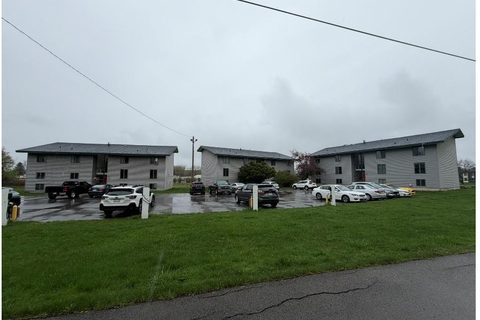
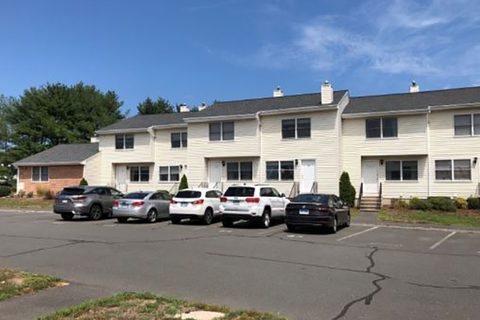
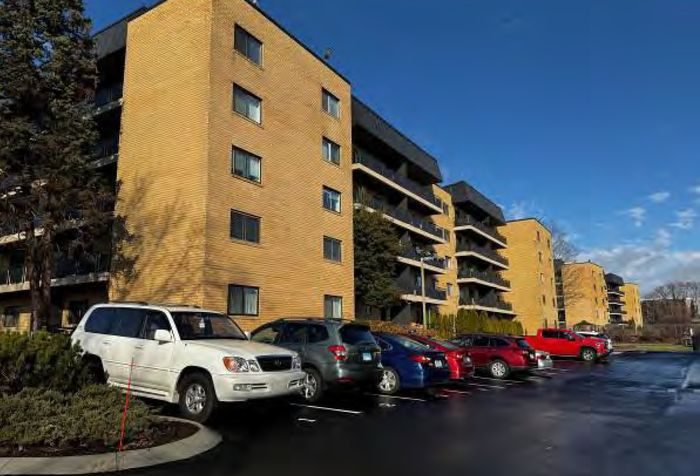
A sample of apartment and multifamily loans we have arranged for investors nationwide.

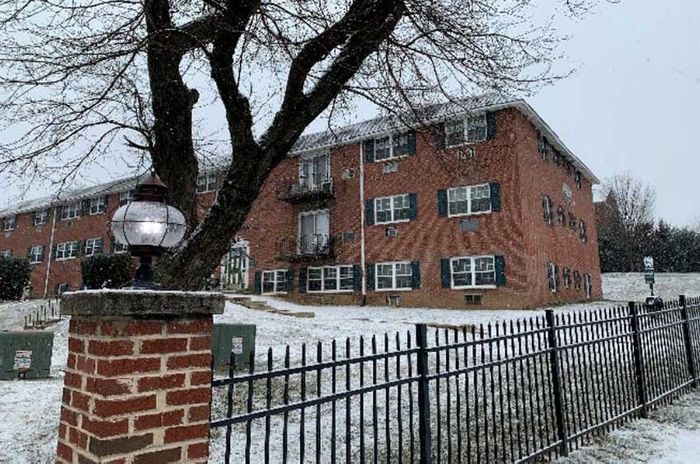
Apartment Loans Across Connecticut
We arrange apartment loans throughout Connecticut, not only in the cities above. Waterbury, Norwalk, Danbury, New Britain, Meriden, Norwich and the shoreline towns are financed through the same agency, bank and credit union programs. In every municipality above twenty-five thousand people, confirm the fair rent commission position before you contract.
For larger balances see our Connecticut multifamily loans. For office, retail, industrial and owner-occupied property see Connecticut commercial mortgages, and nationwide we lend in most major U.S. cities.
What Our Clients Say
“I am a veterinarian who purchased an existing practice. I was surprised to find a company that offered 100% financing at a good rate, with great terms and rates for medical office financing.”
Carol K. · Chicago, IL“I spoke to several commercial lenders before finding Select Commercial. They got me a lower rate and their service was exceptional. If you need a multifamily loan, you need to talk to Stephen.”
Nathan B. · Philadelphia, PA“Select Commercial was very helpful with my multifamily mortgage. Stephen went over several options and we came up with the best lender to meet my needs. I got the funds and also lowered my payments.”
Gary M. · Portland, OR“Select Commercial offered 100% financing for my medical practice when my bank would have required 20% down. They delivered something my bank could not, and handled everything professionally.”
John C. · Boston, MAGet Your Connecticut Apartment Loan Quote
No cost, no obligation. Written answers within 48 hours on Connecticut apartment loans from $1,500,000.
- No application or processing fees
- Written answers within 48 hours
- For 5+ unit and commercial properties, $1.5M and up