
Connecticut · Over $6 Million
Connecticut Multifamily Loans
Select Commercial arranges Connecticut multifamily loans, with rates as low as 6.22%, up to 80% LTV and non-recourse agency options. We compare Fannie Mae, Freddie Mac, FHA/HUD and CMBS. For loans under $6 million, see Connecticut apartment loans. See current rates on every loan type we offer.
Get a Free QuoteFinancing Options in Connecticut
Connecticut apartment, multifamily and commercial properties each have dedicated financing. Pick the page that matches your property:
Financing more of the state? See Connecticut apartment loans and Connecticut commercial mortgages.
Financing in another state? Explore our apartment loans, multifamily loans and commercial mortgages nationwide.
Connecticut Multifamily Loan Rates
Rates updated as of October 19, 2026
| Loan Type | Rate* | Max LTV |
|---|---|---|
| 5 Year Fixed | 6.22% | Up to 80% |
| 7 Year Fixed | 6.26% | Up to 80% |
| 10 Year Fixed | 6.35% | Up to 80% |
- Streamlined underwriting for institutional multifamily
- Cash-out refinances are acceptable
- Interest-only and non-recourse options
- Minimum 1.25x debt-service-coverage ratio
Connecticut Apartment Loans
For smaller apartment building loans, under $6 million
Rates last updated October 19, 2026. Rates and maximum LTV shown represent our best-case pricing scenarios. Actual rates, LTV, and loan terms are subject to underwriting approval and may vary.
Connecticut Apartment Building Loans
Not every Connecticut apartment property is over $6 million, and we finance smaller buildings too. For 5+ unit Connecticut apartment properties from $1,500,000 to $6 million, see our Connecticut apartment loans page for Fannie Mae Small Loan, Freddie Mac SBL, bank and credit union options.
Compare Connecticut Large-Balance Programs
As a broker we place your large-balance Connecticut multifamily loan with the right capital source. Typical starting points for properties over $6 million:
| Program | Typical rate* | Max leverage | Best for |
|---|---|---|---|
| Fannie Mae DUS | 6.22% | Up to 80% | Non-recourse, fixed to 30 yrs |
| Freddie Mac | 6.26% | Up to 80% | Non-recourse large-balance |
| FHA / HUD | 6.83% | Up to 85% | Highest leverage, 35-yr amortization |
| CMBS / conduit | 7.00% | Up to 75% | Non-recourse, flexible underwriting |
Most large-balance lenders look for a debt-service-coverage ratio (DSCR) of at least 1.25x. For properties under $6 million, see our Connecticut apartment loans.
Rates last updated October 19, 2026. Rates and maximum LTV shown represent our best-case pricing scenarios. Actual rates, LTV, and loan terms are subject to underwriting approval and may vary.
2026 Connecticut Multifamily Investment and Lending Outlook
Connecticut is not one multifamily market. It is two, with very little in between.
Northeast Private Client Group reported Hartford County multifamily volume near $235.6 million at an average 8.3% cap rate and roughly $117,031 per unit. Fairfield County recorded about $270.3 million in the first half of 2025, roughly seven times the prior year’s pace, at a 6.4% cap rate and roughly $330,783 per unit.
Those are the same asset class in the same state, separated by about 190 basis points of cap rate and nearly three times the price per door. A $12 million loan buys a very different property depending on which side of the state it sits on, and the two halves do not respond to the same underwriting.
In Fairfield County, where per-unit values rival the outer New York City boroughs, deals are typically value-constrained: the cap rate is low enough that debt service coverage, not loan-to-value, sets your proceeds. In Hartford County, where capitalization rates run in the eights, the arithmetic reverses and loan-to-value usually binds first. The same lender, the same program and the same credit can produce a meaningfully different sizing outcome depending on which constraint controls.
The lender set here is deep. Webster Financial, headquartered in Stamford, carried roughly $22.79 billion of commercial real estate loans against $57.87 billion of total loans, so Connecticut borrowers have substantial regional bank capacity competing alongside the agencies and life companies for stabilized product.
For larger balances the agency execution usually wins on term and non-recourse treatment, while banks compete hardest on short-term and transitional business. Both are worth quoting on a Connecticut file.
Hartford’s Split Assessment, and a Revaluation Date That May Move
Connecticut has one property tax feature that exists nowhere else in the state, and it applies to the market with the highest cap rates and therefore the most leverage-sensitive deals.
Under Connecticut General Statutes § 12-62r, a qualifying municipality may set different assessment ratios for apartment property and for other residential property. Hartford is the only Connecticut municipality operating under it. Apartment property is assessed at the statutory ceiling of 70% of appraised value, phased up from 50% between the 2011 and 2015 assessment years. Owner-occupied residential property sits far below that, near half the apartment ratio, and climbs toward 70% only through a formula tied to the Consumer Price Index that caps annual increases at 5%. The city assessor has said publicly it will take decades to converge.
Put plainly: in Hartford, an apartment building and a house with the same appraised value do not carry the same tax bill, and the apartment building carries roughly twice as much. That is the structural reason Hartford capitalization rates print in the eights while Fairfield County prints in the sixes. A large share of the difference is not risk. It is the tax line.
The timing matters right now. Hartford’s most recent revaluation took effect on the October 1, 2021 grand list, and the next revaluation is scheduled for October 1, 2026. That is the current grand list cycle. Any Hartford property financed in this window will have its assessment restated, and five years of value change will land in a single step.
What that means for a loan closing now is concrete. Trailing twelve-month taxes on a Hartford property are about to become historical rather than predictive, and an underwriter who accepts them at face value is understating the expense line for every year of the loan term after the first. Expect a competent lender to underwrite a pro forma tax figure that reflects the new assessment and the prevailing mill rate, and expect that number to reduce your proceeds relative to a trailing-expense sizing. Model it yourself before you go to market, because finding out during underwriting costs you time you cannot recover.
Outside Hartford, Connecticut municipalities assess all property at the standard 70% and this issue does not arise. The mill rate still varies widely by town, so the tax line is always worth confirming at the municipal level rather than assumed from a county average.
Connecticut Multifamily Loan Programs
As a broker, we compare every large-balance program to find your best fit:
Recent Multifamily Loan Closings
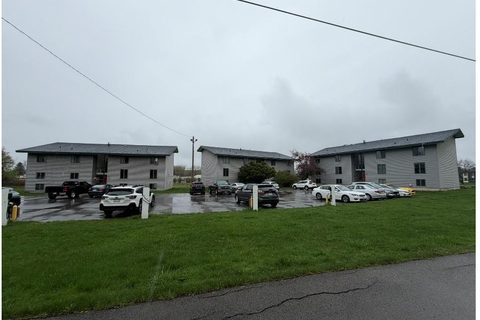
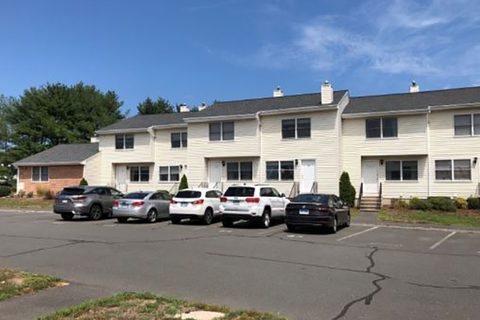
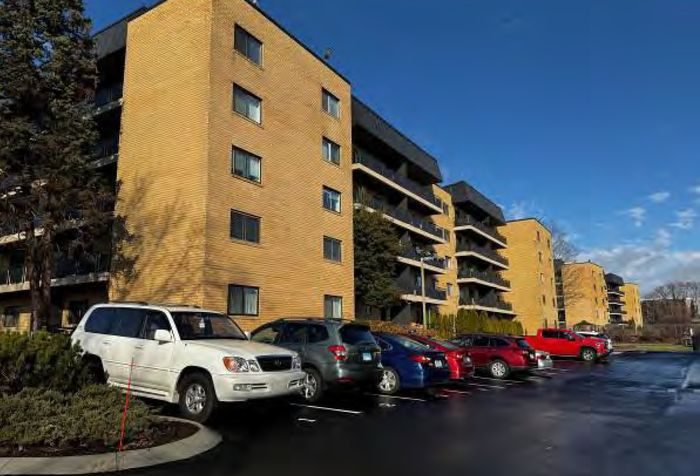
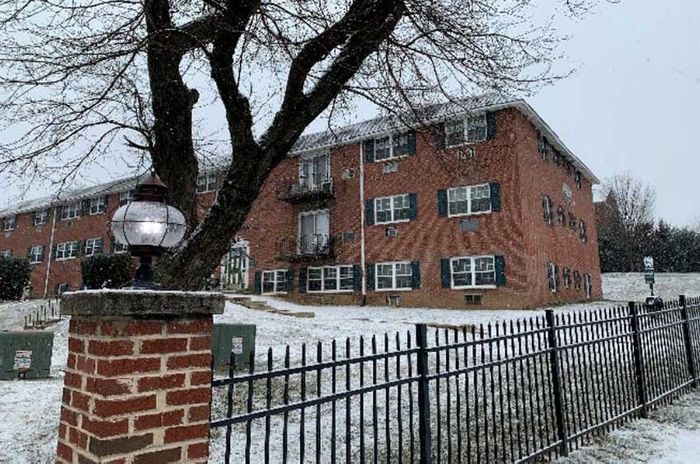
A sample of apartment and multifamily loans we have arranged for investors nationwide.

Connecticut Multifamily Markets We Serve
We arrange large-balance multifamily loans throughout Connecticut, including:
Other Property & Loan Types We Finance in Connecticut
As a full-service commercial mortgage broker, we arrange Connecticut financing across every major property and loan type:
We consider commercial loan requests of all sizes, beginning at $1,500,000.
What Our Clients Say
“As a real estate attorney, I trust that Select Commercial will deliver commercial mortgages in a timely manner. My clients are always handled professionally, and the rates and terms are excellent. I heartily recommend them.”
David S. · New York City“I spoke to several commercial lenders before finding Select Commercial. They got me a lower rate and their service was exceptional. If you need a multifamily loan, you need to talk to Stephen.”
Nathan B. · Philadelphia, PA“Select Commercial was very helpful with my multifamily mortgage. Stephen went over several options and we came up with the best lender to meet my needs. I got the funds and also lowered my payments.”
Gary M. · Portland, OR“Select Commercial offered 100% financing for my medical practice when my bank would have required 20% down. They delivered something my bank could not, and handled everything professionally.”
John C. · Boston, MAGet Your Connecticut Multifamily Loan Quote
No cost, no obligation. Written answers within 48 hours on Connecticut multifamily loans over $6,000,000.
- No application or processing fees
- Written answers within 48 hours
- For 5+ unit and commercial properties, $1.5M and up