
Idaho
Idaho Apartment Loans
Select Commercial arranges Idaho apartment loans from $1,500,000, up to 80% LTV, with no upfront fees. Our lowest rate today is 6.40% as of October 3, 2026, across every apartment and multifamily program we place. We compare Fannie Mae, Freddie Mac, FHA, bank and bridge programs to fit your property. For larger balances, see multifamily loans. See current rates on every loan type we offer.
Get a Free Quote2026 Idaho Apartment Loan Market
Idaho is growing again, in nearly every market we track, and the one exception sits twenty miles from the state’s largest city. That is the most useful thing an out of state buyer can know about Idaho apartment lending in 2026, because it means the market question here is a submarket question.
Where rents stand. As of August 2026, average asking rent in Meridian was $1,800, up 3.4% over the year. Boise was $1,758, up 3.66%. Coeur d’Alene was $1,662, up 3.74%, the strongest growth of the group. Nampa was $1,579, up 0.06%, which is flat. Idaho Falls was about $1,620, with no year over year figure published on the same basis, so we do not quote a change for it. These are RentCafe figures for professionally managed buildings of fifty units and up.
Read that spread carefully. Boise, Meridian and Nampa are all in the same metropolitan area. Two of them are growing near four percent and the third has not moved at all. That is not a state trend and it is not a metro trend. It is a submarket outcome, and it is the reason a Treasure Valley appraisal has to be built on the right submarket rather than on a metro average. The same point shows up inside Boise itself: as of August 2026 the city’s least expensive neighborhoods were asking in the $1,200s while its most expensive was above $2,000. A comparable set assembled from whatever traded most recently, without regard to where, will produce a number that is wrong in one direction or the other.
Where the Boise market clears. Forty six percent of Boise rentals fall between $1,501 and $2,000 a month, and the bedroom spread as of August 2026 ran about $1,442 for a studio, $1,576 for a one bedroom, $1,797 for two bedrooms and $2,032 for three. That is a wider ladder than most inland western markets carry, which does leave room for a renovation case, but it also means the unit mix in your building matters to the underwriting more than it would in a compressed market.
What that means for your file. Idaho apartment loans are sized on demonstrated in place income at a coverage ratio. The state specific item worth knowing before you underwrite is how Idaho property tax actually works, because it does not work the way most states do and the difference is genuinely counterintuitive. That is covered below.
Across Idaho we arrange apartment building loans from $1,500,000 through agency, bank, FHA and bridge programs. Rate and leverage follow the rent roll and the trailing twelve months of operating income.
Idaho Apartment Loan Rates
Rates updated as of October 3, 2026
| Loan Type | Rate* | Max LTV |
|---|---|---|
| 5 Year Fixed | 6.66% | Up to 80% |
| 7 Year Fixed | 6.75% | Up to 80% |
| 10 Year Fixed | 6.64% | Up to 80% |
| Loan Type | Rate* | Max LTV |
|---|---|---|
| 5 Year Fixed | 6.40% | Up to 80% |
| 7 Year Fixed | 6.44% | Up to 80% |
| 10 Year Fixed | 6.44% | Up to 80% |
- Streamlined underwriting for institutional multifamily
- Cash-out refinances are acceptable
- Interest-only and non-recourse options
- Minimum 1.25x debt-service-coverage ratio
Rates last updated October 3, 2026. Rates and maximum LTV shown represent our best-case pricing scenarios. Actual rates, LTV, and loan terms are subject to underwriting approval and may vary.
Idaho Markets We Finance
Idaho splits into four apartment markets that have very little to do with each other: the Treasure Valley in the southwest, the eastern Snake River plain, the Magic Valley, and the panhandle in the north, which is closer to Spokane than to Boise in every way that matters.
Boise and Ada County
The center of the Idaho apartment business, at about $1,758 as of August 2026 and up 3.66% over the year. Boise carries state government, a large healthcare sector, a major semiconductor manufacturer, the university and a corporate and professional base that has broadened considerably over the last decade. The building stock runs from older brick and frame walk ups in the North End and the Bench through mid-century garden product to a substantial amount of newer downtown and Boise River corridor construction. This is the deepest part of the state for agency, bank and credit union competition and the only Idaho market where an out of state lender is likely to have an existing view.
Meridian, Nampa, Caldwell and Canyon County
The suburban and western half of the Treasure Valley, and the place where the Idaho story gets interesting. Meridian, immediately west of Boise, was the most expensive market in the state at about $1,800 as of August 2026 and up 3.4%. Nampa, twenty miles further west, was $1,579 and effectively unchanged at up 0.06%. Two markets in one metro, moving very differently in the same twelve months. Whatever the cause in any given year, the practical consequence for a borrower is fixed: a lender will want the appraisal and the rent comparables drawn from the correct side of that divide, and a submission that anticipates the question does better than one that does not. Caldwell and the smaller Canyon County communities carry the most affordable stock in the valley and are largely community bank and small balance agency territory.
Idaho Falls, Pocatello, Twin Falls and southern Idaho
Idaho Falls was about $1,620 as of August 2026. The eastern Snake River plain runs on a national laboratory, agriculture and food processing, regional healthcare and the universities, an employment mix that is steady rather than fast. Pocatello and Twin Falls are smaller versions of the same, with Twin Falls carrying a significant food processing concentration. Basis per unit across southern Idaho is well below the Treasure Valley, going in yields are correspondingly higher, and there is very little new construction competing against existing buildings. The binding constraint in these markets is the depth of the comparable set rather than demand.
Coeur d’Alene, Post Falls and North Idaho
The strongest rent growth in Idaho as of August 2026, at about $1,662 and up 3.74%. The panhandle economy is tied to Spokane immediately across the Washington line, along with tourism, healthcare, wood products and a long running inflow of retirees and remote workers. That cross border relationship has a practical consequence on a file: employment and household formation for a Coeur d’Alene apartment building are substantially Spokane metropolitan questions, while the property is taxed, governed and insured under Idaho. Ask your appraiser to be explicit about which state each comparable sits in and to address the difference rather than blending them.
Rent figures above are average asking rents across professionally managed buildings of fifty units and up as of August 2026. Where we do not yet have a dedicated apartment page for an Idaho city, the link goes to our commercial mortgage page for that market.
Compare Idaho Apartment Loan Programs
As a broker we compare every program for your best-fit Idaho apartment financing:
| Program | Typical rate* | Max leverage | Best for |
|---|---|---|---|
| Fannie Mae Small Loan | 6.80% | Up to 80% | Non-recourse, fixed to 30 yrs |
| Freddie Mac SBL | 6.66% | Up to 80% | $2M to $10M small balance |
| FHA / HUD | 6.70% | Up to 85% | Highest leverage, longest term |
| Bank / portfolio | 6.50% | Up to 75% | Flexible, value-add |
| Bridge | 9.00% | Up to 80% LTC | Reposition, lease-up |
Most apartment lenders look for a debt-service-coverage ratio (DSCR) of at least 1.25x.
Rates last updated October 3, 2026. Rates and maximum LTV shown represent our best-case pricing scenarios. Actual rates, LTV, and loan terms are subject to underwriting approval and may vary.
Idaho Caps the District’s Budget, Not Your Assessment
This is the least intuitive thing about owning an apartment building in Idaho, and it works in the opposite direction from what most out of state buyers assume. In Idaho, the limit sits on what a taxing district may collect, not on what your parcel may be assessed at. A large jump in your assessment therefore does not automatically produce a proportional jump in your tax bill.
The mechanism. Idaho Code Section 63-802 limits the property tax budget a taxing district may certify. The general limit on the calculated budget increase is eight percent a year, with fire protection and ambulance service districts permitted up to fifteen percent. Because the constraint is at the district level, the district first decides what it needs within that limit, and the levy rate is then set to raise it across the district’s total taxable value. Your share of that total is what determines your bill.
Which means the number that matters is relative, not absolute. If your building’s assessment rises twenty percent and every other property in the district rises twenty percent as well, your share of the district total is unchanged and your bill moves with the district budget rather than with your assessment. If your building rises twenty percent while the district as a whole rises five percent, your share grows and your bill rises considerably. Two Idaho apartment buildings can see identical assessment increases in the same year and receive very different bills, because they sit in different districts with different value movements. This is why an Idaho tax appeal is argued on whether the assessor has valued you correctly relative to comparable property, not simply on whether the number went up.
The exceptions are where bills actually rise, and they are substantial. The limit does not apply to revenue from new construction, or to ninety percent of the value of annexation in the previous calendar year, or to voter approved bonds, override levies and supplemental levies. Districts may also recover previously unused allowable increases, the forgone amount, under defined conditions. And school district levies are outside the section entirely. In a growing Idaho community, new construction and voter approved school and public safety measures are the ordinary route by which a tax line moves, and none of them is constrained by the eight percent figure.
Set against how other states do it. The mechanism matters far more than the headline rate. Nebraska assesses at or near full actual value and revises annually with no described cap, so a bill tracks value continuously. South Carolina caps increases between cycles but lets a sale itself trigger a reassessment that escapes the cap. Mississippi assesses at a fraction of true value on a revaluation cycle of at least every four years, so increases arrive in steps. Idaho does none of those. It constrains the collecting district and lets each parcel’s share float.
What to actually do. Before you go under contract, get the parcel’s current assessed value and its current bill, identify every taxing district the parcel sits in, and ask whether any bond, override or supplemental levy has recently passed or is on an upcoming ballot, and whether any district is planning to recover a forgone amount. Those are the questions that predict an Idaho tax line. Comparing your contract price to the assessor’s value, which is the right first move in Nebraska or South Carolina, tells you much less here on its own.
Financing Options in Idaho
Idaho apartment, multifamily and commercial properties each have dedicated financing. Pick the page that matches your property:
Financing more of the state? See Idaho commercial mortgages.
Financing in another state? Explore our apartment loans, multifamily loans and commercial mortgages nationwide.
Refinancing an Idaho Apartment Building
Idaho refinances are usually sized on coverage rather than value, and in the Treasure Valley the most common conversation right now is with owners who bought during the run up and want to know where they stand after several years of very uneven submarket performance.
The rent roll and the trailing twelve months. Proceeds are set by in place income at a debt service coverage ratio near 1.25x. Send twelve full months of actuals. If your property sits in a submarket that has moved differently from the metro, say so and support it, because an out of state underwriter working from metro data will otherwise apply the metro conclusion to your building.
The current tax bill and the list of districts. Because an Idaho bill is driven by district budgets and levy shares rather than by your assessment alone, the current bill is more informative than the assessment history. Send the bill itself, and flag any recent voter approved measure you are aware of rather than letting the lender discover a step change it cannot explain.
Utilities, metering and the winter. Idaho winters are real, particularly in the north and east. Buildings where residents pay their own heat carry a structurally lower expense ratio than buildings where the owner does, and a lender reads that difference directly into the loan amount. Where the owner pays, twelve months of actual billing across a full heating season settles it far better than any estimate.
Wildfire, smoke and insurance. Property insurance across the interior west has repriced in recent years, and an insurance figure carried at an old number into a pro forma is no longer a reasonable estimate of the current one. Send the bound policy and the declarations page rather than a budget line, and if the building has had defensible space, roofing or exterior work done that bears on its risk profile, document it.
Cash out is available and is sized the same way. Agency, bank, credit union and life company lenders will all consider cash out on a stabilized Idaho apartment property. The constraint is the coverage math, not the program. Owners who bought before the last several years of growth frequently have more available than they expect, and the fastest way to find out is to send the rent roll and the trailing twelve months.
Idaho Apartment Loan Types We Serve
We arrange financing across Idaho for:
- Urban high-rise apartment buildings
- Suburban garden apartment complexes
- Small apartment buildings with 5+ units
- Underlying cooperative apartment loans
- Portfolios of small apartment and rental properties
- Mixed-use and other multifamily property
Idaho Apartment Complex Financing
In Idaho, loan size decides who competes. Smaller balances usually price best with community and regional banks, credit unions and the agency small balance programs, where knowing the submarket and the building stock counts for a great deal. Larger balances open the field to Fannie Mae, Freddie Mac, FHA, life companies and CMBS, and rates there are frequently tighter because the loan is large enough to securitize. The trade is a heavier package: full appraisal, property condition report, environmental review, and sizing driven by net operating income, debt service coverage and debt yield.
Idaho apartment lenders settle two questions before most others: which submarket the property actually competes in, since the Treasure Valley has not moved as one market, and what the current tax bill and insurance premium are as opposed to what they were. Answer both with documents and the file moves quickly. Send the rent roll and the trailing twelve months and we will tell you which lenders are sharpest on your property.
Idaho Multifamily Loan Rates
For larger balances, over $6 million
Other Property & Loan Types We Finance in Idaho
As a full-service commercial mortgage broker, we arrange Idaho financing across every major property and loan type:
We consider commercial loan requests of all sizes, beginning at $1,500,000.
Apartment Loans Across Idaho
We arrange apartment loans throughout Idaho, not only in the Treasure Valley. Boise, Meridian, Nampa, Caldwell, Eagle, Kuna, Idaho Falls, Pocatello, Twin Falls, Rexburg, Moscow, Lewiston, Coeur d’Alene and Post Falls are financed through the same agency, bank, credit union and FHA programs. What changes from one Idaho market to the next is the local employment base, the taxing districts the parcel sits in and the depth of the comparable set, not the shape of the file.
For larger balances see our Idaho multifamily loans. For office, retail, industrial and owner occupied property see Idaho commercial mortgages, and nationwide we lend in most major U.S. cities.
Recent Apartment Loan Closings
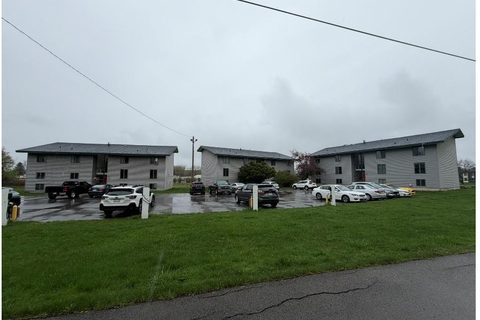
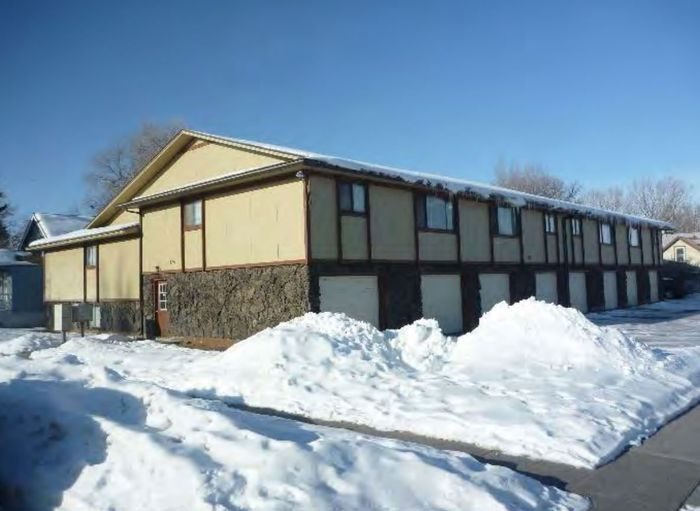
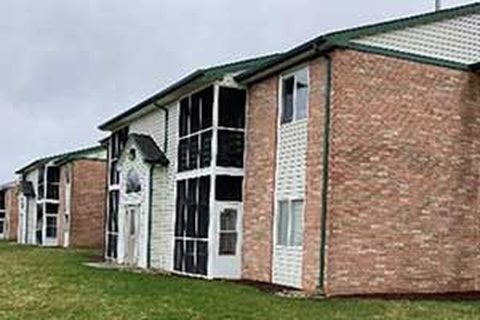
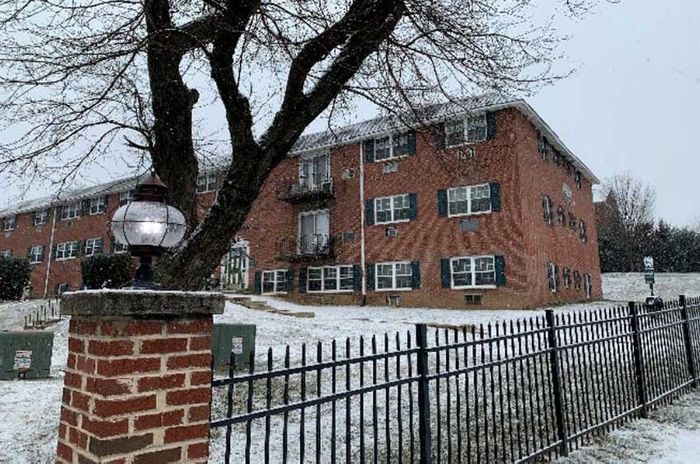
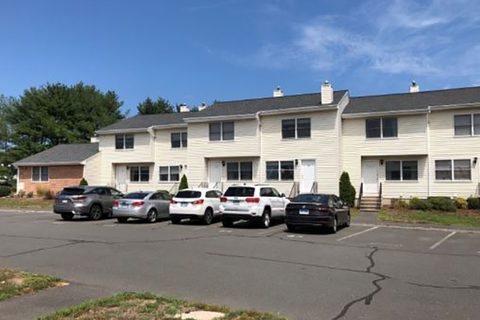
A sample of apartment and multifamily loans we have arranged for investors nationwide.
What Our Clients Say
“I am a veterinarian who purchased an existing practice. I was surprised to find a company that offered 100% financing at a good rate, with great terms and rates for medical office financing.”
Carol K. · Chicago, IL“I spoke to several commercial lenders before finding Select Commercial. They got me a lower rate and their service was exceptional. If you need a multifamily loan, you need to talk to Stephen.”
Nathan B. · Philadelphia, PA“Select Commercial was very helpful with my multifamily mortgage. Stephen went over several options and we came up with the best lender to meet my needs. I got the funds and also lowered my payments.”
Gary M. · Portland, OR“Select Commercial offered 100% financing for my medical practice when my bank would have required 20% down. They delivered something my bank could not, and handled everything professionally.”
John C. · Boston, MAGet Your Idaho Apartment Loan Quote
No cost, no obligation. Written answers within 48 hours on Idaho apartment loans from $1,500,000.
- No application or processing fees
- Written answers within 48 hours
- For 5+ unit and commercial properties, $1.5M and up