
New Hampshire
New Hampshire Apartment Loans
Select Commercial arranges New Hampshire apartment loans from $1,500,000, up to 80% LTV, with no upfront fees. Our lowest apartment rate today is 6.64% as of October 9, 2026. We compare Fannie Mae, Freddie Mac, FHA, bank and bridge programs to fit your property. For larger balances, see multifamily loans. See current rates on every loan type we offer.
Get a Free Quote2026 New Hampshire Apartment Loan Market
New Hampshire is a small state with three apartment markets moving in three different directions, and they are all within an hour of each other. That is unusual, and it is the reason a single New Hampshire rent trend is not a useful thing to underwrite from.
Where rents stand. As of August 2026, average asking rent in Portsmouth was $2,446, up 0.65% over the year. Nashua was $2,191, down 1.06%. Manchester, the largest city in New Hampshire, was $2,095, up 2.31%. Those are RentCafe figures for professionally managed buildings of fifty units and up, measured on the same basis in all three. One up, one down, one close to flat, in a state you can drive across in two hours.
These are high rents by any measure. All three New Hampshire markets ask more than the average apartment in most American cities, and the reason is the same reason there is not much new supply competing against existing buildings: this is a supply constrained state where multifamily development is governed municipality by municipality. For an owner, that constraint is the asset. For a buyer, it means the going in yield is thinner than the rent level suggests and the loan is far more likely to be limited by debt service coverage than by loan to value.
The Manchester unit ladder has an unusually large top step. As of August 2026 the bedroom spread in Manchester ran about $1,653 for a studio, $1,873 for a one bedroom, $2,171 for two bedrooms and $2,921 for three. That is a gap of roughly seven hundred and fifty dollars between the two bedroom and the three bedroom, and it is one of the widest we have measured. Forty three percent of Manchester rentals fall between $2,001 and $2,500. A New Hampshire building with genuine three bedroom units is reaching a part of the market that most of the competing stock does not serve, and that is worth stating in a submission rather than leaving an underwriter to infer it from an average.
What that means for your file. New Hampshire apartment loans are sized on demonstrated in place income at a coverage ratio, and there is one state specific item that catches nearly every out of state buyer: in New Hampshire, the assessed value on a property is not the market value, and the relationship between the two differs from town to town. That is covered below, and it changes what you should do with the assessment card during diligence.
Across New Hampshire we arrange apartment building loans from $1,500,000 through agency, bank, FHA and bridge programs. Rate and leverage follow the rent roll and the trailing twelve months of operating income.
New Hampshire Apartment Loan Rates
Rates updated as of October 9, 2026
| Loan Type | Rate* | Max LTV |
|---|---|---|
| 5 Year Fixed | 6.66% | Up to 80% |
| 7 Year Fixed | 6.75% | Up to 80% |
| 10 Year Fixed | 6.64% | Up to 80% |
- Cash-out refinances are acceptable
- Interest-only and non-recourse options
- Minimum 1.25x debt-service-coverage ratio
See New Hampshire Multifamily Rates Over $6 Million, Starting at 6.44%
Rates last updated October 9, 2026. Rates and maximum LTV shown represent our best-case pricing scenarios. Actual rates, LTV, and loan terms are subject to underwriting approval and may vary.
New Hampshire Markets We Finance
New Hampshire’s apartment stock sits almost entirely in the southern third of the state, in the Merrimack valley mill cities, along the Massachusetts border and on the Seacoast. North of Concord the state becomes small town and seasonal very quickly.
Manchester
The largest city in New Hampshire and the center of its apartment market, at about $2,095 as of August 2026 and up 2.31% over the year, the strongest of the three. Manchester runs on healthcare, higher education, financial and professional services, advanced manufacturing and a technology sector concentrated in the redeveloped mill buildings along the Merrimack. The residential stock is largely late nineteenth and early twentieth century wood frame and brick, much of it multi-unit, which puts the property condition report, the heating plant and the electrical system near the center of any Manchester file. This is the deepest part of New Hampshire for agency small balance, bank and credit union competition.
Nashua and the southern tier
About $2,191 as of August 2026, down 1.06% over the year, the only one of the three moving backward and still the second most expensive. Nashua, Salem, Derry, Hudson and Merrimack sit on or near the Massachusetts line, and their renter base includes a substantial number of households working in the Boston metropolitan economy. That gives the southern tier demand that is not really a New Hampshire demand story, and it also means these markets feel changes in Massachusetts employment and in Massachusetts rents before the rest of the state does. Ask your appraiser to be explicit about whether comparables sit north or south of the state line, because the tax and regulatory environments are not the same.
Portsmouth, Dover and the Seacoast
The most expensive apartment market in New Hampshire at about $2,446 as of August 2026, up 0.65%. The Seacoast runs on the shipyard, healthcare, technology and professional employment, tourism and a well established second home and retirement draw, and Portsmouth’s historic downtown is as supply constrained as anywhere in New England. Dover, Rochester and Somersworth carry more of the workforce stock at a lower basis. Seasonality and short term rental competition are both real factors in the Seacoast analysis, and the conventional apartment comparable set is thinner than the rent level would suggest.
Concord, the Lakes Region and the north
Concord anchors central New Hampshire on state government, healthcare and insurance, an employment mix that is about as steady as a market this size can have. North and west of it, Laconia and the Lakes Region, the Upper Valley around Lebanon and Hanover, and the White Mountain communities are small, seasonal or institution driven markets. The Upper Valley in particular is dominated by a major medical center and a university and behaves very little like the rest of the state. These are community bank and credit union markets where the constraint is the depth of the comparable set rather than demand, and an appraisal benefits from being defended explicitly.
Rent figures above are average asking rents across professionally managed buildings of fifty units and up as of August 2026. Where we do not yet have a dedicated apartment page for a New Hampshire city, the link goes to our commercial mortgage page for that market.
Compare New Hampshire Apartment Loan Programs
As a broker we compare every program for your best-fit New Hampshire apartment financing:
| Program | Typical rate* | Max leverage | Best for |
|---|---|---|---|
| Fannie Mae Small Loan | 6.84% | Up to 80% | Non-recourse, fixed to 30 yrs |
| Freddie Mac SBL | 6.66% | Up to 80% | $2M to $10M small balance |
| FHA / HUD | 6.70% | Up to 85% | Highest leverage, longest term |
| Bank / portfolio | 6.50% | Up to 75% | Flexible, value-add |
| Bridge | 9.00% | Up to 80% LTC | Reposition, lease-up |
Most apartment lenders look for a debt-service-coverage ratio (DSCR) of at least 1.25x.
Rates last updated October 9, 2026. Rates and maximum LTV shown represent our best-case pricing scenarios. Actual rates, LTV, and loan terms are subject to underwriting approval and may vary.
In New Hampshire the Assessed Value Is Not the Market Value
This is the thing to understand before you read a New Hampshire assessment card, and it is the opposite of the rule in several other states. New Hampshire does not require a town’s assessments to equal market value every year. It requires them to be proportional to each other within that town, and it requires a full reappraisal only periodically. The practical result is that the assessed value on a New Hampshire apartment building may sit well below, or occasionally above, what the property is actually worth, and how far off it sits depends entirely on which town it is in and where that town stands in its cycle.
The two provisions that produce this. Under RSA 75:8, assessors and selectmen must annually adjust assessments to reflect changes and correct errors in existing appraisals, considering property that has physically changed, transferred ownership, been rezoned, been subdivided or merged, or otherwise changed in value, and the assessments must be reasonably proportional within that municipality. Under RSA 75:8-a, they must reappraise all real estate within the municipality at least once every five years, maintained at full and true value. Annual proportionality within the town, full reappraisal on a cycle of at least every five years. Nothing in that structure guarantees that any individual card equals today’s market value.
Why out of state buyers get this wrong. In several states the right first move on a purchase is to compare your contract price with the assessor’s value and brace for the difference. In Nebraska, where all real property is assessed at or near one hundred percent of actual value and revised annually, that comparison is genuinely informative. In New Hampshire it can be actively misleading in both directions. A card well below your contract price does not necessarily mean a tax increase is coming, because your tax depends on your value relative to every other property in the same town rather than on your value alone. And a card near your contract price does not mean the number is safe, because the town may be about to revalue.
What actually predicts a New Hampshire tax bill. Three things, and none of them is the assessment in isolation. When the town last completed a full revaluation and when the next one is due, since a revaluation is when the relationship between assessed values and market values gets reset across the whole town. How your building’s assessment compares with genuinely similar property in the same town, because proportionality within the municipality is the statutory standard and it is also the ground on which an abatement is argued. And the town’s rate itself, which is set locally and can vary substantially between adjoining New Hampshire towns.
Set against the other mechanisms. South Carolina lets a sale itself trigger a reassessment that escapes the cap applying between cycles. Mississippi assesses at a fraction of true value and revalues at least every four years, so increases arrive in steps. Idaho caps what the taxing district may collect rather than what your parcel may be assessed at. New Hampshire is different again: it constrains proportionality within the town and the interval between revaluations, and leaves the assessment to market relationship free to drift in between.
What to do about it. Before you go under contract, ask the town three questions. When was the last full revaluation, and when is the next one scheduled. What is the current rate, and has it moved recently. And how does the assessment on this parcel compare with comparable multi-unit property in the same town. That third question is the one that identifies both the risk of an increase and the possibility of an abatement, and it is the one almost nobody asks. Take the answers to your lender with the rent roll and the current bill.
Financing Options in New Hampshire
New Hampshire apartment, multifamily and commercial properties each have dedicated financing. Pick the page that matches your property:
Financing more of the state? See New Hampshire commercial mortgages.
Financing in another state? Explore our apartment loans, multifamily loans and commercial mortgages nationwide.
Refinancing a New Hampshire Apartment Building
New Hampshire refinances are sized on coverage rather than value in nearly every case. Basis per unit here is high, but so are rents, and the loan amount almost always runs out of net operating income before it runs out of loan to value. That puts the expense line at the center of the exercise.
The rent roll and the trailing twelve months. Proceeds are set by in place income at a debt service coverage ratio near 1.25x. Send twelve full months of actuals covering a complete heating season rather than an annualized partial year.
The current tax bill, plus the town’s revaluation position. Because a New Hampshire assessment can drift away from market value between revaluations, the current bill is far more informative than the assessment history. Send the bill, and if you know the town has recently revalued or is about to, say so rather than leaving a lender to discover a step change it cannot explain. If you have an abatement pending or recently granted, include it.
Heat, metering and the winter. New Hampshire winters are long and a substantial amount of the state’s older housing stock was built around oil or older heating systems. Buildings where residents pay their own heat carry a structurally lower and more predictable expense ratio than buildings where the owner does, and a lender reads that difference straight into the loan amount. Where the owner pays, send actual billing across a full heating season rather than an estimate, and state plainly how each unit is heated.
The age of the building. Mill city and Seacoast stock in New Hampshire skews old, and a property condition report on nineteenth or early twentieth century construction will find things. Roofs, heating plant, wiring, windows and the envelope drive the reserve number, and reserves come directly off the income used to size the loan. Capital work completed in the last several years belongs in the file with invoices rather than in a sentence.
Cash out is available and is sized the same way. Agency, bank, credit union and life company lenders will all consider cash out on a stabilized New Hampshire apartment property. The constraint is the coverage math, not the program. Owners who have held through the last several years of rent growth in a supply constrained state frequently have more available than they expect, and the fastest way to find out is to send the rent roll and the trailing twelve months.
New Hampshire Apartment Loan Types We Serve
We arrange financing across New Hampshire for:
- Urban high-rise apartment buildings
- Suburban garden apartment complexes
- Small apartment buildings with 5+ units
- Underlying cooperative apartment loans
- Portfolios of small apartment and rental properties
- Mixed-use and other multifamily property
New Hampshire Apartment Complex Financing
In New Hampshire, loan size decides who competes. Smaller balances usually price best with New Hampshire banks, credit unions and the agency small balance programs, where knowing the town, its rate and its revaluation position counts for a great deal. Larger balances open the field to Fannie Mae, Freddie Mac, FHA, life companies and CMBS, and rates there are frequently tighter because the loan is large enough to securitize. The trade is a heavier package: full appraisal, property condition report, environmental review, and sizing driven by net operating income, debt service coverage and debt yield.
New Hampshire apartment lenders settle two questions before most others: what the town’s tax position implies for the expense line going forward, and what heating the building costs and who pays for it. Answer both with documents and the file moves quickly. Send the rent roll and the trailing twelve months and we will tell you which lenders are sharpest on your property.
New Hampshire Multifamily Loan Rates
For larger balances, over $6 million
Other Property & Loan Types We Finance in New Hampshire
As a full-service commercial mortgage broker, we arrange New Hampshire financing across every major property and loan type:
We consider commercial loan requests of all sizes, beginning at $1,500,000.
Apartment Loans Across New Hampshire
We arrange apartment loans throughout New Hampshire. Manchester, Nashua, Concord, Derry, Salem, Hudson, Merrimack, Portsmouth, Dover, Rochester, Somersworth, Keene, Laconia, Lebanon and Hanover are financed through the same agency, bank, credit union and FHA programs. What changes from one New Hampshire town to the next is the local rate, where the town sits in its revaluation cycle, how the building is heated and how deep the comparable set runs.
For larger balances see our New Hampshire multifamily loans. For office, retail, industrial and owner occupied property see New Hampshire commercial mortgages, and nationwide we lend in most major U.S. cities.
Recent Apartment Loan Closings
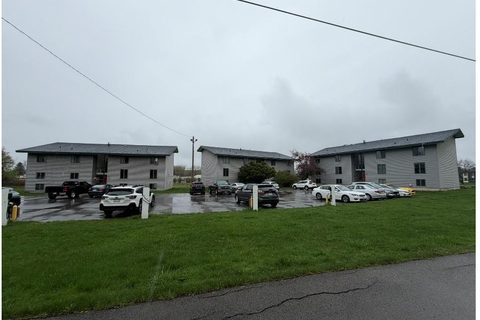
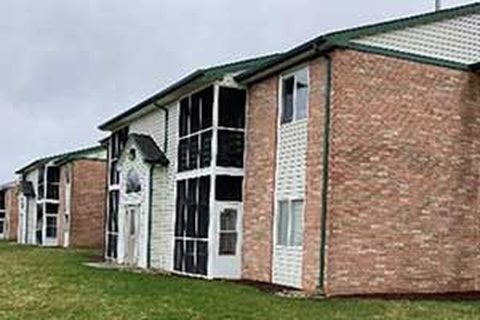
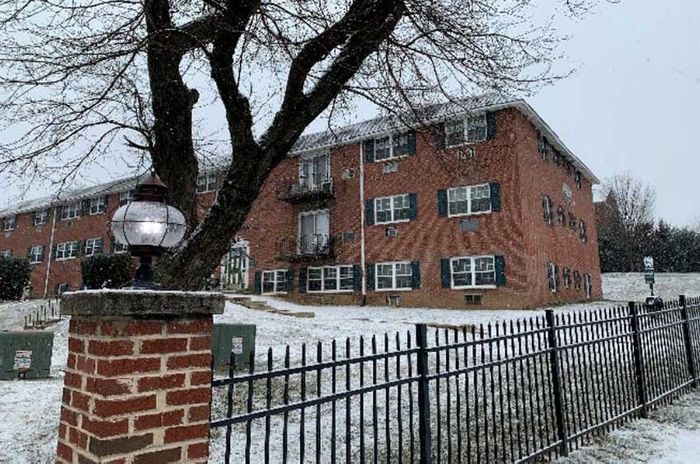
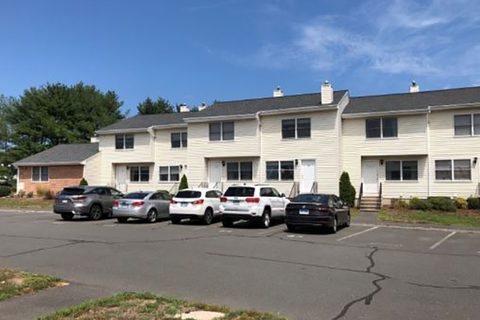
A sample of apartment and multifamily loans we have arranged for investors nationwide.
What Our Clients Say
“I am a veterinarian who purchased an existing practice. I was surprised to find a company that offered 100% financing at a good rate, with great terms and rates for medical office financing.”
Carol K. · Chicago, IL“I spoke to several commercial lenders before finding Select Commercial. They got me a lower rate and their service was exceptional. If you need a multifamily loan, you need to talk to Stephen.”
Nathan B. · Philadelphia, PA“Select Commercial was very helpful with my multifamily mortgage. Stephen went over several options and we came up with the best lender to meet my needs. I got the funds and also lowered my payments.”
Gary M. · Portland, OR“Select Commercial offered 100% financing for my medical practice when my bank would have required 20% down. They delivered something my bank could not, and handled everything professionally.”
John C. · Boston, MAGet Your New Hampshire Apartment Loan Quote
No cost, no obligation. Written answers within 48 hours on New Hampshire apartment loans from $1,500,000.
- No application or processing fees
- Written answers within 48 hours
- For 5+ unit and commercial properties, $1.5M and up