
South Dakota
South Dakota Apartment Loans
Select Commercial arranges South Dakota apartment loans from $1,500,000, up to 80% LTV, with no upfront fees. Our lowest apartment rate today is 6.54% as of October 22, 2026. We compare Fannie Mae, Freddie Mac, FHA, bank and bridge programs to fit your property. For larger balances, see multifamily loans. See current rates on every loan type we offer.
Get a Free Quote2026 South Dakota Apartment Loan Market
South Dakota’s two apartment markets have something unusual in common. Neither of them runs on ordinary economic demand. Both run on a decision that somebody made, one in a state legislature and one in the Pentagon, and understanding that is the difference between underwriting South Dakota well and underwriting it by analogy to somewhere else.
Where rents stand. As of August 2026, average asking rent in Rapid City was $1,338, up 2.52% over the year. Sioux Falls, much the larger city, was $1,170, up 2.39%. Those are RentCafe figures for professionally managed buildings of fifty units and up, measured on the same basis. The smaller market is the more expensive one, which is worth pausing on rather than assuming a data error.
Absolute rents here are among the lowest in the country. The bedroom spread in Sioux Falls as of August 2026 ran about $799 for a studio, $989 for a one bedroom, $1,228 for two bedrooms and $1,552 for three, with half of all Sioux Falls rentals falling between $1,001 and $1,500 a month. A studio at just under eight hundred dollars earns a fraction of what the same unit earns on either coast, while the roof, the boiler, the insurance and the management cost close to the same. At these levels the expense ratio does more to set the loan amount than the rent line does, and a well run South Dakota building supports meaningfully more debt than a comparable one that is not.
The offset is basis and stability. Price per unit in South Dakota is low, going in yields are correspondingly high, neither market is absorbing a supply overhang, and the employment base in both is unusually insensitive to the national business cycle. What South Dakota asks of a borrower is documentation of steady operations rather than optimism about rent growth.
Across South Dakota we arrange apartment building loans from $1,500,000 through agency, bank, FHA and bridge programs. Rate and leverage follow the rent roll and the trailing twelve months of operating income.
South Dakota Apartment Loan Rates
Rates updated as of October 22, 2026
| Loan Type | Rate* | Max LTV |
|---|---|---|
| 5 Year Fixed | 6.54% | Up to 80% |
| 7 Year Fixed | 6.57% | Up to 80% |
| 10 Year Fixed | 6.61% | Up to 80% |
- Cash-out refinances are acceptable
- Interest-only and non-recourse options
- Minimum 1.25x debt-service-coverage ratio
See South Dakota Multifamily Rates Over $6 Million, Starting at 6.14%
Rates last updated October 22, 2026. Rates and maximum LTV shown represent our best-case pricing scenarios. Actual rates, LTV, and loan terms are subject to underwriting approval and may vary.
South Dakota Markets We Finance
South Dakota has two apartment markets of any size, at opposite ends of the state and with almost nothing in common, plus a set of smaller regional and university towns along the eastern corridor.
Sioux Falls
The largest city in South Dakota, at about $1,170 as of August 2026 and up 2.39% over the year. Sioux Falls carries a financial services and credit card operations base that is far larger than its population would predict, along with two substantial health systems that are among the largest employers in the region, food processing, and a distribution and regional retail role reaching into four states. The medical concentration in particular gives the market a demand floor that does not move with the national cycle. This is the deepest part of South Dakota for agency small balance, bank and credit union competition and the only market where an out of state lender is likely to have an existing view.
Sioux Falls commercial mortgages
Rapid City, Box Elder and the Black Hills
The more expensive of the two markets at about $1,338 as of August 2026, up 2.52%, despite being much the smaller city. Rapid City runs on a large air force base immediately to its east, tourism through the Black Hills and the monuments, regional healthcare, and a school of mines and technology. Box Elder, adjacent to the base, is the fastest changing community in South Dakota. The base expansion described below is the dominant fact in this submarket and it is the reason to underwrite Rapid City and Box Elder on their own terms rather than as a small tourism town.
Aberdeen, Watertown, Brookings and the eastern corridor
The eastern South Dakota towns run on agriculture and food processing, manufacturing, regional healthcare and, in Brookings and Madison, the state universities. Basis per unit here is the lowest in South Dakota and going in yields the highest, with very little new construction competing against existing buildings. These markets do not appear in published rent surveys, so an appraisal has to be built property by property rather than looked up, and a lender will want more operating history to compensate. That is a documentation problem rather than a credit problem.
Pierre, Spearfish, Yankton and the rest of South Dakota
Pierre carries South Dakota state government on a small base. Spearfish and the northern Black Hills communities are tourism and university influenced with a meaningful share of housing that is not conventionally rented year round. Yankton, Mitchell, Huron and the smaller river and prairie towns are community bank markets where local relationships do most of the work. Loans get done throughout, on longer operating histories and better documentation than a Sioux Falls property of the same size would need.
Rent figures above are average asking rents across professionally managed buildings of fifty units and up as of August 2026. Most South Dakota communities do not appear in those surveys at all, and where that is the case we do not quote a figure rather than repeating one we cannot stand behind.
Compare South Dakota Apartment Loan Programs
As a broker we compare every program for your best-fit South Dakota apartment financing:
| Program | Typical rate* | Max leverage | Best for |
|---|---|---|---|
| Fannie Mae Small Loan | 6.54% | Up to 80% | Non-recourse, fixed to 30 yrs |
| Freddie Mac SBL | 6.60% | Up to 80% | $2M to $10M small balance |
| FHA / HUD | 6.74% | Up to 85% | Highest leverage, longest term |
| Bank / portfolio | 6.50% | Up to 75% | Flexible, value-add |
| Bridge | 9.00% | Up to 80% LTC | Reposition, lease-up |
Most apartment lenders look for a debt-service-coverage ratio (DSCR) of at least 1.25x.
Rates last updated October 22, 2026. Rates and maximum LTV shown represent our best-case pricing scenarios. Actual rates, LTV, and loan terms are subject to underwriting approval and may vary.
Both South Dakota Apartment Markets Run on a Decision
This is the most useful frame we can offer on South Dakota, and it applies to both ends of the state. Neither Sioux Falls nor Rapid City owes its apartment demand primarily to geography, natural resources or organic regional growth. Each owes it to a decision, and a lender reads that kind of demand differently from ordinary economic demand, in both directions.
Sioux Falls: a state law change that worked. In February 1980 South Dakota removed all usury ceilings for credit card loans and other types of consumer lending, and amended its banking laws to permit an out of state bank holding company to establish a single de novo bank in the state and move its credit card operations there. Citicorp did exactly that, establishing Citibank South Dakota at Sioux Falls. The Federal Reserve Bank of Chicago, reviewing the result seven years later, recorded that the new bank had become the largest commercial bank in South Dakota, with domestic assets of twelve billion dollars, loans to individuals of eleven and a half billion, and around three and a half thousand employees, and that commercial bank employment across South Dakota had risen seventy five percent between 1980 and 1987 against seven percent nationally. That is history rather than current South Dakota data, and we cite it as history. What it explains is why a city of this size carries a financial services employment base that no market of comparable population would otherwise have.
Rapid City: a federal basing decision. Ellsworth Air Force Base, immediately east of Rapid City, was selected as the home of the Air Force’s newest bomber, and a substantial construction and personnel program has followed. The executive director of the South Dakota Ellsworth Development Authority has publicly described more than thirty projects on the base alone, collectively costing more than a billion dollars, including maintenance facilities and simulator training buildings specific to the new aircraft, and the mayor of Box Elder has described the adjacent community as having grown at least ten percent a year even before the aircraft arrived, with more expected after. Those are attributed statements by named officials rather than figures we have independently verified, and they should be treated that way, but the direction is not in question and the construction is visible on the ground.
Why an underwriter cares that demand was made rather than grown. Policy created demand has two properties that matter. It is unusually durable and unusually acyclical while the decision stands. A federal basing mission and a regulatory advantage that attracted an industry do not soften because the national economy softens, which is exactly why both South Dakota markets held through periods that hurt more conventional markets. But it is also concentrated, and concentration is what an underwriter names. A lender looking at a Box Elder property is looking at a South Dakota building whose demand is substantially tied to one installation, and a lender looking at Sioux Falls sees an employment base built around a small number of very large employers in two sectors.
What that means for your submission, concretely. Do not let a South Dakota concentration be discovered. Name it, and then answer it. On a Rapid City or Box Elder file, show what occupancy and collections did before the current expansion as well as during it, because a lender wants to know the property works in the ordinary state of the world and not only in an unusual one. On a Sioux Falls file, show the tenant mix rather than describing it, because a rent roll drawn from several employers reads very differently from one drawn from a single campus. Across the state, several years of documented occupancy is worth more than any argument about growth, and it is the thing that turns a concentration question into a non issue.
And do not underwrite the expansion itself. Construction activity supports demand while it happens and a lender knows that as well as you do, which is precisely why it will not credit it as permanent income. Underwrite what the property collects on a stabilized basis, and treat the expansion as the reason your occupancy assumption is defensible rather than as a reason to raise it.
Financing Options in South Dakota
South Dakota apartment, multifamily and commercial properties each have dedicated financing. Pick the page that matches your property:
Financing more of the state? See South Dakota commercial mortgages.
Financing in another state? Explore our apartment loans, multifamily loans and commercial mortgages nationwide.
Refinancing a South Dakota Apartment Building
South Dakota refinances are sized on coverage rather than value in essentially every case, because basis per unit is low enough that the loan runs out of net operating income long before it runs out of loan to value. The whole exercise sits on the expense line and on the depth of the operating record.
The rent roll and the trailing twelve months. Proceeds are set by in place income at a debt service coverage ratio near 1.25x. Send twelve full months of actuals covering a complete heating season, and outside Sioux Falls and Rapid City, send several years, because published market data is not available to fill the gaps.
Twelve months of actual utility billing. This is the highest value document a South Dakota owner can add to a file. South Dakota winters are long and severe, heating is a major expense line, and the difference between a building where residents pay their own heat and one where the owner does is large enough to move the loan amount materially. Where the owner pays, actual billing across a full season beats any estimate an underwriter would otherwise apply.
The tenant mix, if you have concentration. On a property near the base or serving a single large employer, say so and show the mix rather than letting an underwriter infer it. In South Dakota, concentration that is disclosed and explained is a much smaller problem than concentration that is discovered.
The envelope and the plant. Freeze and thaw cycles, roofs, windows, boilers and parking surfaces are where a South Dakota property condition report concentrates, and the reserves that come out of it reduce the income used to size the loan. Equipment replaced in the last several years belongs in the file with invoices rather than in a sentence.
Cash out is available and is sized the same way. Agency, bank, credit union and life company lenders will all consider cash out on a stabilized South Dakota apartment property. The constraint is the coverage math, not the program. Owners who have held through several steady years frequently have more available than they expect, and the fastest way to find out is to send the rent roll and the operating history.
South Dakota Apartment Loan Types We Serve
We arrange financing across South Dakota for:
- Urban high-rise apartment buildings
- Suburban garden apartment complexes
- Small apartment buildings with 5+ units
- Underlying cooperative apartment loans
- Portfolios of small apartment and rental properties
- Mixed-use and other multifamily property
South Dakota Apartment Complex Financing
In South Dakota, loan size decides who competes. Smaller balances usually price best with South Dakota banks, credit unions and the agency small balance programs, where local knowledge substitutes for published market data that does not exist outside the two largest markets. Larger balances open the field to Fannie Mae, Freddie Mac, FHA, life companies and CMBS, and rates there are frequently tighter because the loan is large enough to securitize. The trade is a heavier package: full appraisal, property condition report, environmental review, and sizing driven by net operating income, debt service coverage and debt yield.
South Dakota apartment lenders settle two questions before most others: what the heating and utility structure does to the expense ratio, and how concentrated the tenant base is and whether that concentration has been addressed rather than left implicit. Answer both with documents and the file moves. Send the rent roll and the trailing twelve months and we will tell you which lenders are sharpest on your property.
South Dakota Multifamily Loan Rates
For larger balances, over $6 million
Other Property & Loan Types We Finance in South Dakota
As a full-service commercial mortgage broker, we arrange South Dakota financing across every major property and loan type:
We consider commercial loan requests of all sizes, beginning at $1,500,000.
Apartment Loans Across South Dakota
We arrange apartment loans throughout South Dakota. Sioux Falls, Rapid City, Box Elder, Aberdeen, Brookings, Watertown, Mitchell, Yankton, Pierre, Huron, Spearfish and Vermillion are all financed through the same agency, bank, credit union and FHA programs. What changes from one South Dakota market to the next is the local employment base, how concentrated it is and how much operating history a lender will want, not the shape of the file.
For larger balances see our South Dakota multifamily loans. For office, retail, industrial and owner occupied property see South Dakota commercial mortgages, and nationwide we lend in most major U.S. cities.
Recent Apartment Loan Closings
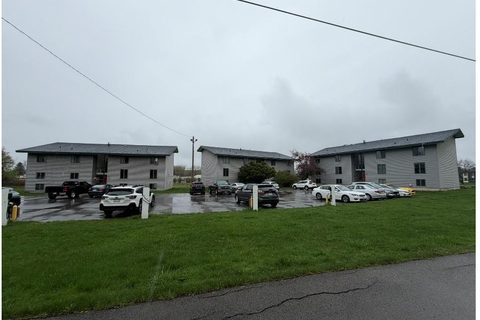
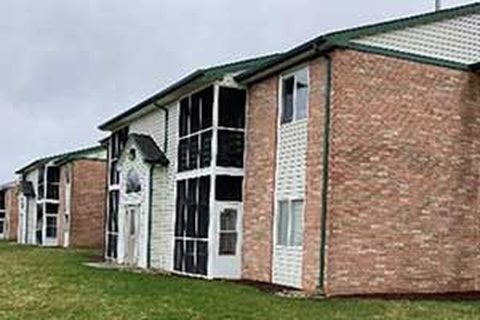
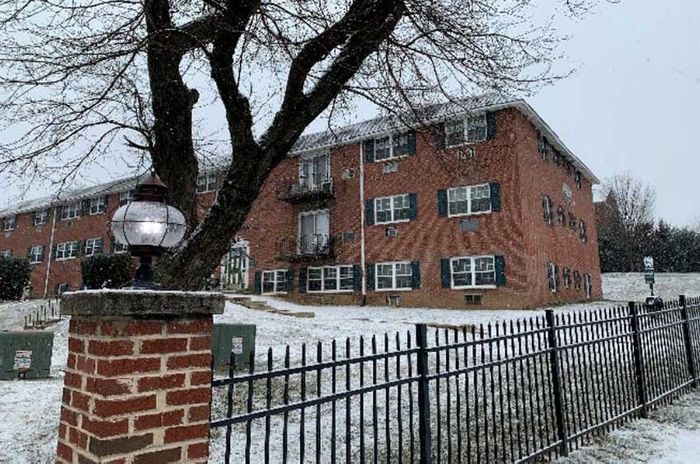
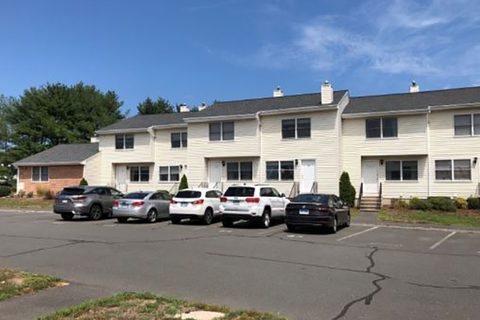
A sample of apartment and multifamily loans we have arranged for investors nationwide.
What Our Clients Say
“I am a veterinarian who purchased an existing practice. I was surprised to find a company that offered 100% financing at a good rate, with great terms and rates for medical office financing.”
Carol K. · Chicago, IL“I spoke to several commercial lenders before finding Select Commercial. They got me a lower rate and their service was exceptional. If you need a multifamily loan, you need to talk to Stephen.”
Nathan B. · Philadelphia, PA“Select Commercial was very helpful with my multifamily mortgage. Stephen went over several options and we came up with the best lender to meet my needs. I got the funds and also lowered my payments.”
Gary M. · Portland, OR“Select Commercial offered 100% financing for my medical practice when my bank would have required 20% down. They delivered something my bank could not, and handled everything professionally.”
John C. · Boston, MAGet Your South Dakota Apartment Loan Quote
No cost, no obligation. Written answers within 48 hours on South Dakota apartment loans from $1,500,000.
- No application or processing fees
- Written answers within 48 hours
- For 5+ unit and commercial properties, $1.5M and up