
North Dakota · Over $6 Million
North Dakota Multifamily Loans
Select Commercial arranges North Dakota multifamily loans, with rates as low as 6.14%, up to 80% LTV and non-recourse agency options. We compare Fannie Mae, Freddie Mac, FHA/HUD and CMBS. For loans under $6 million, see North Dakota apartment loans. See current rates on every loan type we offer.
Get a Free QuoteFinancing Options in North Dakota
North Dakota apartment, multifamily and commercial properties each have dedicated financing. Pick the page that matches your property:
Financing more of the state? See North Dakota apartment loans and North Dakota commercial mortgages.
Financing in another state? Explore our apartment loans, multifamily loans and commercial mortgages nationwide.
North Dakota Multifamily Loan Rates
Rates updated as of October 23, 2026
| Loan Type | Rate* | Max LTV |
|---|---|---|
| 5 Year Fixed | 6.14% | Up to 80% |
| 7 Year Fixed | 6.17% | Up to 80% |
| 10 Year Fixed | 6.21% | Up to 80% |
- Streamlined underwriting for institutional multifamily
- Cash-out refinances are acceptable
- Interest-only and non-recourse options
- Minimum 1.25x debt-service-coverage ratio
North Dakota Apartment Loans
For smaller apartment building loans, under $6 million
Rates last updated October 23, 2026. Rates and maximum LTV shown represent our best-case pricing scenarios. Actual rates, LTV, and loan terms are subject to underwriting approval and may vary.
North Dakota Apartment Building Loans
Not every North Dakota apartment property is over $6 million, and we finance smaller buildings too. For 5+ unit North Dakota apartment properties from $1,500,000 to $6 million, see our North Dakota apartment loans page for Fannie Mae Small Loan, Freddie Mac SBL, bank and credit union options.
Compare North Dakota Large-Balance Programs
As a broker we place your large-balance North Dakota multifamily loan with the right capital source. Typical starting points for properties over $6 million:
| Program | Typical rate* | Max leverage | Best for |
|---|---|---|---|
| Fannie Mae DUS | 6.14% | Up to 80% | Non-recourse, fixed to 30 yrs |
| Freddie Mac | 6.17% | Up to 80% | Non-recourse large-balance |
| FHA / HUD | 6.74% | Up to 85% | Highest leverage, 35-yr amortization |
| CMBS / conduit | 7.03% | Up to 75% | Non-recourse, flexible underwriting |
Most large-balance lenders look for a debt-service-coverage ratio (DSCR) of at least 1.25x. For properties under $6 million, see our North Dakota apartment loans.
Rates last updated October 23, 2026. Rates and maximum LTV shown represent our best-case pricing scenarios. Actual rates, LTV, and loan terms are subject to underwriting approval and may vary.
2026 North Dakota Multifamily Investment and Lending Outlook
North Dakota has a 3% rental vacancy rate and multifamily construction back at pre-2010 levels. Those two facts together are the entire investment case.
The 2026 North Dakota Statewide Housing Needs Assessment, prepared by the Center for Social Research at North Dakota State University and published in September 2026, reported statewide rental vacancy of 3% for 2024, which the authors describe as significantly below the healthy 7% to 9% range. The trajectory is worth seeing: roughly 5% to 6% from 2010 through 2014, a peak near 13% in 2017, and 3% by 2024. County readings in 2024 ranged from 0% in Slope, Ramsey, Pierce and Kidder counties to 25% in Williams County, so the energy counties remain their own market.
Statewide median gross rent was $954 per month in 2024, with two-bedroom units at $950 and three-bedroom at $1,304. Rent grew 43% between 2014 and 2024 against 33% general inflation. Renters occupy 37% of the state’s housing, about 122,979 households. Energy-county rents run well above the state figure, with McKenzie at $1,284 and Williams at $1,123.
The supply side is what makes this unusual. 2025 building permits covered 613 multifamily units in structures of five or more units, and the assessment notes multifamily permitting has fallen back to pre-2010 levels. Demand is projected strongest in the Fargo and Bismarck regions.
Be direct about a limitation. No national brokerage research house publishes a Fargo or Bismarck multifamily report, and there is no reliable published cap rate, price per unit or transaction volume figure for any North Dakota metro. That absence is itself useful information: appraisal here depends on property-level data and on local confidential sales files, so a complete rent roll and a documented multi-year operating history carry unusual weight.
In-state lender capacity exists. Alerus Financial, headquartered in Grand Forks with a Twin Cities presence, carried $1.335 billion of investor commercial real estate within a $4.034 billion loan book as of June 30, 2026, including $361.9 million of multifamily.
North Dakota Can Buy Down Your Rate by Up to 500 Basis Points, If You Qualify
North Dakota has a financing tool that exists nowhere else in the country, and understanding where its caps bind is the difference between a loan that closes on the subsidized coupon and one that gets resized at the last minute.
The Bank of North Dakota is state-owned, and it does not take direct applications. A local financial institution originates the loan and keeps the borrower relationship; the Bank participates alongside it. Its Bank Participation Loan Program exists specifically for a borrower whose financing needs have outgrown the legal lending or exposure limits of the originating lender, with real estate term guidelines of 12 to 20 years. For a large-balance North Dakota apartment deal that is the practical route to size, because the state’s community banks hit their limits well below $6 million on a single credit.
The interest buy-down is the headline. Under Flex PACE for Affordable Housing, which finances new affordable multifamily units licensed in North Dakota, the interest rate to the borrower may be as much as 5.00% below the rate on the promissory note, but not less than 5.00% below Prime with a floor of 1.00%. It applies to permanent financing, though the Bank may also participate in the construction loan.
Five hundred basis points off the rate on permanent debt is an enormous benefit. Because the buy-down reduces actual debt service rather than the stated note rate, it raises debt service coverage on unchanged net operating income, and therefore supports a larger permanent loan. But only until the caps bind, and on a large deal they bind quickly.
The caps are the part to model first. The buy-down is limited to $500,000 per project for affordable housing, with a maximum of $25,000 of buy-down per unit committed to affordable housing, and a ceiling of $500,000 per biennium per borrower across all PACE and Flex PACE programs combined.
Put the per-unit cap against the per-project cap and the arithmetic is unavoidable. At $25,000 per affordable unit against a $500,000 project ceiling, the subsidy stops scaling at twenty affordable units. So on a loan over $6 million the buy-down is a fixed-dollar benefit, not a proportional one, and its effect on sizing shrinks as the deal grows. A 40-unit affordable component gets the same $500,000 as a 20-unit one.
Two further structural points. The $500,000 per biennium per borrower ceiling rations a repeat developer’s capacity on a two-year legislative calendar, which means the order in which you bring projects forward matters. And the program requires a mandatory community match: the community must provide a matching component to the interest buy-down, which may be direct cash, loans, equity, investments, land, property or infrastructure. That makes the municipality a necessary counterparty.
The error to avoid is sizing a loan on the bought-down coupon before the community match is committed in writing. Underwrite the unsubsidized rate, confirm the deal clears coverage, and treat the buy-down as the improvement it is. The Bank also requires satisfactory evidence that the project will provide rental concessions at a level deemed affordable in the community, verified by the local housing authority against current market rates at the time of application, so the affordability test is local and current rather than formulaic.
Three North Dakota tax and remedy features round out the picture.
Apartments are commercial property here, not residential. N.D.C.C. § 57-02-01 defines residential property to exclude structures providing living accommodations for four or more separate family units. Under § 57-02-27, taxable valuation is 10% of assessed value for commercial property against 9% for residential. Apartments carry the higher figure.
The state’s headline property tax relief is not available to you. House Bill 1176 of 2025, signed May 17, 2025, raised the primary residence credit to $1,600 per tax year and imposed a 3% limit on annual increases in a taxing district’s levy without voter approval, with exclusions for bonded indebtedness and certain special levies. The credit applies only to property owned by individuals and occupied as a primary residence, so rental and apartment property cannot claim it. The levy cap, by contrast, restrains district levy growth for every taxpayer in the district. The relief flows to owner-occupants; the restraint flows to everyone.
Foreclosure is judicial only. Under N.D.C.C. § 32-19-01 the plaintiff must bring an action in district court; there is no power of sale. Section 32-19-20 requires written notice to the record title owner at least thirty and not more than ninety days before commencing the action, and § 32-19-18 gives parties sixty days after the sheriff’s sale to redeem. A deficiency judgment is barred on residential property of four or fewer units, so it is available on a five-or-more-unit apartment, but under § 32-19-06 it is measured against the court-appointed appraised value rather than the auction price. That lengthens a workout and changes the economics of a credit bid, and it is a reason North Dakota collateral prices slightly wider than a comparable power-of-sale state.
North Dakota Multifamily Loan Programs
As a broker, we compare every large-balance program to find your best fit:
Recent Multifamily Loan Closings
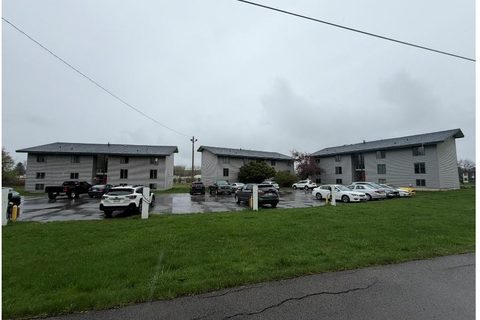
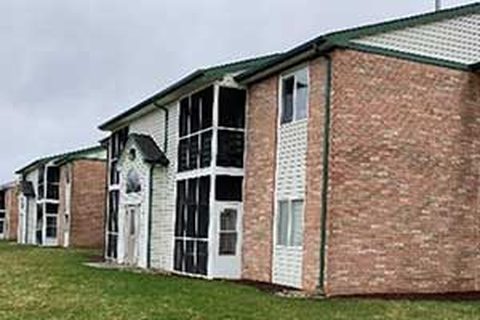
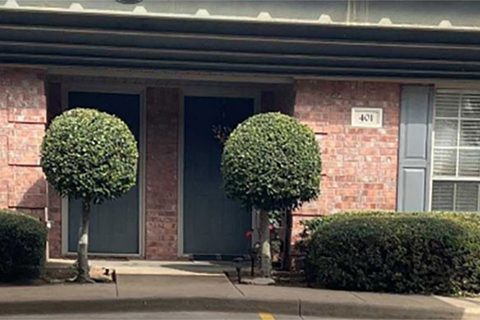
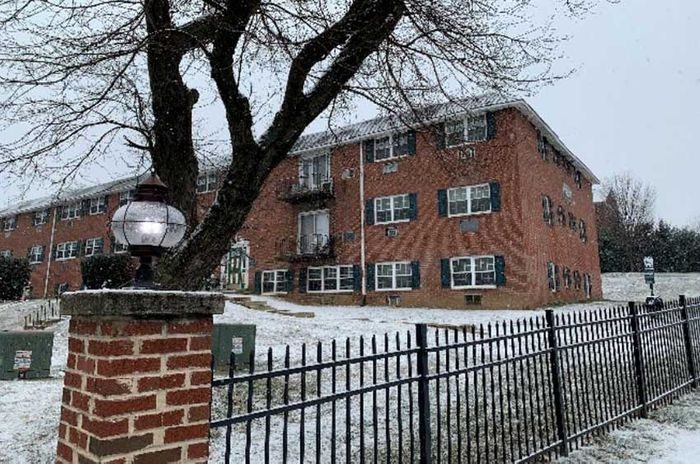
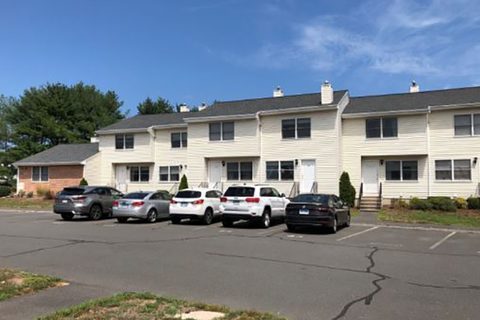
A sample of apartment and multifamily loans we have arranged for investors nationwide.
North Dakota Multifamily Markets We Serve
We arrange large-balance multifamily loans throughout North Dakota, including:
Other Property & Loan Types We Finance in North Dakota
As a full-service commercial mortgage broker, we arrange North Dakota financing across every major property and loan type:
We consider commercial loan requests of all sizes, beginning at $1,500,000.
What Our Clients Say
“As a real estate attorney, I trust that Select Commercial will deliver commercial mortgages in a timely manner. My clients are always handled professionally, and the rates and terms are excellent. I heartily recommend them.”
David S. · New York City“I spoke to several commercial lenders before finding Select Commercial. They got me a lower rate and their service was exceptional. If you need a multifamily loan, you need to talk to Stephen.”
Nathan B. · Philadelphia, PA“Select Commercial was very helpful with my multifamily mortgage. Stephen went over several options and we came up with the best lender to meet my needs. I got the funds and also lowered my payments.”
Gary M. · Portland, OR“Select Commercial offered 100% financing for my medical practice when my bank would have required 20% down. They delivered something my bank could not, and handled everything professionally.”
John C. · Boston, MAGet Your North Dakota Multifamily Loan Quote
No cost, no obligation. Written answers within 48 hours on North Dakota multifamily loans over $6,000,000.
- No application or processing fees
- Written answers within 48 hours
- For 5+ unit and commercial properties, $1.5M and up