
Utah
Utah Apartment Loans
Select Commercial arranges Utah apartment loans from $1,500,000, up to 80% LTV, with no upfront fees. Our lowest apartment rate today is 6.54% as of October 24, 2026. We compare Fannie Mae, Freddie Mac, FHA, bank and bridge programs to fit your property. For larger balances, see multifamily loans. See current rates on every loan type we offer.
Get a Free Quote2026 Utah Apartment Loan Market
Utah is one apartment market strung along one corridor, and in 2026 the corridor is pulling apart at both ends. Provo at the south end is the fastest rising city in the state. Ogden at the north end is the only one moving backward. Salt Lake City in the middle is close to flat. Eighty miles separate them and they are not having the same year.
Where rents stand. As of August 2026, average asking rent in Provo was $1,905, up 4.1% over the year. Salt Lake City was $1,602, up 0.56%. West Valley City was $1,579, up 0.54%. Ogden was $1,510, down 1.09%. Those are RentCafe figures for professionally managed buildings of fifty units and up, measured the same way in all four cities, which is why they can be read against each other.
Supply explains most of it. The Salt Lake metro completed roughly 9,430 apartments in 2025, about 6.7% of existing stock and the metro’s peak for the decade, according to Yardi Matrix. Very few markets in the country add that share of their inventory in a single year. Occupancy in stabilized properties still held at 94.7% in February 2026, ten basis points better than a year earlier, so the units were absorbed rather than left standing empty. Absorbing them cost rent growth: Yardi put metro asking rent at $1,525 in February 2026, down 0.4% on a trailing three month basis. That figure is a metro average from a different provider on a different date than the city numbers above, which is exactly why we name the source and the basis every time rather than blending them.
The pipeline is thinning. Northmarq reported in the second quarter of 2026 that multifamily permitting in the metro has fallen well below its ten year average, and that nine of the metro’s eleven submarkets recorded vacancy compression from the previous quarter. Read alongside the occupancy figure, that describes a market working through supply it has already taken delivery of, rather than one still bracing for it.
What that means for your file. A Utah apartment loan in 2026 is underwritten on demonstrated in place income, with the concession question asked early and answered with documents. Lenders are not pricing a rent recovery into Utah files, and they are not pricing a collapse either. They are asking what the building actually collects and how steady that has been through a heavy delivery year. Buildings that can show the answer are financing well.
Across Utah we arrange apartment building loans from $1,500,000 through agency, bank, FHA and bridge programs. Rate and leverage follow the rent roll and the trailing twelve months of operating income rather than any forecast.
Utah Apartment Loan Rates
Rates updated as of October 24, 2026
| Loan Type | Rate* | Max LTV |
|---|---|---|
| 5 Year Fixed | 6.54% | Up to 80% |
| 7 Year Fixed | 6.57% | Up to 80% |
| 10 Year Fixed | 6.61% | Up to 80% |
- Cash-out refinances are acceptable
- Interest-only and non-recourse options
- Minimum 1.25x debt-service-coverage ratio
See Utah Multifamily Rates Over $6 Million, Starting at 6.14%
Rates last updated October 24, 2026. Rates and maximum LTV shown represent our best-case pricing scenarios. Actual rates, LTV, and loan terms are subject to underwriting approval and may vary.
Utah Markets We Finance
Almost all of Utah’s apartment stock sits on the Wasatch Front, a strip of roughly eighty miles running from Ogden through Salt Lake City to Provo, hemmed in by the mountains on one side and the Great Salt Lake and the desert on the other. That geography is the reason Utah builds upward and inward along the corridor instead of sprawling outward, and it is the reason these markets share an employment base while behaving as separate rental markets.
Salt Lake City and Salt Lake County
The state capital and the center of the corridor, at about $1,602 as of August 2026 and up 0.56% over the year. State government, healthcare, higher education, finance and back office operations, the airport and a substantial technology sector give the city the broadest employment base in Utah. Most of the metro’s recent construction landed downtown and in the neighborhoods immediately around it, so that is where concessions are most visible and where comparable selection matters most. The county’s older and more affordable stock sits west and south of the city. West Valley City, the second largest city in Utah at about $1,579 and up 0.54%, is the clearest example: workforce housing, largely garden and walk up product from the 1970s through the 1990s, and the part of the market where small balance agency, bank and credit union capital competes hardest.
Salt Lake City apartment loans · Salt Lake City commercial · West Valley City commercial
Provo, Orem and Utah County
The highest average rent in Utah and the fastest growth of the four markets we track, at about $1,905 and up 4.1% over the year to August 2026. Utah County carries the southern half of the state’s technology corridor along with two very large universities, and the combination of employment growth and a student population that does not shrink gives the county demand from two directions at once. One caution belongs on every Utah County file: a building near a major campus is underwritten differently from a conventional apartment property even when it is leased conventionally. By the bed leasing, parental guaranties, a leasing calendar tied to the academic year and summer vacancy all change how a lender reads a rent roll, and the programs that price student housing well are not always the programs that price conventional apartments well. Say plainly which one you own, because the appraisal will.
Ogden, Layton and the northern front
Ogden was about $1,510 as of August 2026, down 1.09% over the year, the only one of Utah’s four measured markets running negative. Weber and Davis counties run on aerospace and defense work, distribution and logistics along the interstate, healthcare and a large federal installation, and the northern front carries the lowest basis per unit on the corridor. Going in yields are correspondingly higher. A file here is sized firmly on demonstrated in place income, and because rents have been slipping rather than rising, a lender will want more than a single strong year behind it. This is community bank, credit union and small balance agency territory.
St. George, Park City and the rest of Utah
Off the Wasatch Front, Utah gets specific fast. St. George and Washington County in the southwest corner have been among the fastest growing areas in the country by population, driven by retirement and second home demand and a seasonal visitor economy, which makes for genuine growth and genuinely seasonal operating numbers. Park City and Summit County are resort markets where a large share of the housing is not conventionally rented at all, so apartment rent comps and comparable sales both thin out quickly and need to be justified rather than assumed. Logan, Cedar City and Tooele are university towns and satellite markets with small but steady rental demand. Across all of these, lenders lean on the appraisal harder than they do on the corridor, and a well supported comp set is worth pressing your appraiser for.
Rent figures above are average asking rents across professionally managed buildings of fifty units and up as of August 2026. Where we do not yet have a dedicated apartment page for a Utah city, the link goes to our commercial mortgage page for that market.
Compare Utah Apartment Loan Programs
As a broker we compare every program for your best-fit Utah apartment financing:
| Program | Typical rate* | Max leverage | Best for |
|---|---|---|---|
| Fannie Mae Small Loan | 6.54% | Up to 80% | Non-recourse, fixed to 30 yrs |
| Freddie Mac SBL | 6.60% | Up to 80% | $2M to $10M small balance |
| FHA / HUD | 6.74% | Up to 85% | Highest leverage, longest term |
| Bank / portfolio | 6.50% | Up to 75% | Flexible, value-add |
| Bridge | 9.00% | Up to 80% LTC | Reposition, lease-up |
Most apartment lenders look for a debt-service-coverage ratio (DSCR) of at least 1.25x.
Rates last updated October 24, 2026. Rates and maximum LTV shown represent our best-case pricing scenarios. Actual rates, LTV, and loan terms are subject to underwriting approval and may vary.
What a Supply Wave Does to a Utah Apartment File
This is the part of a Utah apartment loan that catches out of state buyers, and it has nothing to do with rent control, because Utah does not have any. Utah Code Title 57, Chapter 20 prohibits a county, city or town from enacting an ordinance or resolution that controls rents or fees on private residential property without the approval of the Legislature, preserving only their zoning, building and planning authority. None of the analysis that dominates a California, Oregon, Maryland or New Jersey file applies in Utah. There is no cap to model, no coverage test by construction date, and no vacancy decontrol question to answer. What limits rents in Utah is the market, and for two years the market has been full of new units. The whole risk sits in supply and absorption, which is unusual enough to be worth saying out loud.
Concessions and the gap between gross and net. A competing property absorbing a delivery wave does not usually cut its asking rent. It offers a month or two free, waives the administrative and application fees, or buys down the first year. The rent roll still shows the gross number. Net effective rent, which is what the property actually collects over the term of the lease, is lower. A lender values the building on what it collects. That makes concessions the first thing a Utah appraiser and a Utah underwriter go looking for, at your property and across every comp. If your building is granting concessions, put them in front of the lender with the rent roll instead of letting them be found. If your building is not granting them and the comparable properties are, say so plainly and document it, because in this market that is a competitive advantage and it deserves to be priced as one.
Trailing twelve months against the most recent months. In a market digesting new supply, the twelve month look back and the last three months annualized can tell two different stories about the same property. Both get calculated. Where the recent months are stronger, the case for weighting them rests on documented occupancy sustained long enough to be more than a good quarter, together with a reason a lender can believe. Where the recent months are weaker, expect the file to be sized on the weaker set. Knowing which way your property leans before you apply is worth a great deal.
Comparable selection is not a formality here. A stabilized garden building in West Valley City from the 1980s and a 2024 delivery downtown can appear in the same metro statistics and have almost nothing to do with each other. Utah’s new construction has been concentrated in a small number of submarkets, so a metro wide average describes a mix that may contain nothing resembling your building. An appraisal that pulls comps from the right vintage, the right submarket and the right unit type will support a materially different number than one that works from the metro average, and it is worth asking for the comp set early.
Unit mix carries more weight in Utah than in most states. Utah households are unusually large. Census figures covering 2020 through 2024 put persons per household at 2.97 in Utah against 2.53 nationally. That difference shows up directly in a rent roll. In Provo as of August 2026, average asking rent ran about $1,257 for a one bedroom and about $2,652 for a three bedroom, more than double, a spread you will not find in most rental markets. A Utah building weighted toward two and three bedroom units is competing for a slice of the renter base that is unusually deep. A building that is mostly studios and one bedrooms is competing for a slice that is unusually thin, and it is competing against a large share of what has just been delivered. Neither is a problem on its own. Both are worth understanding before you set your rent assumptions.
None of this makes Utah a hard state to finance. It makes Utah a state where the file does the work. A building that has been leasing at its asking rents, without concessions, through the heaviest delivery year the metro has seen in a decade has a genuinely strong story, and that story is only worth what the documents behind it can prove.
Financing Options in Utah
Utah apartment, multifamily and commercial properties each have dedicated financing. Pick the page that matches your property:
Financing more of the state? See Utah commercial mortgages.
Financing in another state? Explore our apartment loans, multifamily loans and commercial mortgages nationwide.
Refinancing a Utah Apartment Building
Utah refinances in 2026 divide fairly cleanly by when the building was acquired, and the two groups are handled quite differently.
Bought before the delivery wave. These are usually straightforward. Basis is below replacement cost, in place rents have generally held, and the question is coverage rather than value. Sizing runs off the trailing twelve months at a debt service coverage ratio near 1.25x, which puts every operating expense into the loan calculation. Owners in this group are often surprised at how much the expense line moves the number, and it is the cheapest place to find proceeds.
Bought or built into the wave. This is the more common conversation we are having in Utah right now. A property that leased up more slowly, or at a lower net effective rent, than the original plan assumed, with bridge or construction debt approaching maturity against that plan. It is workable, and there are usually three routes: extend the bridge, take a bank loan sized on where the property actually is today, or wait for agency debt once there are enough clean stabilized months behind the property. Which route fits turns almost entirely on how many months of concession free, documented operation you can put on the table. Two more quarters of clean performance can be worth more than any argument.
What to send. The rent roll, the trailing twelve months of operating income, and a concession schedule if concessions are being granted. Two Utah specific items are worth adding without being asked. The last twelve months of water and utility billing, because this is an arid state, irrigation and landscaping water is a real line rather than a rounding error, and metering arrangements vary widely by vintage. And, for anything near a campus in Utah County or Cache County, a clear statement of how the property leases, by unit or by bed, and on what calendar. Both answer questions a lender would otherwise have to ask twice.
Utah Apartment Loan Types We Serve
We arrange financing across Utah for:
- Urban high-rise apartment buildings
- Suburban garden apartment complexes
- Small apartment buildings with 5+ units
- Underlying cooperative apartment loans
- Portfolios of small apartment and rental properties
- Mixed-use and other multifamily property
Utah Apartment Complex Financing
In Utah, loan size decides who competes for the deal. Smaller balances usually price best with regional banks, credit unions and the agency small balance programs, where familiarity with the submarket and the building stock counts for a great deal. Larger balances open the field to Fannie Mae, Freddie Mac, FHA, life companies and CMBS, and rates there are frequently tighter because the loan is large enough to securitize. The trade is a heavier package: full appraisal, property condition report, environmental review, and sizing driven by net operating income, debt service coverage and debt yield.
Utah apartment lenders settle two questions before most others: what the property collects on a net effective basis rather than a gross one, and how it has performed against the new supply in its own submarket. Answer both with documents and the file moves quickly. Send the rent roll and the trailing twelve months and we will tell you which lenders are sharpest on your property.
Utah Multifamily Loan Rates
For larger balances, over $6 million
Other Property & Loan Types We Finance in Utah
As a full-service commercial mortgage broker, we arrange Utah financing across every major property and loan type:
We consider commercial loan requests of all sizes, beginning at $1,500,000.
Apartment Loans Across Utah
We arrange apartment loans throughout Utah, not only on the Wasatch Front. Salt Lake City, West Valley City, Provo, Orem, Ogden, Layton, Sandy, Murray, Taylorsville, St. George, Logan, Cedar City, Tooele and Park City are all financed through the same agency, bank, credit union and FHA programs. Because no Utah city or county may impose rent regulation, the file is the same shape everywhere in the state and the differences that matter are supply, submarket and the building itself.
For larger balances see our Utah multifamily loans. For office, retail, industrial and owner occupied property see Utah commercial mortgages, and nationwide we lend in most major U.S. cities.
Recent Apartment Loan Closings
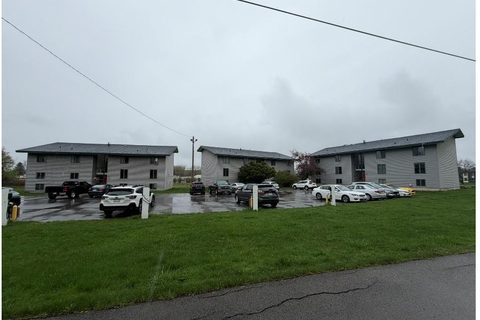
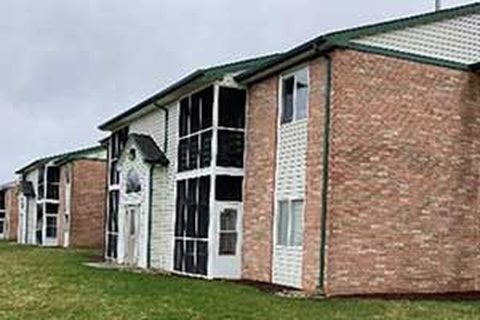
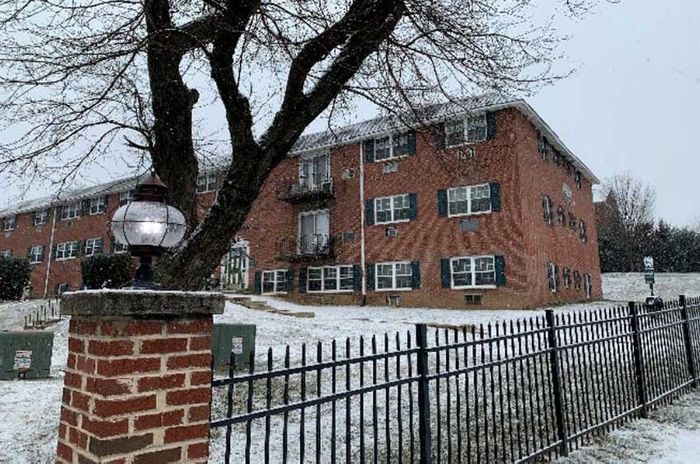
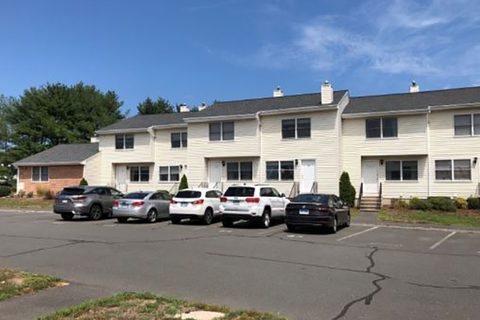
A sample of apartment and multifamily loans we have arranged for investors nationwide.
What Our Clients Say
“I am a veterinarian who purchased an existing practice. I was surprised to find a company that offered 100% financing at a good rate, with great terms and rates for medical office financing.”
Carol K. · Chicago, IL“I spoke to several commercial lenders before finding Select Commercial. They got me a lower rate and their service was exceptional. If you need a multifamily loan, you need to talk to Stephen.”
Nathan B. · Philadelphia, PA“Select Commercial was very helpful with my multifamily mortgage. Stephen went over several options and we came up with the best lender to meet my needs. I got the funds and also lowered my payments.”
Gary M. · Portland, OR“Select Commercial offered 100% financing for my medical practice when my bank would have required 20% down. They delivered something my bank could not, and handled everything professionally.”
John C. · Boston, MAGet Your Utah Apartment Loan Quote
No cost, no obligation. Written answers within 48 hours on Utah apartment loans from $1,500,000.
- No application or processing fees
- Written answers within 48 hours
- For 5+ unit and commercial properties, $1.5M and up