
Colorado
Colorado Apartment Loans
Select Commercial arranges Colorado apartment loans from $1,500,000, up to 80% LTV, with no upfront fees. Our lowest apartment rate today is 6.64% as of October 9, 2026. We compare Fannie Mae, Freddie Mac, FHA, bank and bridge programs to fit your property. On larger balances, see multifamily loans. See current rates on every loan type we offer.
Get a Free Quote2026 Colorado Apartment Loan Market
Denver went through one of the deepest apartment corrections in the country, and 2026 is the year it turned. Net absorption in the second quarter ran roughly 6,550 to 6,760 units depending on the source, described by one as a market record and by another as the strongest quarter since 2021. Deliveries are forecast near 10,000 units for the full year, the lightest since 2020, against a construction peak of about 32,400 units under way in 2022 and roughly 18,700 delivered in 2024.
Rents stopped falling. Denver asking rent ran about $1,764 to $1,800 a month in the second quarter, down somewhere between 3% and 5.5% over the year but up 1% to 2% on the quarter, which is the first positive quarterly move in some time. Vacancy readings range from 5.6% to 6.8% depending on the provider and on whether lease-up units are counted. Roughly 11,100 units across the metro were still unleased, which is the number that keeps concessions in circulation and keeps effective rent under asking rent.
Values reset harder than rents did. Second-quarter sales volume of about $386 million was well down on the $681 million traded a year earlier, at an average near $236,000 a unit, off roughly 22% year over year. Median pricing across the first half ran nearer $170,400 a unit, with pre-1980 vintage product trading between about $95,000 and $176,000. Older value-add assets have been changing hands at close to half their prior per-unit values. For a buyer with cash and patience that is the opportunity; for an owner refinancing, it is the reason to have a conversation about valuation before the appraisal is ordered.
Across Colorado we arrange apartment building loans from $1,500,000 through agency, bank, FHA and bridge programs. Rate and leverage follow the rent roll and the trailing twelve months of operating income, not your personal income.
Colorado Apartment Loan Rates
Rates updated as of October 9, 2026
| Loan Type | Rate* | Max LTV |
|---|---|---|
| 5 Year Fixed | 6.66% | Up to 80% |
| 7 Year Fixed | 6.75% | Up to 80% |
| 10 Year Fixed | 6.64% | Up to 80% |
- Cash-out refinances are acceptable
- Interest-only and non-recourse options
- Minimum 1.25x debt-service-coverage ratio
See Colorado Multifamily Rates Over $6 Million, Starting at 6.44%
Rates last updated October 9, 2026. Rates and maximum LTV shown represent our best-case pricing scenarios. Actual rates, LTV, and loan terms are subject to underwriting approval and may vary.
Colorado Markets We Finance
Almost all of Colorado’s apartment stock sits along the Front Range, but Denver, Colorado Springs and the northern corridor are at different points in the same cycle, and the mountain resorts run on separate economics entirely.
Denver and the metro
The largest apartment market in the Mountain West and the one that absorbed the deepest correction. Record quarterly absorption in the second quarter of 2026 against a delivery forecast of roughly 10,000 units for the year, the lightest since 2020. Pricing has reset hard, with averages off about 22% year over year and older value-add product trading near half its prior per-unit value. Agency, bank and life company capital all compete here. For a stabilized Denver apartment complex with concessions burned off, quotes are competitive; a property still leasing into that 11,100-unit unleased overhang is a bank or bridge conversation first.
Denver apartment loans · Denver commercial · Aurora · Lakewood apartment loans · Lakewood commercial
Colorado Springs
Further along than Denver and looking healthier for it. Occupancy reached 94.4% in the first half of 2026, up about 150 basis points from year end and the highest in nearly four years, on absorption of 1,319 units against only 369 units delivered. Average rent ran about $1,457, still down 2.6% over the year but improving on the quarter. Military and defense employment around Fort Carson, Peterson and Schriever gives the Springs a demand base that does not track Denver’s. Sales volume of $82.5 million in the first half was well up on the prior six months, though still below the historical norm.
Northern Colorado
Fort Collins, Loveland, Greeley and Boulder run on university, technology and agricultural processing employment rather than on Denver’s office economy. Boulder in particular is structurally supply constrained by growth limits, which keeps existing buildings full and keeps basis per unit among the highest in the state. Apartment building loans in this corridor are frequently placed with regional banks and credit unions who know the submarkets directly.
Pueblo and southern Colorado
A very different basis: a much lower cost per unit, higher going-in yields and almost no new construction competing with existing buildings. Stock is older, so the property condition report carries real weight, and financing comes almost entirely from regional banks, credit unions and the agency small-balance programs rather than from institutional capital.
Where we do not yet have a dedicated apartment page for a Colorado city, the link goes to our commercial mortgage page for that market, which covers apartment and mixed-use property alongside other commercial types.
Compare Colorado Apartment Loan Programs
As a broker we compare every program for your best-fit Colorado apartment financing:
| Program | Typical rate* | Max leverage | Best for |
|---|---|---|---|
| Fannie Mae Small Loan | 6.84% | Up to 80% | Non-recourse, fixed to 30 yrs |
| Freddie Mac SBL | 6.66% | Up to 80% | $2M to $10M small balance |
| FHA / HUD | 6.70% | Up to 85% | Highest leverage, longest term |
| Bank / portfolio | 6.50% | Up to 75% | Flexible, value-add |
| Bridge | 9.00% | Up to 80% LTC | Reposition, lease-up |
Most apartment lenders look for a debt-service-coverage ratio (DSCR) of at least 1.25x.
Rates last updated October 9, 2026. Rates and maximum LTV shown represent our best-case pricing scenarios. Actual rates, LTV, and loan terms are subject to underwriting approval and may vary.
Why Colorado Taxes Your Apartment Building Like a House
This is the most valuable structural fact about owning apartments in Colorado, and it is worth understanding before you compare the state to any other. Colorado assesses residential property, which includes apartment and multifamily rental buildings, at a residential rate currently in the high-6% to low-7% range of actual value. General commercial and industrial property is assessed at 25% to 27%. That is roughly a fourfold difference in the assessment ratio applied before the local mill levy, and it means an apartment building and an office building of identical market value carry very different tax lines.
The framework changed after voters repealed the Gallagher Amendment in 2020, which had automatically adjusted the residential rate by formula. Since then the legislature sets the rates by statute, most recently through the 2024 legislation that established the schedule now running through 2026 and beyond. The exact residential figure varies slightly depending on the levy and on a statewide valuation test, so confirm the current rate with the county assessor before you finalize a pro forma rather than working from a number you were quoted last year.
Colorado also preempts local rent control. State law provides that no county or municipality may enact an ordinance controlling rent on private residential property. The one carve-out is for voluntary agreements between a local government and an owner restricting rents in exchange for something, which is how inclusionary and affordable-housing programs operate. Broad market-rate rent stabilization is not permitted, and no Colorado locality has one. For a lender projecting your income, that means no statutory ceiling on rent growth, which is a genuine advantage over California, Oregon, Washington or New York.
One piece of context on why Colorado builds apartments rather than condominiums. Construction defect litigation reform in 2017 required a homeowners association to notify all unit owners and the builder, hold an informational meeting and obtain majority owner approval before bringing a defect claim. That framework remains in place and a 2024 attempt to unwind it did not pass. The practical effect over the last decade has been that Colorado developers have favored rental apartments over for-sale condominiums, which is part of why the rental pipeline grew as large as it did and why the correction was as deep as it was.
Financing Options in Colorado
Colorado apartment, multifamily and commercial properties each have dedicated financing. Pick the page that matches your property:
Financing more of the state? See Colorado commercial mortgages.
Financing in another state? Explore our apartment loans, multifamily loans and commercial mortgages nationwide.
Colorado City Spotlights: 2026 Apartment Market Notes
Beyond the major metros, we finance apartment buildings across Colorado. Current market notes for cities where borrowers ask us to lend:
- Colorado Springs: median 1-bedroom rent about $1,100, down 4.3% year over year (July 2026 rent report), digesting new supply, which favors well-capitalized buyers.
National baseline for context: the U.S. median rent was $1,388 in July 2026, down 1.1% year over year, with rental vacancy near 7.2% (national rent report, July 2026). Each city above links to our local commercial mortgage page, and we finance 5+ unit apartment properties in every Colorado market from $1,500,000.
Colorado Apartment Loan Types We Serve
We arrange financing across Colorado for:
- Urban high-rise apartment buildings
- Suburban garden apartment complexes
- Small apartment buildings with 5+ units
- Underlying cooperative apartment loans
- Portfolios of small apartment and rental properties
- Mixed-use and other multifamily property
Refinancing a Colorado Apartment Building
Colorado refinances in 2026 turn on valuation more than on rate, and that is an uncomfortable conversation worth having early rather than late.
Start with what the appraisal is likely to say. With average per-unit pricing down roughly 22% over the year and older value-add product trading near half its prior per-unit values, an owner who bought in 2021 or 2022 may be refinancing into a materially lower valuation than the one the acquisition loan was written against. That does not mean the refinance fails, but it does change the shape of it: proceeds are more likely to be constrained by loan-to-value than by coverage, which is the reverse of the usual Colorado position. Work that out before you order the appraisal, not after.
Then the rent roll and the trailing twelve. Proceeds are sized on in-place income, and with roughly 11,100 units still unleased across metro Denver, concessions remain in circulation. Effective rent sits under asking rent and the lender sizes on the lower figure. Owners who have burned concessions off and held occupancy through two or three quarters are borrowing materially better than those still buying traffic with free rent.
Then the note. A great deal of Colorado multifamily was financed with floating-rate bridge debt in 2021 and 2022 against a rent growth assumption the supply wave undercut. If that is your situation, confirm the maturity date and whether prepayment is yield maintenance, a step-down or open, and start the process six to nine months out. Distress in this market has been real, and lenders are noticeably more constructive with owners who came to them early than with owners who arrived at the balloon.
Send the rent roll and the trailing twelve and we will underwrite the building the way the lender will, then come back with written options inside 48 hours at no cost. Colorado apartment loans start at $1,500,000, whether it is a twenty-unit building in Pueblo or a garden complex in Aurora.
Other Property & Loan Types We Finance in Colorado
As a full-service commercial mortgage broker, we arrange Colorado financing across every major property and loan type:
We consider commercial loan requests of all sizes, beginning at $1,500,000.
Colorado Apartment Complex Financing
Loan size decides who competes. Smaller Colorado balances usually price best with regional banks, credit unions and the agency small-balance programs, where local knowledge and a clean rent roll carry the file. Larger balances open the field to Fannie Mae, Freddie Mac, FHA, life companies and CMBS, and rates there are often tighter because the loan is big enough to securitize. The tradeoff is a heavier package: full appraisal, property condition report, environmental review, and sizing driven by net operating income, debt service coverage and debt yield.
Colorado apartment lenders are focused on valuation and on lease-up exposure right now more than on anything else. Know where your building sits on both before you apply. Send the rent roll and the trailing twelve months and we will tell you which lenders are sharpest on your property.
Colorado Multifamily Loan Rates
For larger balances, over $6 million
Recent Apartment Loan Closings
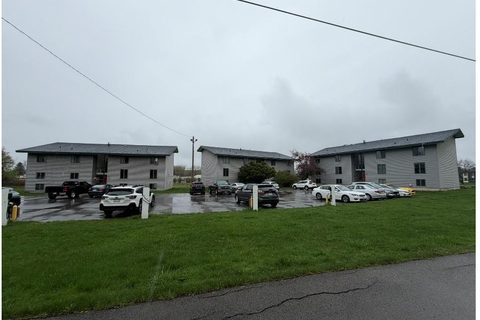
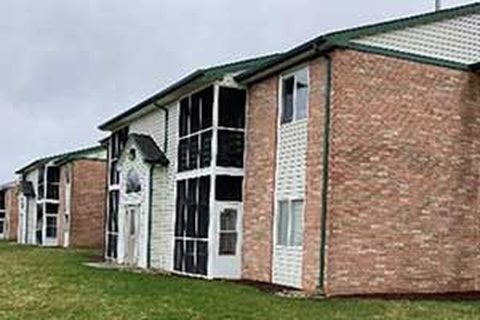
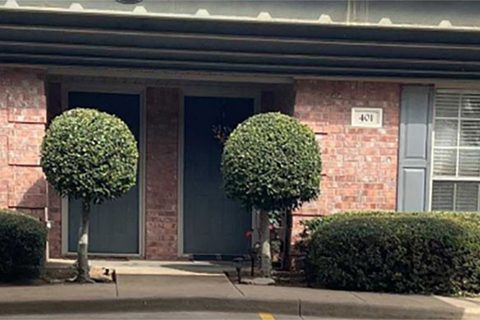
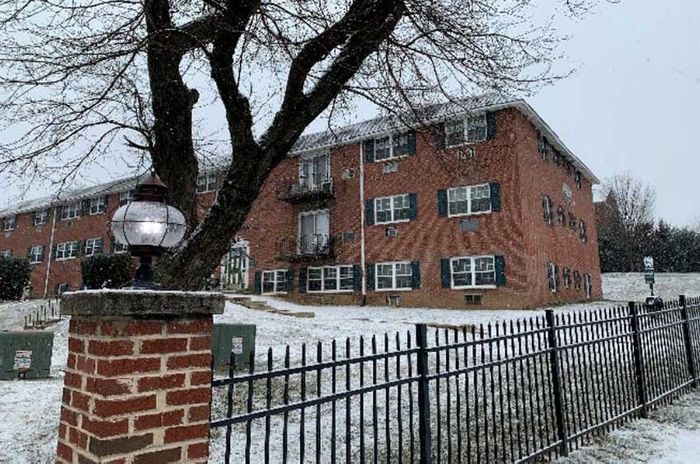
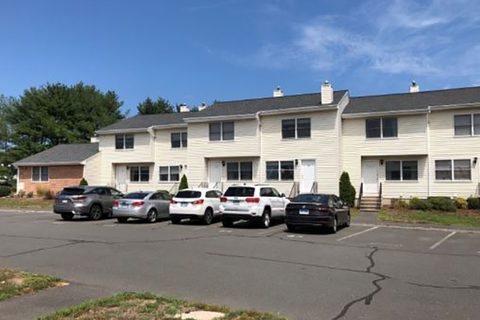
A sample of apartment and multifamily loans we have arranged for investors nationwide.
Apartment Loans Across Colorado
We arrange apartment loans throughout Colorado, not only along the Front Range. Grand Junction, Durango, Greeley and the mountain communities are financed through the same agency, bank and credit union programs, though resort markets are underwritten on year-round occupancy rather than peak-season rents.
For larger balances see our Colorado multifamily loans. For office, retail, industrial and owner-occupied property see Colorado commercial mortgages, and nationwide we lend in most major U.S. cities.
What Our Clients Say
“I am a veterinarian who purchased an existing practice. I was surprised to find a company that offered 100% financing at a good rate, with great terms and rates for medical office financing.”
Carol K. · Chicago, IL“I spoke to several commercial lenders before finding Select Commercial. They got me a lower rate and their service was exceptional. If you need a multifamily loan, you need to talk to Stephen.”
Nathan B. · Philadelphia, PA“Select Commercial was very helpful with my multifamily mortgage. Stephen went over several options and we came up with the best lender to meet my needs. I got the funds and also lowered my payments.”
Gary M. · Portland, OR“Select Commercial offered 100% financing for my medical practice when my bank would have required 20% down. They delivered something my bank could not, and handled everything professionally.”
John C. · Boston, MAGet Your Colorado Apartment Loan Quote
No cost, no obligation. Written answers within 48 hours on Colorado apartment loans from $1,500,000.
- No application or processing fees
- Written answers within 48 hours
- For 5+ unit and commercial properties, $1.5M and up