
Wyoming
Wyoming Apartment Loans
Select Commercial arranges Wyoming apartment loans from $1,500,000, up to 80% LTV, with no upfront fees. Our lowest apartment rate today is 6.55% as of October 21, 2026. We compare Fannie Mae, Freddie Mac, FHA, bank and bridge programs to fit your property. For larger balances, see multifamily loans. See current rates on every loan type we offer.
Get a Free Quote2026 Wyoming Apartment Loan Market
The headline number in Wyoming this year is a fifteen percent rent increase, and the most useful thing we can tell you about it is not to underwrite from it. Understanding why is most of what you need to know about financing apartments in the least populous state in the country.
Where rents stand. As of August 2026, average asking rent in Cheyenne was $1,367, up 15.59% over the year. Casper was $1,204, up 1.83%. Those are RentCafe figures drawn from Yardi Matrix data covering apartment buildings of fifty or more units. Cheyenne and Casper are the only two Wyoming markets that appear in that dataset at all.
Read the second sentence of that paragraph again, because it is the whole point. The survey covers professionally managed buildings of fifty units and up. Wyoming has very few of them. In a market with a small number of qualifying properties, one new building entering the sample, or one leaving it, moves the reported average a great deal, and the movement reflects the composition of the sample rather than what any individual landlord is achieving. A statewide rent increase of that size would be extraordinary. A fifteen percent move in a thin sample is ordinary, and it is not evidence of anything about your building.
What a lender actually does with this. Nothing, is the honest answer. An underwriter is not going to credit a Wyoming rent trend in either direction, because there is not enough underlying data to make it meaningful. What that means in practice is that a Wyoming apartment file is decided almost entirely on the property’s own record. Several years of occupancy, collections and expenses, documented, is not a nice addition to a Wyoming submission. It is the submission.
The energy question sits underneath all of it. Wyoming’s economy is more concentrated in mineral extraction than any other state’s, and that concentration reaches apartment demand in Casper, Gillette and Rock Springs directly. Lenders read it the way they read energy exposure in Oklahoma and western North Dakota: not as a reason to decline, but as a reason to want more history. A file supported by a single strong year is a difficult file. One supported by four is straightforward.
Across Wyoming we arrange apartment building loans from $1,500,000 through agency, bank, FHA and bridge programs. Rate and leverage follow the rent roll and the trailing twelve months of operating income.
Wyoming Apartment Loan Rates
Rates updated as of October 21, 2026
| Loan Type | Rate* | Max LTV |
|---|---|---|
| 5 Year Fixed | 6.60% | Up to 80% |
| 7 Year Fixed | 6.63% | Up to 80% |
| 10 Year Fixed | 6.55% | Up to 80% |
- Cash-out refinances are acceptable
- Interest-only and non-recourse options
- Minimum 1.25x debt-service-coverage ratio
See Wyoming Multifamily Rates Over $6 Million, Starting at 6.22%
Rates last updated October 21, 2026. Rates and maximum LTV shown represent our best-case pricing scenarios. Actual rates, LTV, and loan terms are subject to underwriting approval and may vary.
Wyoming Markets We Finance
Wyoming has no metropolitan area of any size, and its apartment markets are best understood by what drives each local economy rather than by rent levels, which for most of the state are not published on any consistent basis.
Cheyenne and Laramie County
The state capital and the largest city in Wyoming, at about $1,367 as of August 2026, and the only market in the state with meaningful rent growth in the published data, though for the reasons above that figure should be read carefully. Cheyenne runs on state government, a large air force base, the railroad, a growing data center presence and a position on the interstate corridor an hour and a half from Denver. That last point matters more than its size suggests: Cheyenne is close enough to the Front Range to take some demand from it, which gives it a demand source no other Wyoming market has. Fifty two percent of Cheyenne rentals fall between $1,001 and $1,500 a month, and the reported spread as of August 2026 ran about $1,185 for a one bedroom, $1,467 for two bedrooms and $1,491 for three, with only about twenty four dollars between the two and three bedroom figures, which is itself a sign of how thin the underlying sample is.
Casper and Natrona County
About $1,204 as of August 2026, up 1.83%, the second and only other market in the published survey. Casper is the state’s energy services center, with oil and gas support, a regional medical presence, a community college and a retail and distribution role covering central Wyoming. Demand here follows drilling and production activity more closely than it follows anything else, which is why a lender will read several years of occupancy rather than one. Basis per unit is low and going in yields are correspondingly high.
Gillette, Rock Springs and the energy basins
Campbell County around Gillette and Sweetwater County around Rock Springs and Green River are the most directly commodity linked apartment markets in Wyoming, tied to coal, trona, oil and gas. These markets have historically moved sharply with production activity in both directions. They are financed, and regularly, by community banks and small balance agency capital, but they are underwritten conservatively and with a long look back. A borrower who can show occupancy held through a downturn has the single most persuasive document available in this part of Wyoming.
Laramie, Sheridan, Jackson and the rest
Laramie is a university town with the demand profile that implies, including a leasing calendar tied to the academic year. Sheridan and Cody run on tourism, healthcare and ranching. Jackson and Teton County are a category of their own: an extremely constrained resort economy where housing costs are far above the rest of Wyoming, where a large share of the housing stock is not conventionally rented, and where employee housing is a live issue for local employers. Apartment comparables in Jackson are very thin and an appraisal there needs to be defended explicitly rather than assembled.
Rent figures above are drawn from surveys of professionally managed buildings of fifty units and up as of August 2026. Most Wyoming communities do not appear in those surveys at all, and where that is the case we do not quote a figure rather than repeating one we cannot stand behind.
Compare Wyoming Apartment Loan Programs
As a broker we compare every program for your best-fit Wyoming apartment financing:
| Program | Typical rate* | Max leverage | Best for |
|---|---|---|---|
| Fannie Mae Small Loan | 6.62% | Up to 80% | Non-recourse, fixed to 30 yrs |
| Freddie Mac SBL | 6.60% | Up to 80% | $2M to $10M small balance |
| FHA / HUD | 6.83% | Up to 85% | Highest leverage, longest term |
| Bank / portfolio | 6.50% | Up to 75% | Flexible, value-add |
| Bridge | 9.00% | Up to 80% LTC | Reposition, lease-up |
Most apartment lenders look for a debt-service-coverage ratio (DSCR) of at least 1.25x.
Rates last updated October 21, 2026. Rates and maximum LTV shown represent our best-case pricing scenarios. Actual rates, LTV, and loan terms are subject to underwriting approval and may vary.
A Fifteen Percent Rent Increase No Lender Will Underwrite
Wyoming is the clearest example in the country of a problem that exists quietly everywhere: the market data an underwriter would normally lean on does not describe your building. Getting this right is worth more to a Wyoming borrower than any amount of argument about rent trends.
Why the published numbers behave the way they do. The standard rent surveys track professionally managed apartment properties of fifty units and up. That threshold exists for good reasons in Dallas or Phoenix, where thousands of properties clear it and the resulting average is stable. This state has two markets that appear in the survey at all, and each of them is represented by a small number of qualifying properties. When the sample is that small, the reported average is driven by which buildings are in it. A single new lease-up entering the sample at above market asking rents will lift the average sharply without a single existing tenant paying more. A single property leaving it does the reverse. The number moves. Nothing about the market necessarily did.
What that means for your appraisal. An appraiser cannot rely on published market data here, and a good one will not pretend to. What they will do instead is build a comparable set property by property, from actual leases, actual sales and direct conversations with local owners and managers. That takes longer, costs more and is worth every dollar. When you engage an appraiser for a Wyoming apartment property, ask specifically how they intend to develop the rent comparables, and be wary of anyone who answers by naming a data subscription.
What substitutes for market data in the file. The property’s own history, in more depth than you would send anywhere else. Specifically: three to five years of occupancy by month rather than an annual average, because an annual average hides exactly the volatility a Wyoming lender is trying to see. Collections and delinquency over the same period. A rent roll showing lease start and end dates so an underwriter can see turnover and how quickly units re-let. Expenses year by year rather than a single trailing twelve. And where you have it, the record of how the property performed through the last downturn in whichever commodity drives the local economy. That last item is the one that separates a Wyoming file that closes from one that stalls.
Who lends here, and why it matters. Wyoming apartment loans are placed most often with community and regional banks and through the agency small balance programs, precisely because those lenders substitute local knowledge for the market data that does not exist. A national lender working from a screen will not find what it needs and will size defensively or decline. Part of the value of a broker on a Wyoming file is knowing which lenders will actually engage with a property in Gillette or Rock Springs rather than declining it for reasons that have nothing to do with the building.
The same discipline pays off elsewhere. This is the sharpest version of an argument that also applies in Vermont, where most of the state produces no published apartment data either, and in the smaller markets of Montana and the Dakotas. Wherever the data thins out, the property’s own documented record is what an underwriter uses instead, and the borrower who arrives with it is doing the lender’s job for them.
Financing Options in Wyoming
Wyoming apartment, multifamily and commercial properties each have dedicated financing. Pick the page that matches your property:
Financing more of the state? See Wyoming commercial mortgages.
Financing in another state? Explore our apartment loans, multifamily loans and commercial mortgages nationwide.
Refinancing a Wyoming Apartment Building
Wyoming refinances are sized on coverage rather than value in essentially every case, and they succeed or fail on documentation rather than on the rate environment.
The rent roll and several years of history. Proceeds are set by in place income at a debt service coverage ratio near 1.25x. In Wyoming, send more than the minimum: multiple years of operating statements, occupancy by month, and a rent roll with lease dates. Where published market data is absent, this is the evidence that takes its place, and a file that supplies it is treated very differently from one that does not.
The current tax bill and insurance policy. Send the actual documents. Property insurance across the interior west has repriced substantially in recent years and an older figure in a pro forma is not a reasonable estimate of the current one. Where roofing or other work has been done that bears on the risk profile, document it.
Heat, metering and the winter. Winters here are long, cold and windy. Buildings where residents pay their own heat carry a structurally lower and more predictable expense ratio than buildings where the owner does, and a lender reads that difference straight into the loan amount. Where the owner pays, send actual billing across a full heating season rather than an estimate.
The commodity cycle, addressed head on. If your property is in an energy linked Wyoming market, do not leave the question hanging. Show what occupancy and collections did through the last downturn. An owner who volunteers that record is making the strongest possible case, and an owner who omits it invites an underwriter to assume the worst.
Cash out is available and is sized the same way. Agency, bank, credit union and life company lenders will all consider cash out on a stabilized Wyoming apartment property. The constraint is the coverage math, not the program. Owners who have held through a full cycle frequently have both more equity and a better story than they realize, and the fastest way to find out is to send the rent roll and the operating history.
Wyoming Apartment Loan Types We Serve
We arrange financing across Wyoming for:
- Urban high-rise apartment buildings
- Suburban garden apartment complexes
- Small apartment buildings with 5+ units
- Underlying cooperative apartment loans
- Portfolios of small apartment and rental properties
- Mixed-use and other multifamily property
Wyoming Apartment Complex Financing
In Wyoming, the availability of local knowledge decides who competes at least as much as loan size does. Smaller balances usually price best with Wyoming and regional banks, credit unions and the agency small balance programs, where familiarity with the local economy substitutes for published market data. Larger balances open the field to Fannie Mae, Freddie Mac, FHA, life companies and CMBS, and rates there are frequently tighter because the loan is large enough to securitize, though a Wyoming property has to be a genuinely institutional asset to reach that market. The trade is a heavier package: full appraisal, property condition report, environmental review, and sizing driven by net operating income, debt service coverage and debt yield.
Wyoming apartment lenders settle two questions before most others: how the property performed through the last commodity cycle, and whether the operating history is deep enough to stand in for market data that does not exist. Answer both with documents and the file moves. Send the rent roll and the operating history and we will tell you which lenders are sharpest on your property.
Wyoming Multifamily Loan Rates
For larger balances, over $6 million
Other Property & Loan Types We Finance in Wyoming
As a full-service commercial mortgage broker, we arrange Wyoming financing across every major property and loan type:
We consider commercial loan requests of all sizes, beginning at $1,500,000.
Apartment Loans Across Wyoming
We arrange apartment loans throughout Wyoming. Cheyenne, Casper, Laramie, Gillette, Rock Springs, Green River, Sheridan, Evanston, Riverton, Cody and Jackson are all financed through the same agency, bank, credit union and FHA programs. What changes from one market to the next is the local economic driver, the depth of the comparable set and how much operating history a lender will want, not the shape of the file.
For larger balances see our Wyoming multifamily loans. For office, retail, industrial and owner occupied property see Wyoming commercial mortgages, and nationwide we lend in most major U.S. cities.
Recent Apartment Loan Closings
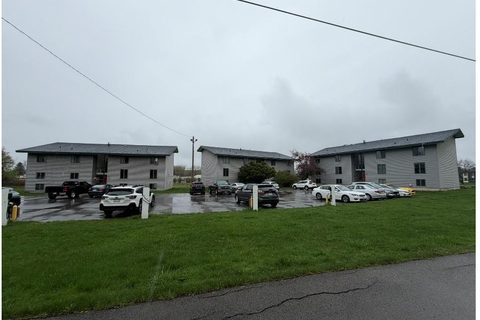
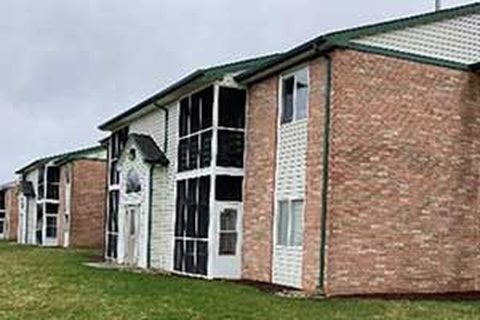
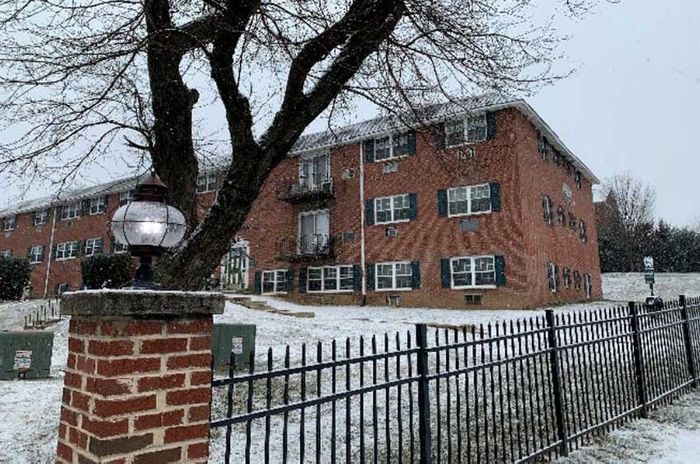
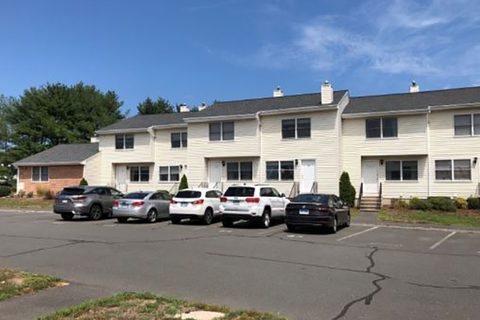
A sample of apartment and multifamily loans we have arranged for investors nationwide.
What Our Clients Say
“I am a veterinarian who purchased an existing practice. I was surprised to find a company that offered 100% financing at a good rate, with great terms and rates for medical office financing.”
Carol K. · Chicago, IL“I spoke to several commercial lenders before finding Select Commercial. They got me a lower rate and their service was exceptional. If you need a multifamily loan, you need to talk to Stephen.”
Nathan B. · Philadelphia, PA“Select Commercial was very helpful with my multifamily mortgage. Stephen went over several options and we came up with the best lender to meet my needs. I got the funds and also lowered my payments.”
Gary M. · Portland, OR“Select Commercial offered 100% financing for my medical practice when my bank would have required 20% down. They delivered something my bank could not, and handled everything professionally.”
John C. · Boston, MAGet Your Wyoming Apartment Loan Quote
No cost, no obligation. Written answers within 48 hours on Wyoming apartment loans from $1,500,000.
- No application or processing fees
- Written answers within 48 hours
- For 5+ unit and commercial properties, $1.5M and up