
West Virginia
West Virginia Apartment Loans
Select Commercial arranges West Virginia apartment loans from $1,500,000, up to 80% LTV, with no upfront fees. Our lowest apartment rate today is 6.54% as of October 27, 2026. We compare Fannie Mae, Freddie Mac, FHA, bank and bridge programs to fit your property. For larger balances, see multifamily loans. See current rates on every loan type we offer.
Get a Free Quote2026 West Virginia Apartment Loan Market
The two fastest growing apartment markets in West Virginia sit at opposite corners of the state, and neither of them is the capital. One is a university town. The other is functionally a Washington suburb that happens to be in West Virginia, and it is the most misunderstood apartment market in the state.
Where rents stand. As of August 2026, average asking rent in Martinsburg was $1,597, up 4.77% over the year. Morgantown was $1,294, up 5.37%, the strongest growth in the state. Charleston, the capital, was $1,290, up 1.33%. Those are RentCafe figures for professionally managed buildings of fifty units and up, measured on the same basis.
Martinsburg is more expensive than the capital by about three hundred dollars, and that gap is the single most important thing on this page. It is not a West Virginia rent premium. It is the Washington metropolitan area reaching across the state line, and it means a Martinsburg apartment building has to be analyzed against a completely different set of facts from a Charleston one. That is covered below.
One data note worth reading carefully. In Charleston the published one bedroom figure, about $1,321, sits above the published two bedroom figure of about $1,227. A larger unit asking less than a smaller one is almost always a sign of a thin sample rather than a market fact, and it is a useful reminder that West Virginia markets outside the two growth centers do not generate enough professionally managed inventory for published averages to be stable. Where that is true, an underwriter falls back on the property’s own record, and so should your submission.
What that means for your file. West Virginia apartment loans are sized on demonstrated in place income at a coverage ratio. Two items decide more West Virginia files than any rent number: where in the state the building sits, and whether the parcel is inside or outside a municipal boundary, which changes its property tax class. Both are below.
Across West Virginia we arrange apartment building loans from $1,500,000 through agency, bank, FHA and bridge programs. Rate and leverage follow the rent roll and the trailing twelve months of operating income.
West Virginia Apartment Loan Rates
Rates updated as of October 27, 2026
| Loan Type | Rate* | Max LTV |
|---|---|---|
| 5 Year Fixed | 6.54% | Up to 80% |
| 7 Year Fixed | 6.57% | Up to 80% |
| 10 Year Fixed | 6.61% | Up to 80% |
- Cash-out refinances are acceptable
- Interest-only and non-recourse options
- Minimum 1.25x debt-service-coverage ratio
See West Virginia Multifamily Rates Over $6 Million, Starting at 6.14%
Rates last updated October 27, 2026. Rates and maximum LTV shown represent our best-case pricing scenarios. Actual rates, LTV, and loan terms are subject to underwriting approval and may vary.
West Virginia Markets We Finance
West Virginia is four apartment markets that have very little to do with one another, and the differences between them are larger than the differences between whole states elsewhere.
The Eastern Panhandle: Martinsburg and Charles Town
The most expensive apartment market in West Virginia at about $1,597 as of August 2026, up 4.77% over the year. Berkeley and Jefferson counties sit at the far eastern tip of the state, inside the Washington metropolitan area, with commuter rail service and interstate access to the Maryland and Virginia suburbs. A substantial share of the renter base works outside West Virginia entirely. There is also a real local economy in distribution and warehousing along the interstate corridor and in government facilities in the area. This is the part of West Virginia where out of state capital is most active and where the analysis is most often done wrongly, for the reasons in the next section.
Morgantown and north central West Virginia
The strongest rent growth in the state as of August 2026, at about $1,294 and up 5.37%. Morgantown carries the state’s flagship university and its academic medical center, along with federal research and energy sector employment in the surrounding counties. The university dominates, and that has a specific consequence for a lender: a substantial share of the apartment stock here is student oriented, and student housing is underwritten differently from conventional apartments even when it leases conventionally. By the bed leasing, parental guaranties, an academic leasing calendar and summer vacancy all change how a rent roll reads. Say which one you own at the outset, because the appraisal will. Clarksburg, Fairmont and Bridgeport nearby run on healthcare, energy and federal facilities at a lower basis.
Charleston, Huntington and the Kanawha and Ohio valleys
Charleston, the state capital, was about $1,290 as of August 2026 and up 1.33%, and Huntington anchors the Ohio valley an hour west with a large university and a medical complex. These are the traditional centers of West Virginia, running on state government, chemicals and energy, healthcare and education. Basis per unit is low and going in yields are high. Buildings here are frequently older, so the property condition report does real work in the underwriting, and the comparable set is thinner than the population would suggest.
Wheeling, Parkersburg, Beckley and southern West Virginia
The northern panhandle around Wheeling sits closer to Pittsburgh than to Charleston and takes some demand from it. Parkersburg runs on chemicals and manufacturing along the Ohio. Beckley and the southern coalfield counties have the lowest basis per unit in the state and the thinnest comparable data, and their local economies have been through a long structural adjustment that a lender will want to see reflected in several years of operating history rather than one. These are community bank and small balance agency markets throughout.
Rent figures above are average asking rents across professionally managed buildings of fifty units and up as of August 2026. Where a West Virginia market is not quoted, no figure was published on that basis and we would rather say so than repeat one we cannot stand behind.
Compare West Virginia Apartment Loan Programs
As a broker we compare every program for your best-fit West Virginia apartment financing:
| Program | Typical rate* | Max leverage | Best for |
|---|---|---|---|
| Fannie Mae Small Loan | 6.54% | Up to 80% | Non-recourse, fixed to 30 yrs |
| Freddie Mac SBL | 6.60% | Up to 80% | $2M to $10M small balance |
| FHA / HUD | 6.74% | Up to 85% | Highest leverage, longest term |
| Bank / portfolio | 6.50% | Up to 75% | Flexible, value-add |
| Bridge | 9.00% | Up to 80% LTC | Reposition, lease-up |
Most apartment lenders look for a debt-service-coverage ratio (DSCR) of at least 1.25x.
Rates last updated October 27, 2026. Rates and maximum LTV shown represent our best-case pricing scenarios. Actual rates, LTV, and loan terms are subject to underwriting approval and may vary.
West Virginia’s Growth Market Is a Washington Suburb
Berkeley and Jefferson counties are in West Virginia for legal purposes and in the Washington metropolitan area for every purpose that affects an apartment building’s income. Getting that distinction right is most of the work on an Eastern Panhandle file, and getting it wrong is how these deals get mispriced in both directions.
The demand analysis is a Washington analysis. Employment, household formation, wage growth and the competing supply for a Martinsburg or Charles Town apartment building are Washington metropolitan questions. An underwriter who evaluates the property against West Virginia statewide data will reach a conclusion that has very little to do with the building. Say so in the submission and support it, because the data is available and it is genuinely the right frame.
Which means it inherits the Washington market’s problems as well as its rents. This is the part that gets left out. The federal employment picture that has been reshaping demand across the Washington suburbs does not stop at the Blue Ridge. Anything that reduces absorption in the Maryland and Northern Virginia suburbs eventually reaches the outer commuter ring, and the Eastern Panhandle is the outer commuter ring. Our Maryland and Virginia pages set out what that has looked like on the closer-in side of the metro, and a Panhandle borrower should expect a well informed lender to have read the same data. A submission that presents Martinsburg purely as a growth story, without acknowledging the metro it belongs to, invites an underwriter to supply the missing half of the picture unfavorably.
The property is West Virginia in every other respect. It is taxed under West Virginia classification and levy rates, described in the next section. Its landlord and tenant law is West Virginia law. Its insurance market is a West Virginia market. Its recording, title and transfer costs are West Virginia costs, and those differ materially from Maryland and Virginia. None of that is captured by comparing the property to something across the line.
Where this bites hardest is the appraisal. Comparable sales and rents for an Eastern Panhandle property will often cross into Maryland or Virginia, because that is where the nearest similar product is, and that can be entirely appropriate. What is not appropriate is treating the three sides of that boundary as interchangeable, because the tax treatment differs and tax is a real component of net operating income. Ask your appraiser to state plainly which state each comparable sits in and to address the difference in tax burden explicitly rather than letting it disappear into a general market adjustment. Lenders notice appraisals that do this, and they discount the ones that do not.
The practical upside is real. An Eastern Panhandle building can offer Washington area demand at West Virginia basis and West Virginia operating costs, which is a genuinely attractive combination and is why capital has found it. The point of this section is not to talk you out of it. It is to make sure the file you submit describes the property accurately, because a lender that has to work out the cross border picture on its own will size the loan on the conservative reading of it.
Financing Options in West Virginia
West Virginia apartment, multifamily and commercial properties each have dedicated financing. Pick the page that matches your property:
Financing more of the state? See West Virginia commercial mortgages.
Financing in another state? Explore our apartment loans, multifamily loans and commercial mortgages nationwide.
Inside or Outside the Town Line Changes Your Tax Class
West Virginia sorts property into four tax classes, and for a rental apartment building the dividing line is municipal boundaries. Two comparable buildings a few hundred yards apart can sit in different classes, and the maximum rates that apply to those classes are not close to each other.
The classes, as county guidance describes them. Class I is personal property used in agriculture and is exempt. Class II is owner occupied residences and farm real estate. Class III is property outside municipalities other than Classes I and II. Class IV is property inside municipalities other than Classes I and II. Property is assessed at sixty percent of appraised value. Because Class II is defined by owner occupancy, an investor owned apartment building is not in Class II, and it therefore falls into Class III or Class IV depending on whether the parcel sits outside or inside a municipal boundary. That determination belongs to the county assessor, so confirm the classification carried on your specific parcel rather than reasoning it out from a map.
What the rate difference looks like. The West Virginia Tax Division publishes maximum regular levy rates by class and by levying authority, expressed in cents per hundred dollars of assessed value. At the county level the published maximum for Classes III and IV is 57.20 against 28.60 for Class II. For school levies it is 91.80 against 45.90. At the state level it is 1.00 against 0.50. In each case the maximum for a rental apartment building is double the maximum for an owner occupied home. The municipal line is starker still: the published municipal maximum is 100.00 for Class IV against 25.00 for Class II and 50.00 for Class III. These are maximum regular levy rates rather than the rates actually imposed, since levying bodies set their rates within those ceilings, but the structure tells you where the exposure sits.
Why this is an acquisition question and not a curiosity. If you are comparing two West Virginia properties and one is inside a municipality while the other is not, you are comparing assets with structurally different tax exposure, and the difference flows dollar for dollar into net operating income. At a debt service coverage requirement near 1.25x, every dollar of net operating income takes several dollars of loan proceeds with it. A buyer who has established the class and the actual current levy on each parcel is comparing the properties properly. A buyer who has not is comparing rent rolls and calling it analysis.
What to do. Ask the county assessor two things before you go under contract: what class is this parcel carried in, and what is the current combined levy applying to that class at this location. Then use that figure in your model rather than the seller’s tax line, and hand the analysis to your lender with the rent roll. It is the same discipline that pays off in South Carolina, where a sale can reset the assessment, and in Delaware, where a statewide reassessment has disconnected historic bills from current ones. Three different mechanisms, one identical instruction: establish what the tax will be under your ownership, in writing, before the appraisal.
West Virginia Apartment Loan Types We Serve
We arrange financing across West Virginia for:
- Urban high-rise apartment buildings
- Suburban garden apartment complexes
- Small apartment buildings with 5+ units
- Underlying cooperative apartment loans
- Portfolios of small apartment and rental properties
- Mixed-use and other multifamily property
Refinancing a West Virginia Apartment Building
West Virginia refinances are sized on coverage rather than value in essentially every case, because basis per unit across most of the state is low enough that the loan runs out of net operating income long before it runs out of loan to value.
The rent roll and the trailing twelve months. Proceeds are set by in place income at a debt service coverage ratio near 1.25x. Send twelve full months of actuals covering a complete heating season. In the southern counties and the smaller markets, send several years, because published market data is not available to fill the gaps and the operating record is what takes its place.
The current tax bill and the parcel’s class. State the class the parcel is carried in and the current levy, not just the dollar amount of the bill. On an Eastern Panhandle property in particular, a lender comparing your building to Maryland or Virginia comparables needs to understand the tax difference rather than guess at it.
Utility billing and the metering structure. Buildings where residents pay their own heat carry a structurally lower and more predictable expense ratio than buildings where the owner does, and a lender reads that difference straight into the loan amount. Where the owner pays, send actual billing across a full heating season rather than an estimate.
The age of the building. A great deal of West Virginia apartment stock is old, particularly in Charleston, Huntington, Wheeling and the river towns. Roofs, heating plant, wiring, windows and the exterior envelope drive the reserve number, and reserves come off the income used to size the loan. In the hillier parts of the state, retaining walls, drainage and parking surfaces belong in that list too. Capital work completed in the last several years belongs in the file with invoices rather than in a sentence.
Cash out is available and is sized the same way. Agency, bank, credit union and life company lenders will all consider cash out on a stabilized West Virginia apartment property. The constraint is the coverage math, not the program. Eastern Panhandle owners who bought before the last several years of rent growth frequently have more available than they expect, and the fastest way to find out is to send the rent roll and the trailing twelve months.
Other Property & Loan Types We Finance in West Virginia
As a full-service commercial mortgage broker, we arrange West Virginia financing across every major property and loan type:
We consider commercial loan requests of all sizes, beginning at $1,500,000.
West Virginia Apartment Complex Financing
In West Virginia, loan size decides who competes. Smaller balances usually price best with West Virginia and regional banks, credit unions and the agency small balance programs, where local knowledge substitutes for published market data that does not exist across much of the state. Larger balances open the field to Fannie Mae, Freddie Mac, FHA, life companies and CMBS, and rates there are frequently tighter because the loan is large enough to securitize. The trade is a heavier package: full appraisal, property condition report, environmental review, and sizing driven by net operating income, debt service coverage and debt yield.
West Virginia apartment lenders settle two questions before most others: which market the property actually competes in, since an Eastern Panhandle building competes in the Washington metropolitan area rather than in West Virginia, and what tax class the parcel carries. Answer both with documents and the file moves. Send the rent roll and the trailing twelve months and we will tell you which lenders are sharpest on your property.
West Virginia Multifamily Loan Rates
For larger balances, over $6 million
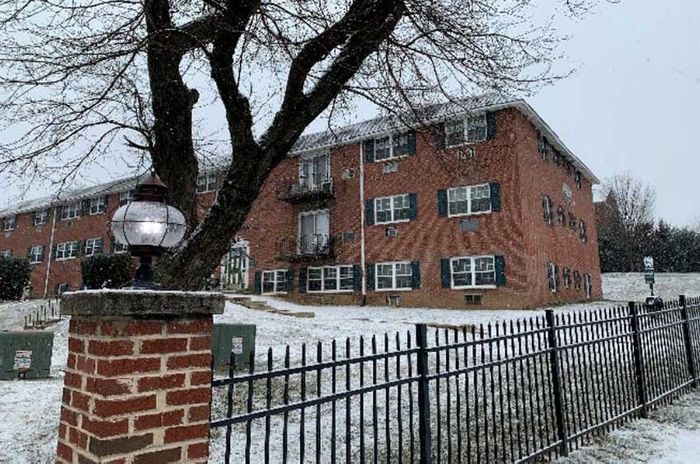
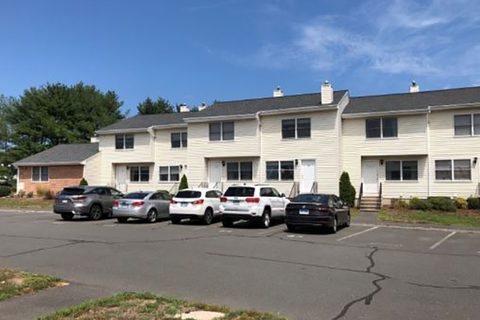
Recent Apartment Loan Closings
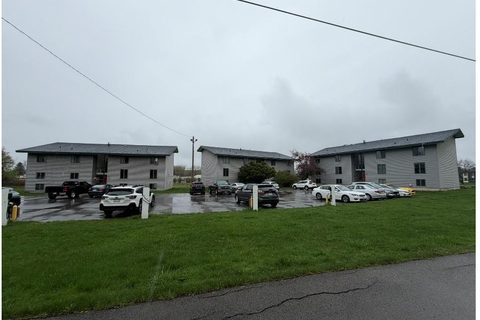
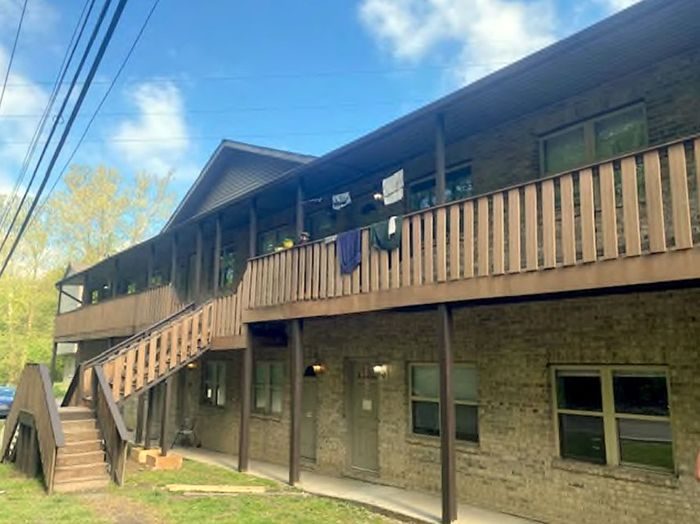
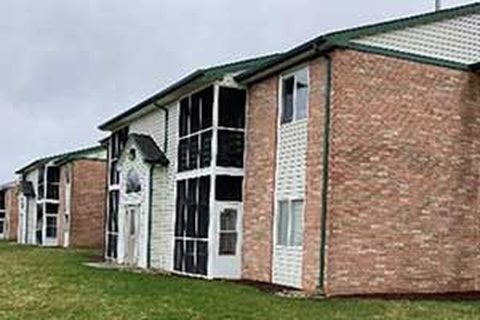
A sample of apartment and multifamily loans we have arranged for investors nationwide.
Apartment Loans Across West Virginia
We arrange apartment loans throughout West Virginia. Martinsburg, Charles Town, Morgantown, Clarksburg, Fairmont, Bridgeport, Charleston, Huntington, Parkersburg, Wheeling, Weirton, Beckley and Bluefield are all financed through the same agency, bank, credit union and FHA programs. What changes from one West Virginia market to the next is which economy the building actually depends on, the tax class the parcel carries and the depth of the comparable set, not the shape of the file.
For larger balances see our West Virginia multifamily loans. For office, retail, industrial and owner occupied property see West Virginia commercial mortgages, and nationwide we lend in most major U.S. cities.
What Our Clients Say
“I am a veterinarian who purchased an existing practice. I was surprised to find a company that offered 100% financing at a good rate, with great terms and rates for medical office financing.”
Carol K. · Chicago, IL“I spoke to several commercial lenders before finding Select Commercial. They got me a lower rate and their service was exceptional. If you need a multifamily loan, you need to talk to Stephen.”
Nathan B. · Philadelphia, PA“Select Commercial was very helpful with my multifamily mortgage. Stephen went over several options and we came up with the best lender to meet my needs. I got the funds and also lowered my payments.”
Gary M. · Portland, OR“Select Commercial offered 100% financing for my medical practice when my bank would have required 20% down. They delivered something my bank could not, and handled everything professionally.”
John C. · Boston, MAGet Your West Virginia Apartment Loan Quote
No cost, no obligation. Written answers within 48 hours on West Virginia apartment loans from $1,500,000.
- No application or processing fees
- Written answers within 48 hours
- For 5+ unit and commercial properties, $1.5M and up