
 Written & reviewed by Stephen A. Sobin, President of Select Commercial Funding LLC
California
California Apartment Loans
Select Commercial arranges California apartment loans from $1,500,000, up to 80% LTV, with rates as low as 5.67%. We compare Fannie Mae, Freddie Mac, FHA, bank and bridge programs to fit your property. Larger balances are covered on our multifamily loans page. See current rates on every loan type we offer.
Get a Free QuoteFinancing Options in California
California apartment, multifamily and commercial properties each have dedicated financing. Pick the page that matches your property:
Financing more of the state? See California commercial mortgages.
Financing in another state? Explore our apartment loans, multifamily loans and commercial mortgages nationwide.
California Apartment Loan Rates
Rates updated as of August 30, 2026
| Loan Type | Rate* | Max LTV |
|---|---|---|
| 5 Year Fixed | 6.07% | Up to 80% |
| 7 Year Fixed | 6.17% | Up to 80% |
| 10 Year Fixed | 6.25% | Up to 80% |
| Loan Type | Rate* | Max LTV |
|---|---|---|
| 5 Year Fixed | 5.67% | Up to 75% |
| 7 Year Fixed | 5.77% | Up to 75% |
| 10 Year Fixed | 5.85% | Up to 75% |
- Streamlined underwriting for institutional multifamily
- Cash-out refinances are acceptable
- Interest-only and non-recourse options
- Minimum 1.25x debt-service-coverage ratio
Rates last updated August 30, 2026. Rates and maximum LTV shown represent our best-case pricing scenarios. Actual rates, LTV, and loan terms are subject to underwriting approval and may vary.
Compare California Apartment Loan Programs
As a broker we compare every program for your best-fit California apartment financing:
| Program | Typical rate* | Max leverage | Best for |
|---|---|---|---|
| Fannie Mae Small Loan | 6.07% | Up to 80% | Non-recourse, fixed to 30 yrs |
| Freddie Mac SBL | 6.15% | Up to 80% | $2M to $10M small balance |
| FHA / HUD | 6.12% | Up to 85% | Highest leverage, longest term |
| Bank / portfolio | 6.25% | Up to 75% | Flexible, value-add |
| Bridge | 9.00% | Up to 80% LTC | Reposition, lease-up |
Most apartment lenders look for a debt-service-coverage ratio (DSCR) of at least 1.25x.
2026 California Apartment Loan Market
California never had the construction wave that swamped the Sun Belt, and that shortage is what holds the floor under apartment values here. Los Angeles County took delivery of 32,000 units between 2022 and 2025 while vacancy rose only about 100 basis points across the entire stretch (February 2026). In the second quarter of 2026 the Los Angeles market ran 4.52% vacancy on an occupied stock of 1.12 million units, with average effective rent at $2,887, up 0.8% on the year, and trailing-year completions of 9,105 units forecast to fall toward 7,280 (August 2026).
The north is far tighter than the south. San Francisco sat at 2.4% vacancy at midyear, with a median one-bedroom asking $3,881 and units moving from listing to lease in 18 days, the fastest pace since that tracking began in 2019. The city permitted roughly 1,400 apartments in 2025 against 705 in 2024, a doubling off a very low base that does not begin to change the balance (August 2026).
What that means for your loan. Thin vacancy and a short pipeline make California cash flow unusually predictable, and lenders price that in. The offsetting factor is the rent cap: your ability to grow net operating income is limited by statute across most of the state, so proceeds turn on in-place income, the rent roll and expense control rather than on a rent growth assumption. How that works is set out below.
Across California we arrange apartment building loans from $1,500,000 through agency, bank, FHA and bridge programs. Rate and leverage follow the building’s trailing cash flow, not your personal income.
California Metro Markets We Finance
California holds several of the largest apartment markets in the country and they are not moving together. The Bay Area is tightening fast, Los Angeles is grinding along at low vacancy with almost no rent growth, and the Inland Empire is absorbing the last of its new supply. A California apartment mortgage gets structured to the submarket, not to the state. These are the markets we work in most.
Los Angeles County
Vacancy of 4.52% in the second quarter of 2026, average effective rent $2,887 and rent growth of 0.8% over the year, with $9.3 billion of sales in the trailing twelve months at a 5.37% average cap rate and roughly $308,600 per unit (Q2 2026). The largest apartment market in California by a wide margin, and values held up here because supply never caught demand. This is also the county where rent stabilization bites hardest, so the registration history matters as much as the rent roll on an older building.
Los Angeles · Long Beach · Pasadena · Lancaster · Santa Clarita · Torrance · Inglewood · Pomona · El Monte · Palmdale
Orange County
Dense, expensive and structurally supply constrained, with high barriers to new construction that keep existing buildings full. Apartment building financing here tends to favor experienced local owners, and California banks and credit unions compete aggressively for well-located product because they understand the collateral better than a national lender does.
Anaheim · Santa Ana · Irvine · Huntington Beach · Garden Grove · Fullerton · Costa Mesa
San Diego
A tale of two submarkets in 2026. Downtown ran about 8.5% vacancy with rents up 3.0% year over year, while Clairemont, Linda Vista and Mission sat in the mid-4% range. Deliveries are running near 6,400 units for a second straight year, with permits forecast about 20% below 2025, so the pipeline is closing. Class B product traded around $500,000 per unit with cap rates near 4.7%, among the sharpest in California (Q2 2026).
San Diego · Chula Vista · Escondido · Oceanside
Inland Empire
The California market that behaves most like the Sun Belt. Class B and C vacancy stood at 4.2% in the first quarter of 2026, roughly 100 basis points above its long-run average, on about 3,000 units of net absorption over twelve months. Asking rents posted a 1.1% quarterly gain after two quarters of decline, with 1.3% forecast for the year, and 2026 deliveries of roughly 2,900 units are down 27% from 2025. Stabilized Class A traded in the high-4% to low-5% cap range and value-add Class B and C nearer 6.0% (Q1 2026). This is where an apartment complex loan still pencils on cash-on-cash returns.
Riverside · San Bernardino · Fontana · Moreno Valley · Rancho Cucamonga · Corona
San Francisco and the Bay Area
The tightest major apartment market in California. San Francisco held 2.4% vacancy at midyear with a median one-bedroom at $3,881 and an 18-day list-to-lease window, the fastest since 2019. Oakland medians ran about $2,137 for a one-bedroom and San Jose about $2,725, with Sunnyvale near $3,369 (August 2026). Bay Area multifamily lenders are underwriting genuine rent recovery here for the first time in years, which is showing up in proceeds.
San Francisco · Oakland · San Jose · Concord · Hayward · Sunnyvale · Santa Rosa · Vallejo
Sacramento and the Central Valley
A lower basis per unit, higher cap rates and cash-on-cash returns that coastal California investors rarely see, with far less regulatory drag than Los Angeles or San Francisco. Agency small-balance programs and regional banks are both active apartment building lenders in these markets, and the same borrower frequently clears more leverage here than on a comparable coastal asset.
Sacramento · Stockton · Fresno · Elk Grove · Modesto · Bakersfield
Ventura County and the Central Coast
Small building stock, tight supply and long-tenured local ownership. Deals here are usually relationship driven, and these California apartment building loans often refinance into agency debt once the rent roll supports it.
Oxnard · Thousand Oaks · Simi Valley · Salinas
Where we do not yet have a dedicated apartment page for a California city, the link goes to our commercial mortgage page for that market, which covers apartment and mixed-use property alongside other commercial types.
How California Rent Rules Affect Your Apartment Loan
Every California apartment loan gets underwritten against the state’s rent cap, and owners who understand it going in tend to get better outcomes. The Tenant Protection Act limits annual increases on covered units to 5% plus the change in the local cost of living, or 10%, whichever is lower. The applicable figure resets each year and varies by region, so the number that governs a building in Los Angeles is not the one that governs a building in Sacramento.
Not every unit is covered. Buildings less than 15 years old are exempt on a rolling basis, as are deed-restricted affordable housing and, under certain conditions, most single-family homes and condominiums. Where a stricter local ordinance applies it governs instead: Los Angeles, San Francisco, Oakland, Berkeley and Santa Monica each run their own rent stabilization programs, with tighter limits and their own registration requirements.
Why a lender cares. A cap puts a ceiling on how quickly net operating income can grow, so an underwriter will not credit a rent growth assumption the statute does not permit. What does get credited is the spread between in-place and market rents on units that turn, your expense trend, and the accuracy of the rent roll. On a rent-stabilized building expect the lender to ask for the registration history alongside current rents.
None of this makes a California apartment complex harder to finance. It makes the file more document driven. Owners who bring a clean rent roll, twelve months of operating statements and, where it applies, the rent registration history, consistently see the best terms.
Refinancing a California Apartment Building
The California refinance conversation starts from a different place than it does in most states. Owners here are often sitting on a very low basis and a great deal of embedded equity, so the question is rarely whether the building supports a loan. It is how much can come out without straining coverage.
Refinancing does not reset your property taxes. Under Proposition 13 the assessed value resets on a change of ownership, not on a refinance. For a long-time owner weighing a sale against pulling cash out, that difference is frequently worth more than the rate spread, and it is the most common reason California owners refinance rather than trade.
Proceeds are sized on the rent roll and the trailing twelve. Because rent growth is capped, the underwriter leans harder on expense history than in an uncapped market. Insurance and utility trends, deferred maintenance, and any seismic retrofit obligation on an older soft-story building all show up in the sizing. A property with three clean years of operating statements will out-borrow an identical building with a disorganized file.
Loans written in 2015 and 2016 are maturing now. Ten-year fixed agency and bank debt from that vintage is coming due into a very different rate environment. Confirm whether prepayment is yield maintenance, a step-down or open, and start six to nine months ahead of the balloon so there is room to shop more than one lender rather than take an extension.
Send the rent roll and the trailing twelve months and we will underwrite the building the way the lender will, then come back with written options inside 48 hours at no cost. California apartment loans start at $1,500,000, from a six-unit building in Oakland to a garden complex in the Inland Empire.
California Multifamily Financing
Apartment loan and multifamily loan describe the same product: debt on a building with five or more residential units. We arrange it throughout California, and the label matters far less than the rent roll behind it.
What genuinely changes with size is the lender set. Smaller California balances are usually best served by community banks, credit unions and the agency small-balance programs, where a local relationship and a clean file carry the deal. Larger balances bring in Fannie Mae, Freddie Mac, FHA, life companies and CMBS, and multifamily loan rates there are often tighter because the loan is big enough to securitize. The tradeoff is a heavier package: full appraisal, property condition report, environmental review, and sizing driven by net operating income, debt service coverage and debt yield.
California multifamily lenders also weigh submarket and regulatory exposure more heavily than lenders in most states. A rent-stabilized building in Los Angeles and an exempt newer property in Sacramento underwrite very differently at the same loan amount. Send the rent roll and the trailing twelve and we will tell you which multifamily lenders are sharpest on your building, and what multifamily financing looks like at that size.
California Apartment Loan Types We Serve
We arrange financing across California for:
- Urban high-rise apartment buildings
- Suburban garden apartment complexes
- Small apartment buildings with 5+ units
- Underlying cooperative apartment loans
- Portfolios of small apartment and rental properties
- Mixed-use and other multifamily property
Apartment Loans Across California
We arrange apartment loans in every California market, not only the metros above. Secondary cities and the agricultural valleys are financed through the same agency, bank and credit union programs, and a well-occupied building outside the coastal metros often supports more leverage than its owner expects.
For larger balances see our California multifamily loans. For office, retail, industrial and owner-occupied property see California commercial mortgages, and nationwide we lend in most major U.S. cities.
Recent Apartment Loan Closings
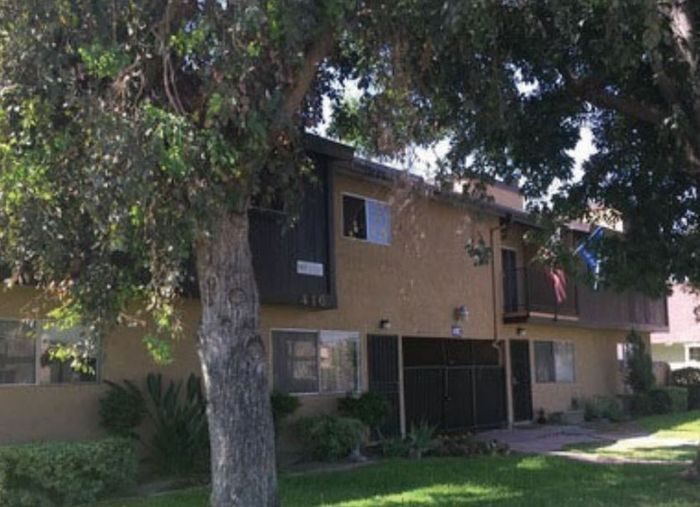
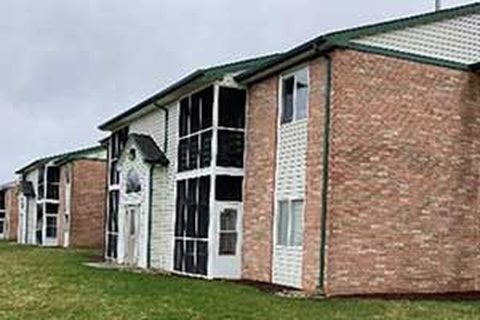
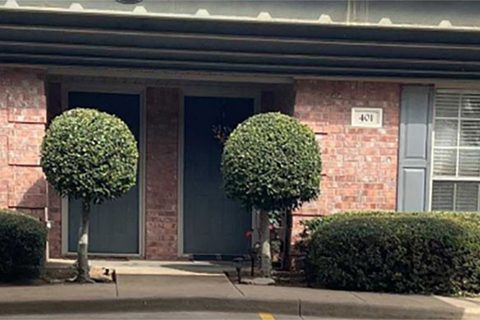
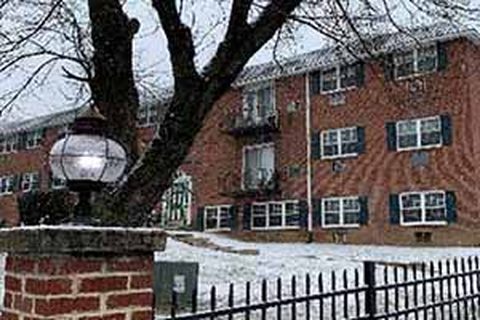
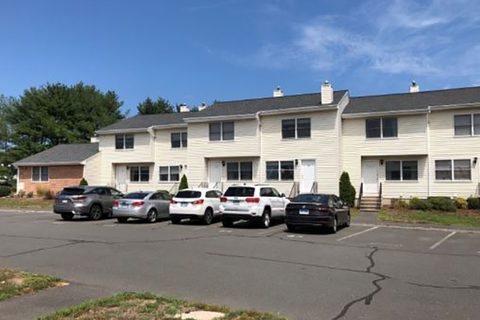
A sample of apartment and multifamily loans we have arranged for investors nationwide.
Other Property & Loan Types We Finance in California
As a full-service commercial mortgage broker, we arrange California financing across every major property and loan type:
We consider commercial loan requests of all sizes, beginning at $1,500,000.
What Our Clients Say
“I am a veterinarian who purchased an existing practice. I was surprised to find a company that offered 100% financing at a good rate, with great terms and rates for medical office financing.”
Carol K. · Chicago, IL“I spoke to several commercial lenders before finding Select Commercial. They got me a lower rate and their service was exceptional. If you need a multifamily loan, you need to talk to Stephen.”
Nathan B. · Philadelphia, PA“Select Commercial was very helpful with my multifamily mortgage. Stephen went over several options and we came up with the best lender to meet my needs. I got the funds and also lowered my payments.”
Gary M. · Portland, OR“Select Commercial offered 100% financing for my medical practice when my bank would have required 20% down. They delivered something my bank could not, and handled everything professionally.”
John C. · Boston, MAGet Your California Apartment Loan Quote
No cost, no obligation. Written answers within 48 hours on California apartment loans from $1,500,000.
- No application or processing fees
- Written answers within 48 hours
- For 5+ unit and commercial properties, $1.5M and up
California City Spotlights: 2026 Apartment Market Notes
Beyond the major metros, we finance apartment buildings across California. Current market notes for cities where borrowers ask us to lend:
- Bakersfield: median 1-bedroom rent about $1,100, down 2.7% year over year (July 2026 rent report), the Central Valley’s most affordable large market.
- Santa Clarita: median 1-bedroom rent about $2,095, up 5% year over year (Zumper, August 2026), a supply-constrained north Los Angeles County market.
- Garden Grove: median 1-bedroom rent about $1,995, up 2% year over year (Zumper, August 2026), a dense Orange County rental market.
National baseline for context: the U.S. median rent was $1,388 in July 2026, down 1.1% year over year, with rental vacancy near 7.2% (national rent report, July 2026). Each city above links to our local commercial mortgage page, and we finance 5+ unit apartment properties in every California market from $1,500,000.